
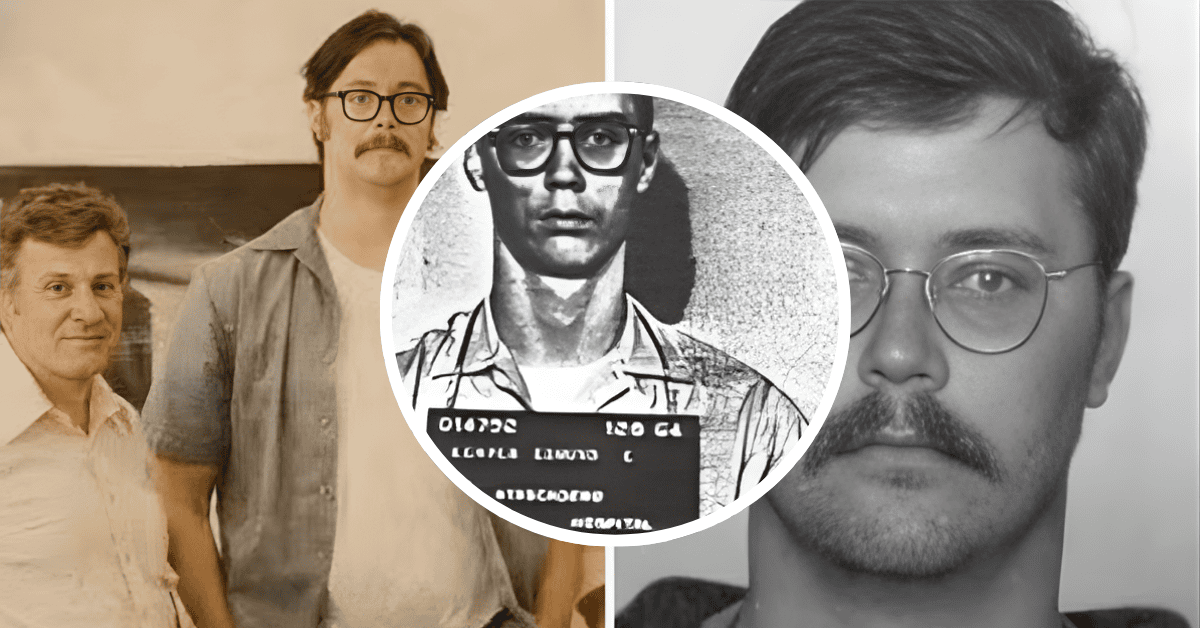
He sat alone in a locked room with a man who had already murdered at least ten people, and for nearly half an hour, there was no one to help him if something went wrong. No guards. No backup. Just him, the criminal, and the door between them.
It was the 1970s, and FBI agent Robert Ressler was at the forefront of an emerging field: trying to understand the minds of serial killers. He was in California, at the Vacaville Medical Facility, sitting across from Edmund Kemper, a towering man whose intelligence and calm demeanor belied the horrors he had committed. The Bureau was still figuring out how to approach this new type of criminal. Criminal profiling was not yet a formalized science—it was raw, experimental, and often dangerous work.
Ressler wanted to know what made killers like Kemper tick. How did they think? What drove them? Could understanding their motives and patterns help prevent future murders? But in that room, with the panic button failing and no guards responding, none of that mattered. The only thing that mattered was the immediate, terrifying reality: a physically imposing, unrestrained murderer was in the same room as him, fully aware that help was unavailable.
Kemper noticed the malfunction too. But he didn’t act. He didn’t raise his voice. He didn’t make a sudden move. Calmly, he explained to Ressler that, if he wanted to, he could have killed him in moments—long before anyone could intervene. Then he leaned back, silent, giving the agent a front-row seat to what restraint looked like in someone who had already proven he could not be trusted.
For roughly thirty minutes, Ressler remained alone with a man who had every advantage—size, strength, and the willingness to kill. Nothing happened, but the danger was real. And it left an indelible mark on the FBI. This wasn’t a moment of heroism or bravado to celebrate; it was a near-miss, a glaring example of risk. Afterward, the Bureau banned solo interviews with violent offenders, redefining what had once been considered bold investigative access as an unnecessary gamble with human life.
Ressler’s work, including this terrifying encounter, laid the groundwork for modern behavioral analysis. His book, Whoever Fights Monsters, details these experiences and highlights the lessons learned—not only about the minds of killers but also about the boundaries and safeguards that must accompany such work. This story, in particular, serves as a stark reminder that progress is often built in spaces where safety depends on the self-control of someone who has repeatedly shown they lack it.
It is easy, reading this decades later, to focus on the outcome: nothing happened. But the real story is the tension, the uncertainty, and the recognition that human lives sometimes hang on a single choice. It’s a chilling reminder that the study of evil is not just an academic exercise—it is a delicate, dangerous, and deeply human pursuit, where knowledge comes at the edge of fear.