
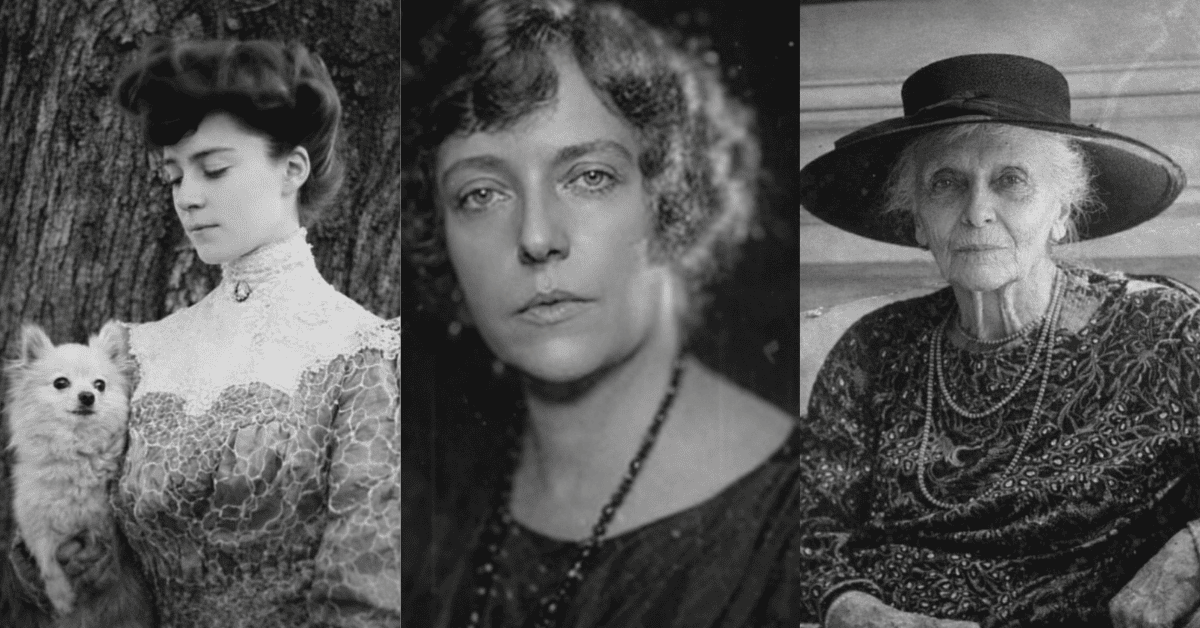
Alice Roosevelt never intended to be quiet.
Born in 1884, she was the eldest child of Theodore Roosevelt, a man whose energy dominated American politics. When he became president in 1901, the White House filled with power, protocol, and expectations. Alice had no interest in any of it.
She became famous almost immediately not for obedience, but for defiance.
Alice smoked cigarettes on the White House roof, carried a pet snake named Emily Spinach to social events, and openly mocked Washington’s rigid social codes. Newspapers followed her every move. Society gasped. Her father reportedly joked, “I can be president of the United States, or I can control Alice. I cannot possibly do both.”
She was banned from the White House twice.
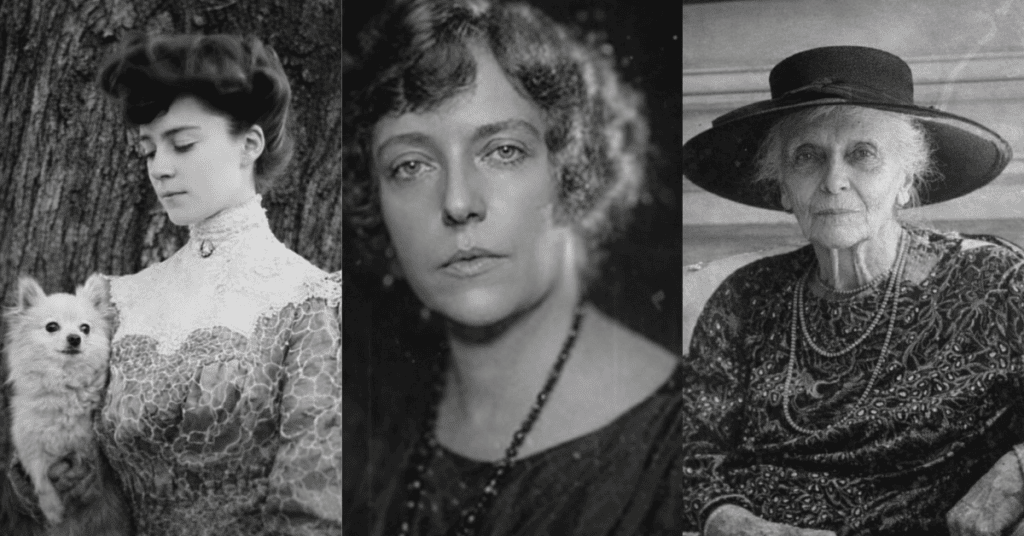
But Alice Roosevelt was not simply a troublemaker. Beneath the rebellion was a sharp political mind and a fearless understanding of power. She paid attention. She listened. She remembered everything.
As she grew older, Alice transformed her notoriety into influence.
She became one of Washington’s most sought-after dinner guests not because she was polite, but because she was informed. Politicians, diplomats, and journalists knew that if Alice Roosevelt was at the table, the conversation would matter. She was witty, ruthless, and impossible to intimidate.
Her opinions carried weight.
Alice advised presidents, critiqued policy, and shaped social alliances for decades. She remained a central figure in Washington politics through multiple administrations, spanning more than 80 years of public life. Long after her father’s presidency ended, Alice was still there watching, judging, and influencing.
She never softened herself to be acceptable.
Alice believed that women did not need permission to occupy space, express opinion, or wield power. She rejected the idea that femininity required silence or compliance. Her sharp tongue became legendary. Her honesty became feared.
She once said, “If you can’t say something good about someone, come sit right here by me.”
That unapologetic voice made her unforgettable.
Alice Roosevelt lived to be 96 years old. By the time she died in 1980, she had outlasted most of the men who once tried to control her. She had witnessed wars, presidencies, and cultural revolutions and commented on all of them.
History often remembers her as a rebellious daughter.
But that misses the point.
Alice Roosevelt didn’t rebel to shock. She rebelled to exist fully in a system that expected women to shrink. She proved that personality itself could be political and that refusing to behave could be a form of power.
Some people inherit influence.
Alice Roosevelt seized it.
And then she dared the world to stop her.