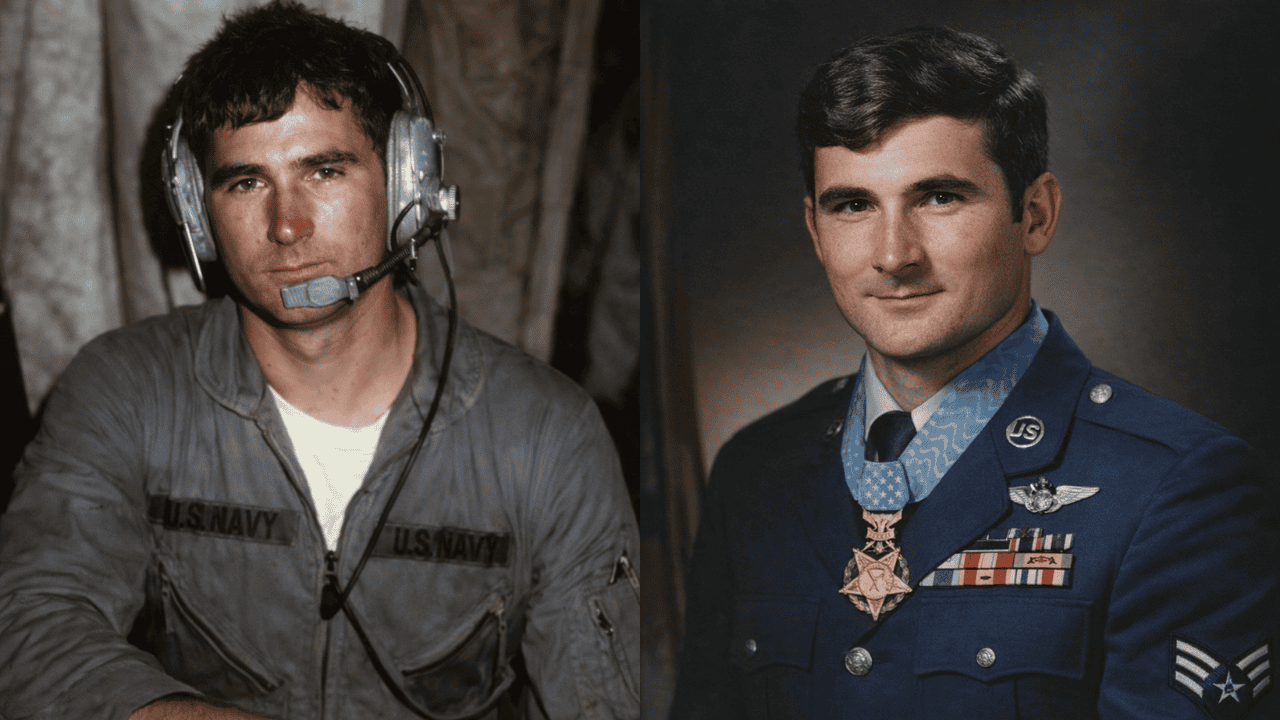
On February 24, 1969, in the skies over Vietnam, a routine mission turned into a fight for survival in a matter of seconds. Airman First Class John L. Levitow was aboard a U.S. Air Force AC-47 gunship when the aircraft suddenly came under heavy enemy mortar fire. The explosion tore through the plane, ripping metal apart and sending shrapnel flying in every direction.
Levitow was hit hard.
More than forty pieces of shrapnel struck his body, leaving him severely wounded and struggling to stay conscious. Around him, the aircraft was in chaos—damaged, shaking, and filled with smoke. Crew members were injured, equipment was failing, and the situation was spiraling toward disaster.
Then something even more dangerous happened.
A live magnesium flare—designed to burn intensely and illuminate the ground below—was knocked loose by the blast. It ignited and began rolling across the floor of the aircraft, dangerously close to ammunition and other volatile equipment. If it detonated inside the plane, it would almost certainly destroy the aircraft and kill everyone on board.
No one was in a position to reach it.
Except Levitow.
Despite his injuries, barely able to move, he forced himself forward. Crawling through smoke and debris, he dragged his wounded body toward the burning flare. The pain was overwhelming, but the urgency was greater. Every second counted.
Reaching it, he did something extraordinary.
He pulled the flare to his body, cradling it against himself to keep it from rolling, absorbing its intense heat and sparks. Then, with what strength he had left, he carried it to the open cargo door and threw it out into the night.
Moments later, it exploded.
But it exploded outside the aircraft.
The plane—and the crew—were saved.
Levitow collapsed from his injuries, his body pushed far beyond its limits. Yet his actions in those critical seconds had made the difference between survival and catastrophe. In a situation where hesitation could have cost every life on board, he acted without it.
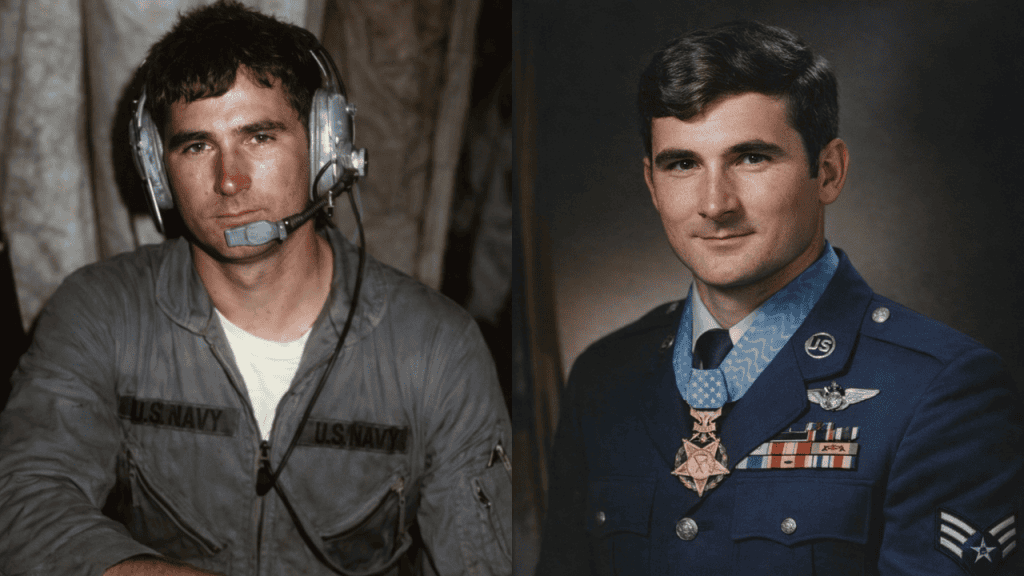
For his extraordinary courage and selflessness, John L. Levitow was awarded the Medal of Honor, becoming the lowest-ranking Air Force member to receive the nation’s highest military decoration.
His story is not just about bravery in the face of danger – it is about instinct, sacrifice, and the decision to act when no one else could. In a burning aircraft high above a war-torn landscape, one wounded airman chose to move forward—and saved everyone with him.