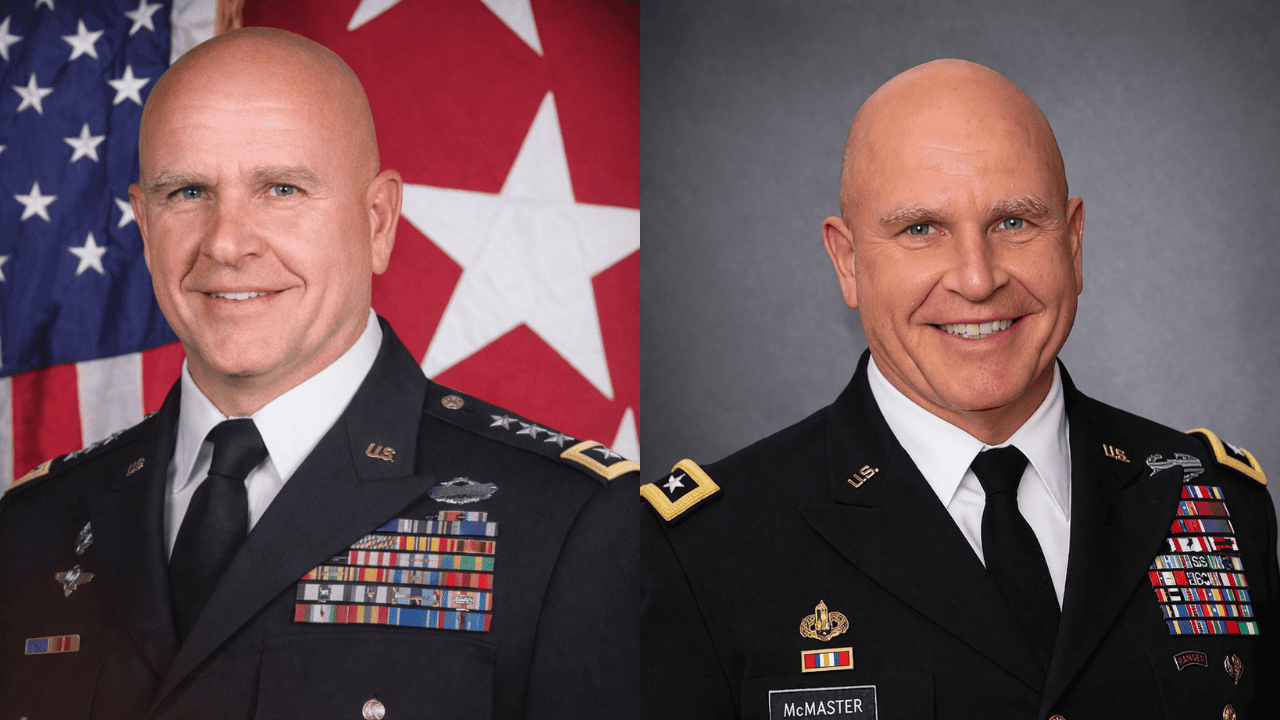
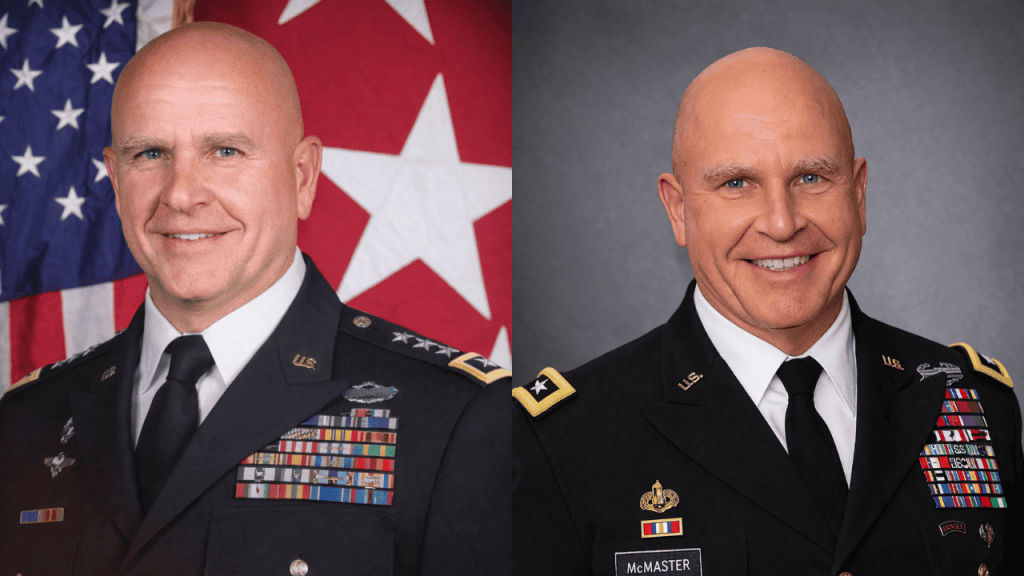
Lieutenant General H.R. McMaster’s career stands at the intersection of battlefield experience and intellectual depth, a combination that has shaped both his leadership and his legacy. In an era where military command often focuses on immediate outcomes, McMaster built a reputation for thinking beyond the moment—studying history even as he made it.
A graduate of West Point, he did not follow a purely conventional path. While advancing through the ranks, he pursued deeper understanding, earning a Ph.D. in military history. For McMaster, war was not just something to fight—it was something to study, question, and learn from. That perspective would later define both his command style and his influence on military thought.
His leadership first drew wide attention during the Gulf War in 1991. As a young captain, he commanded Eagle Troop during the Battle of 73 Easting, one of the most significant armored engagements of the conflict. Facing a larger Iraqi force, McMaster led his unit with speed, coordination, and decisive action. The result was a rapid and overwhelming victory, demonstrating not only tactical skill but also the importance of initiative under pressure.
But McMaster’s career did not rest on a single moment.
Years later, during the Iraq War, he took command in Tal Afar, a city deeply affected by insurgency and instability. There, his approach reflected lessons drawn from both experience and study. Rather than relying solely on force, he emphasized protecting civilians, building local relationships, and stabilizing communities alongside military operations. It was a method that aligned with evolving counterinsurgency strategies and showed how leadership could adapt to complex modern conflicts.
Beyond the battlefield, McMaster’s influence continued to grow.
He played a key role in shaping Army doctrine, contributing to the development of strategies that emphasized adaptability and understanding of local conditions. His work in training and leadership development helped prepare future officers for the realities of modern warfare—where challenges are often as political and social as they are military.
His writing further cemented his reputation as a thinker. In Dereliction of Duty, he examined the failures of leadership during the Vietnam War, offering a critical look at how decisions are made at the highest levels. It was not just a history book—it was a warning about the consequences of poor judgment and the importance of accountability.
Later, his role as National Security Advisor brought him into the center of political decision-making, where strategy extended beyond the battlefield into global policy.
H.R. McMaster’s story is one of balance—between action and reflection, command and analysis. He represents a kind of leadership that does not separate experience from learning, but combines them.
In doing so, he has shown that understanding the past is not just about remembering it—it is about shaping what comes next.