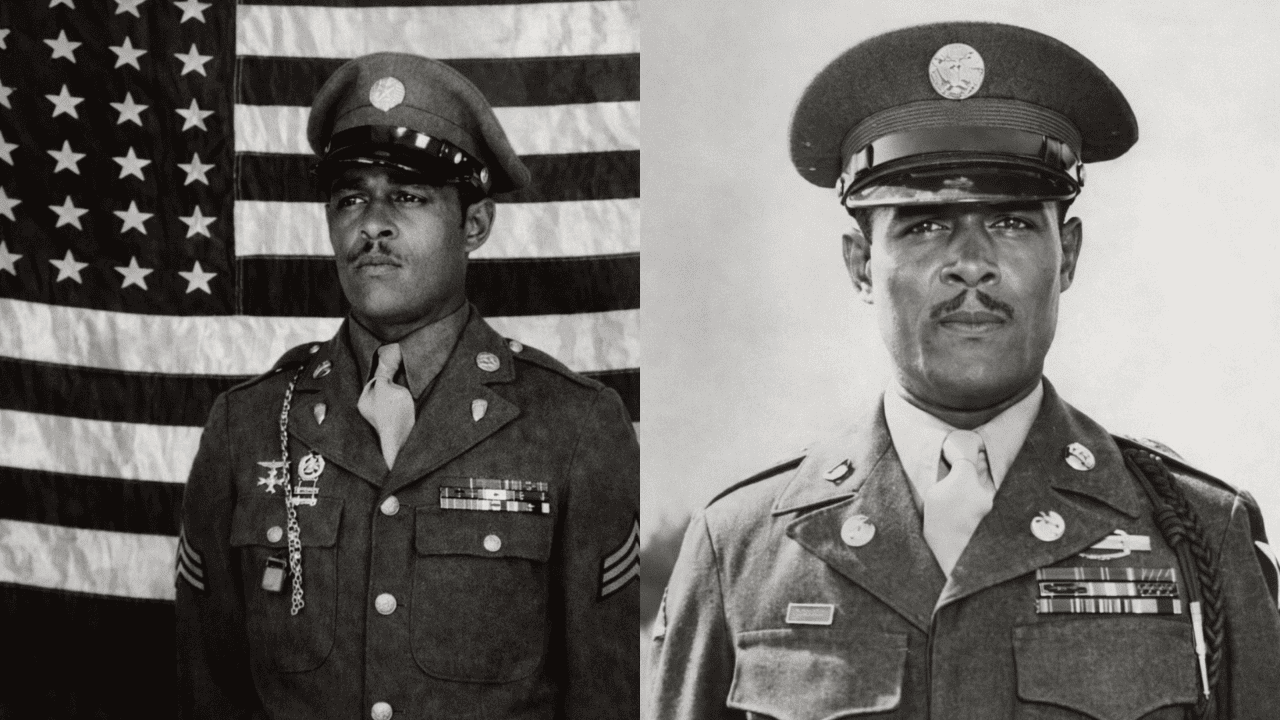
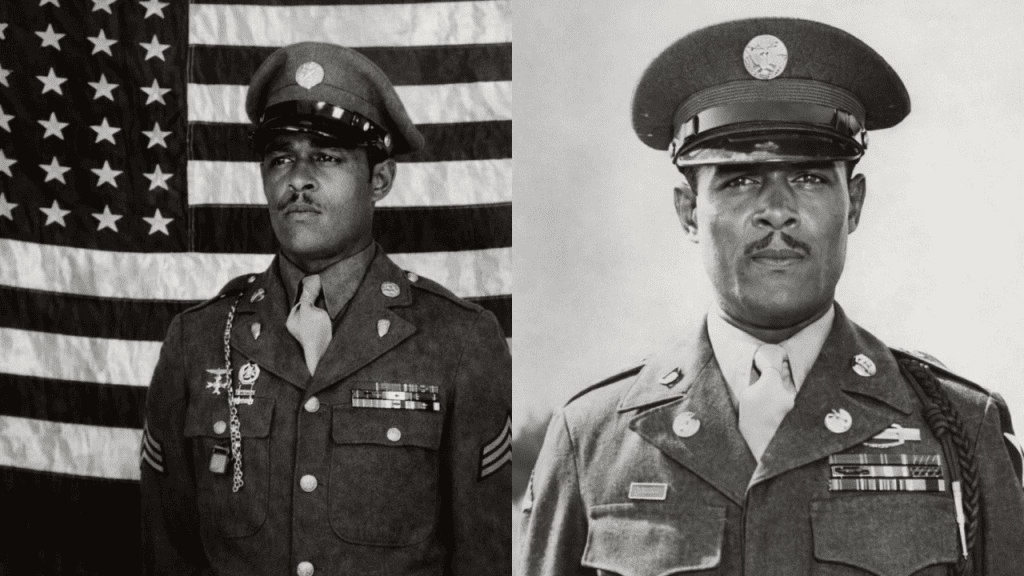
On March 23, 1945, near the German city of Speyer, the war in Europe was nearing its final, brutal chapter. Allied forces were pushing forward, but the resistance they faced was still fierce. In the middle of that chaos stood Staff Sergeant Edward A. Carter Jr., a soldier whose actions that day would define a legacy of courage that took decades to be fully recognized.
Carter served with the 12th Armored Division, and during the advance, his unit came under intense enemy fire. The attack pinned them down, halting movement and leaving them exposed. In such moments, hesitation could mean disaster. The line was stalled, and the danger was immediate.
Already wounded, Carter made a decision that set him apart.
He moved forward alone.
Crossing open ground under relentless fire, he pushed toward the enemy position. Bullets struck him again and again—five times in total—but he did not stop. Each step carried risk, yet he continued, driven by the need to break the deadlock that held his unit in place.
When he reached the enemy, the situation shifted.
Despite his injuries, Carter confronted German soldiers directly, forcing two of them to surrender. But his mission was not just survival or even combat—it was information. Through interrogation, he gathered critical intelligence about enemy positions and defenses, knowledge that would prove vital for the advancing Allied forces.
Then came the hardest part—returning.
Still wounded, still under fire, Carter made his way back across the same exposed ground, carrying both his injuries and the intelligence he had secured. His actions allowed his unit to regroup, break through the enemy line, and continue the advance at a crucial moment in the war.
Yet for all he had done, recognition did not come immediately.
As an African American soldier serving in a segregated military, Carter’s bravery was acknowledged at the time, but not at the level it deserved. It would take more than fifty years for that to change. In 1997, after a long-overdue review, he was posthumously awarded the Medal of Honor—the nation’s highest recognition for valor.
By then, Carter was no longer alive to receive it.
His story is not only one of battlefield heroism, but also of perseverance in the face of inequality. He fought not just against the enemy in front of him, but within a system that failed to fully recognize his courage at the time.
On that day in 1945, under a storm of gunfire, Edward A. Carter Jr. advanced when others could not. And though history took time to catch up, his actions ensured that his courage would never be forgotten.