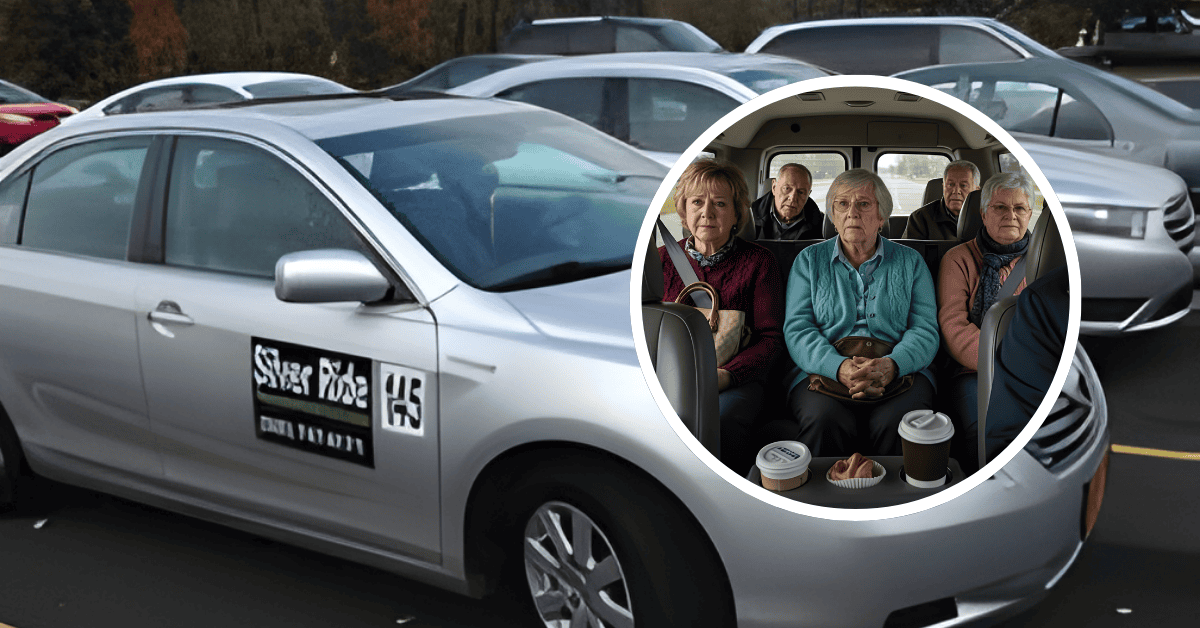
When 69-year-old Lucille signed up for a senior rideshare program last November, she wasn’t looking for connection. She was looking for affordability. Called SilverRide, the program offered retirees a practical solution: shared transportation for just $3 per trip, compared to the $15 cost of a standard rideshare. For Lucille, who had three medical appointments each week, the savings were necessary.
Her assigned carpool met every Monday, Wednesday, and Friday morning. Five seniors. Same route. Same van.
Howard, 74, was the driver. He owned the vehicle and quietly picked everyone up. Dorothy, 71, was always first—initially from a gated community, impeccably dressed, never speaking. Gene, 68, came next from a deteriorating apartment complex, wearing the same jacket every ride. Lucille was picked up third, from a modest middle-class neighborhood. Last was Susan, 66, waiting alone in a church parking lot, never inviting anyone inside.
For weeks, the rides passed in silence. They were strangers united only by convenience.
But small signs of strain began to surface.
During the third week, Lucille overheard Gene take a phone call, his voice shaking as he repeated, “There’s no money.” By week five, Susan arrived one morning visibly crying, brushing it off as allergies. A few weeks later, Dorothy’s pickup location changed—from the gated community to a small apartment building—without explanation.
By week nine, Gene appeared noticeably thinner. He brought the same brown bag lunch every day but never ate it. In week ten, Susan answered a tense phone call, quickly claiming it was her daughter worrying too much. No one pressed. Everyone looked away.
Then, in the twelfth week, the van broke down.
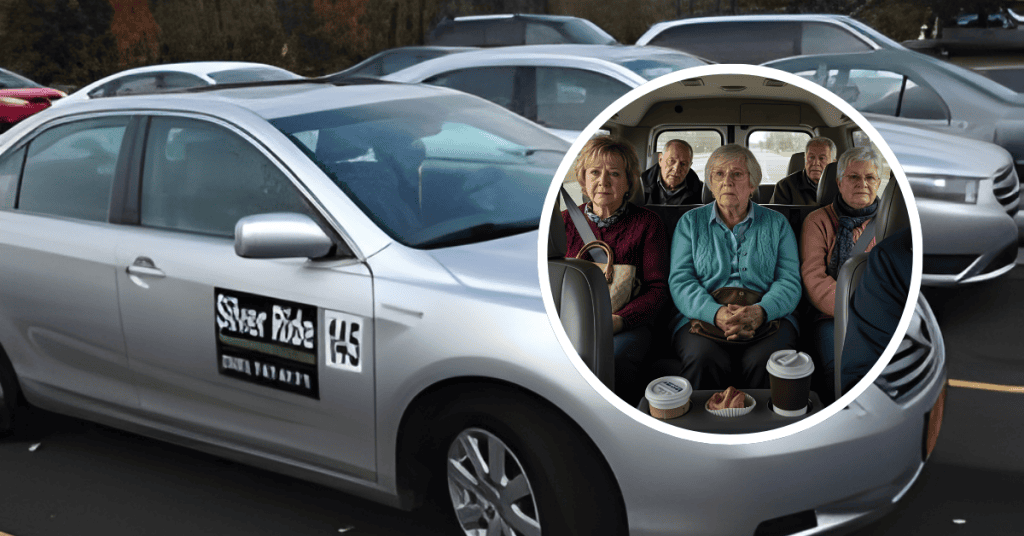
Stranded on the roadside for nearly forty minutes, the group could no longer avoid one another. Gene finally spoke, asking Dorothy why her pickup locations kept changing. She resisted at first, then broke down. Her husband, she explained, was imprisoned for financial fraud. Their assets were gone. She had sold her home and moved into the apartment, continuing to use her old pickup spot out of shame.
Susan followed. She had been living in her car for months, sleeping in the church parking lot where the pastor quietly allowed her access to restrooms. Gene then shared his own truth: stage four pancreatic cancer, no money for treatment, and relentless medical debt. Lucille admitted she was losing her sight to macular degeneration and feared she wouldn’t be able to slow it due to cost.
Finally, Howard spoke. His wife had Alzheimer’s. He was her sole caregiver. Driving the van, he said, was the only time he wasn’t watching her disappear.
What followed was not despair—but action.
Once the silence broke, support followed naturally. Dorothy used her legal experience to help Gene navigate medical debt forgiveness. Gene connected Susan to housing resources through church networks. Susan helped Lucille find vision assistance programs. Lucille helped Howard locate adult daycare for his wife.
Within two months, Susan had stable housing. Gene entered a free clinical trial. Dorothy found work helping fraud victims. Howard gained respite care. Lucille’s vision loss slowed with newly discovered treatment options.
Their experience led to something bigger. Together, they helped expand SilverRide Support, encouraging conversation and connection among riders. Today, more than 40 carpools across the city operate under the program, with riders encouraged to exchange phone numbers and talk openly.
Lucille joined to save $12 per trip. What she found instead was a reminder: people sit beside one another every day carrying problems that silence keeps invisible.
Sometimes, all it takes to change a life is the courage to start a conversation.