
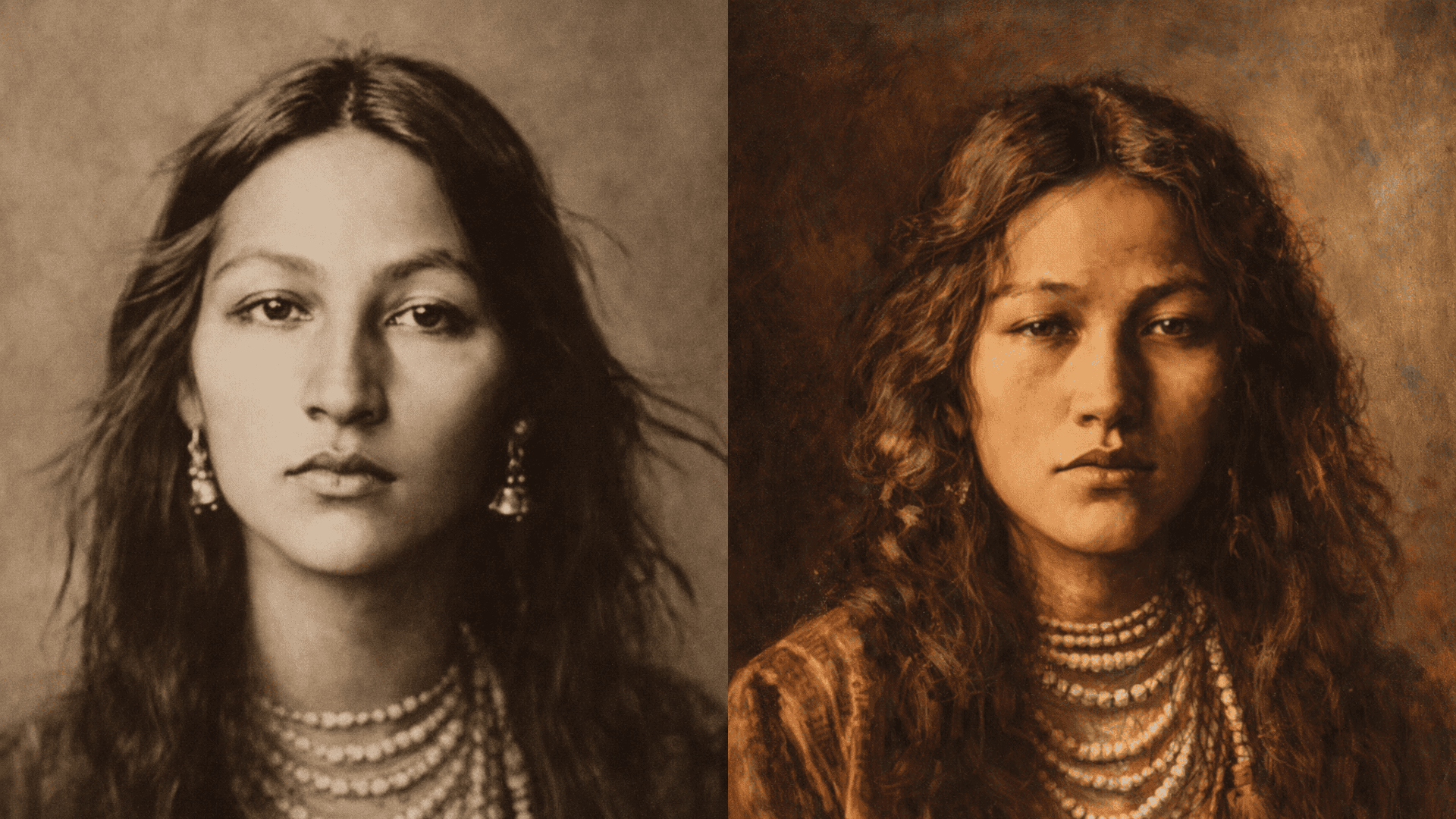
As a child, Zitkala-Ša was taken from her home and sent to a boarding school designed to erase everything that made her who she was.
Born on February 22, 1876, on the Yankton Sioux Reservation in South Dakota, she grew up immersed in Dakota language, stories, and traditions. But like many Native children of her generation, she became a target of the federal government’s assimilation policy. Missionaries convinced her mother to send her to White’s Indiana Manual Labor Institute, a Quaker boarding school where Native children were stripped of their culture in the name of “civilization.”
The trauma began almost immediately. Her long hair a powerful symbol in Dakota culture was forcibly cut. She later wrote about hiding in terror as school authorities searched for her, knowing what the cutting meant. She was punished for speaking her own language. Her name was replaced. Her identity was treated as something to be corrected.
Yet Zitkala-Ša did not break. She absorbed the education she was given learning English, mastering music, and becoming an accomplished violinist but she never abandoned her heritage. Instead, she turned the tools of the system into instruments of resistance.
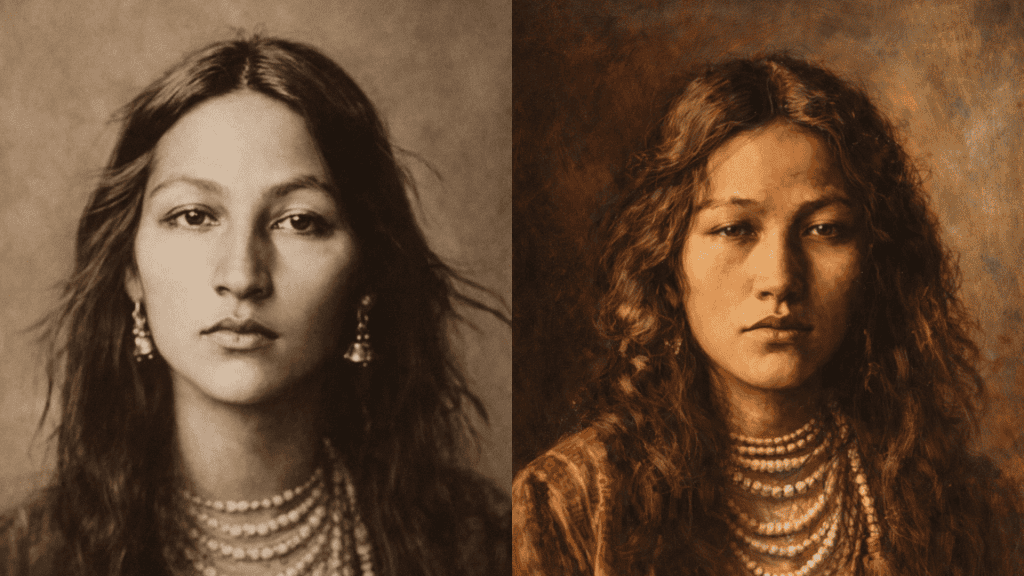
In the early 1900s, she began publishing essays and short stories that exposed the emotional and cultural violence of the boarding school experience. Her writings, including pieces that appeared in national magazines like The Atlantic Monthly, gave readers a rare and powerful account of Native life from a Native perspective. She wrote about the loneliness, the forced conformity, and the deep internal conflict of living between two worlds.
But her activism extended far beyond the page.
Zitkala-Ša became deeply involved in political organizing for Native rights. In 1926, she co-founded the National Council of American Indians, one of the first organizations dedicated to securing full citizenship rights, voting access, and legal protections for Native people across the United States. At a time when Native voices were routinely excluded from national conversations, she insisted on being heard.
She also collaborated on The Sun Dance Opera in 1913, blending Dakota cultural themes with Western musical forms a bold artistic statement that challenged stereotypes and demanded recognition of Native cultural depth and sophistication.
Known as “Red Bird,” Zitkala-Ša lived at the intersection of art and activism. She was a writer, musician, educator, and organizer who refused to let assimilation define her story. Instead of allowing her childhood trauma to silence her, she transformed it into testimony and then into action.
When she died in 1938, she left behind more than essays and music. She left a foundation for modern Native activism and a powerful reminder that identity, once suppressed, can rise again as resistance.