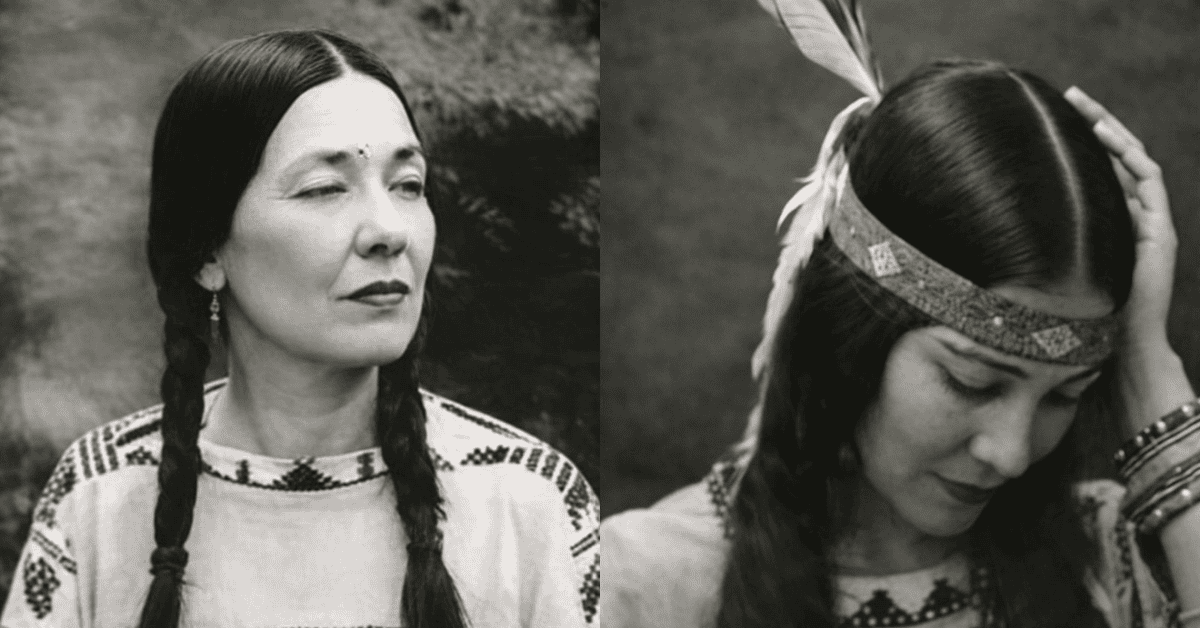
Te Ata was born Mary Thompson Fisher in 1895, at a time when Native American cultures were under systematic attack. Government policies sought assimilation. Children were taken from their families and sent to boarding schools where their languages, names, and traditions were forbidden. The goal was clear: erase identity.
Te Ata chose resistance through storytelling.
A member of the Chickasaw Nation, she grew up hearing traditional stories passed down through generations. These stories carried history, morality, humor, and survival itself. As the world around her tried to silence Indigenous voices, Te Ata made the radical choice to speak louder without ever raising her voice.
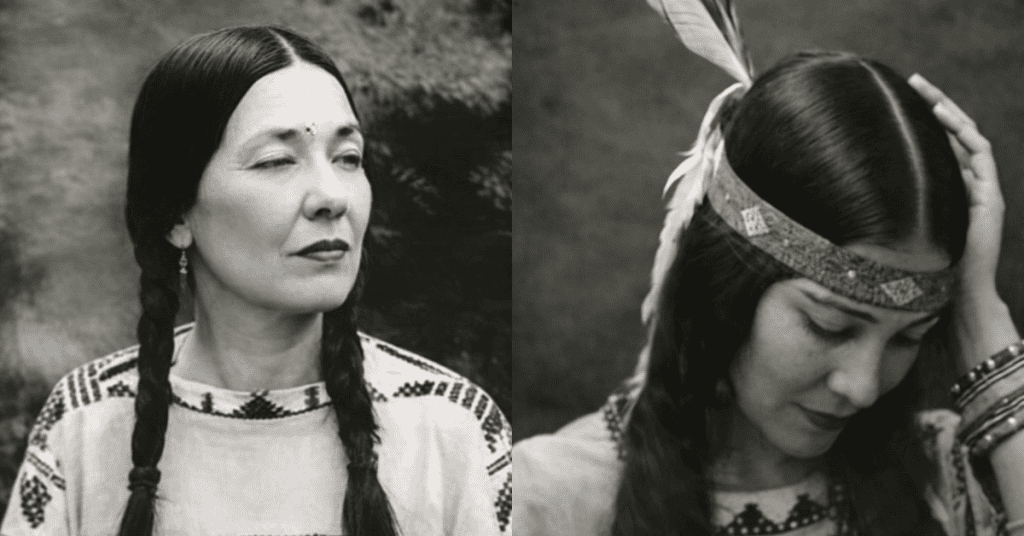
She began performing Chickasaw stories publicly in the early 20th century, wearing traditional clothing and speaking with reverence rather than explanation. She did not adapt the stories to make them more “acceptable.” She presented them as they were, insisting that Indigenous culture did not need translation to be worthy.
Over the next six decades, Te Ata traveled the world.
She performed across the United States and internationally, appearing before British royalty, European audiences, and American presidents. She performed at the White House and on grand stages usually reserved for opera and classical theater. Wherever she went, she carried the voice of her people.
This was not entertainment alone.
At a time when Native Americans were portrayed as relics of the past, Te Ata stood living, breathing proof of cultural continuity. Her presence challenged stereotypes simply by existing. She showed that Indigenous culture was not dying it was enduring.
While Native children were being punished for speaking their languages, Te Ata was being applauded for preserving hers. The contrast was painful, but powerful. She understood that visibility mattered. If people could hear Indigenous stories told with dignity, they might begin to see Indigenous people differently.
Te Ata never claimed to represent all Native nations. She spoke only for her own people, and she did so with care. Her performances were acts of preservation, not performance for approval.
Even as age slowed her body, she continued telling stories. She performed well into her later years, believing that as long as she could speak, the stories would live.
Te Ata died in 1995 at the age of 99. By then, she had spent 60 years doing what policy tried to prevent: passing culture forward.
Today, she is remembered not as a celebrity, but as a cultural guardian. Someone who carried memory when memory was under threat. Someone who proved that survival does not always look like protest.
Sometimes it looks like a woman standing alone on a stage, telling a story the world was told to forget and refusing to let it disappear.
Her voice ensured it didn’t.