In 1947, Hollywood met Richard Widmark in a way no one expected and no one forgot.
He wasn’t introduced as a charming leading man or a safe studio favorite. Instead, Widmark appeared in Kiss of Death as Tommy Udo, a grinning psychopath whose most infamous moment involved pushing an elderly woman in a wheelchair down a staircase. The scene was brief, cruel, and unforgettable. It stunned audiences and sent a chill through postwar America.
The performance earned Widmark an Academy Award nomination for Best Supporting Actor. It also came with a risk that could have ended his career before it truly began.
At the time, Hollywood had a habit of trapping actors inside the roles that made them famous. Villains stayed villains. Monsters didn’t get second chances. Widmark understood that danger immediately and refused to let it define him.
Instead of leaning into villain roles, he deliberately chose parts that challenged expectations. He played soldiers, journalists, lawmen, outcasts, and flawed heroes. Sometimes he was warm and principled. Sometimes bitter and conflicted. What mattered was range.
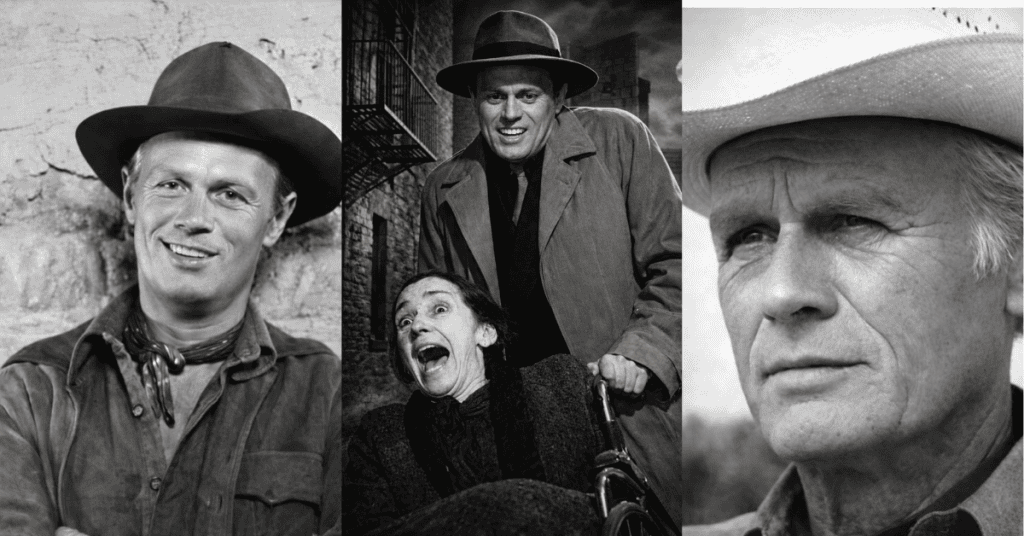
He wanted audiences to see the human being beneath the character.
Over the next six decades, Widmark built one of the most varied careers in American cinema. He starred in films like Pickup on South Street, Judgment at Nuremberg, The Alamo, and Madigan, moving effortlessly between genres and moral shades. He worked with major directors, shared the screen with Hollywood legends, and earned a reputation as a serious actor who cared deeply about craft.
What made Widmark stand out wasn’t just his talent it was his restraint. He didn’t chase celebrity or cultivate scandal. He avoided the Hollywood party circuit and focused on work that mattered to him. In an industry obsessed with image, he chose substance.
As Hollywood changed, Widmark adapted. When the studio system faded, he continued acting. When roles slowed, he stepped back without bitterness. His career wasn’t built on hype it was built on credibility.
By the time he retired, Widmark had appeared in more than 60 films across genres and generations. He had played villains who terrified audiences and heroes who felt deeply human. He proved that one shocking moment didn’t have to define an entire life.
Richard Widmark died in 2008, but his legacy remains a reminder of something rare in Hollywood: longevity earned through integrity.He made one of cinema’s most chilling debuts and then spent the rest of his life showing how much more an actor, and a person, could be.