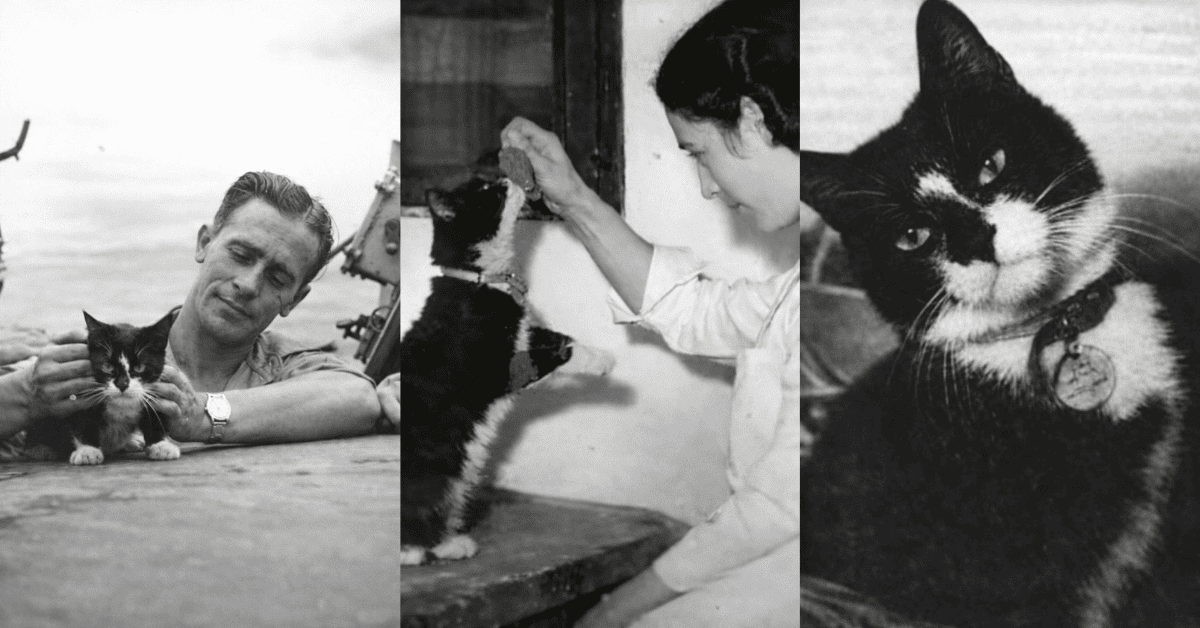
In 1948, no one expected a black-and-white stray cat to matter aboard a Royal Navy ship. He had no pedigree, no training, and no rank. He simply appeared on HMS Amethyst, thin and half-tailed, and made himself at home among the sailors. They named him Simon.
A year later, Simon would become a legend.
In April 1949, HMS Amethyst was sailing up China’s Yangtze River during the Chinese Civil War when it was suddenly ambushed by Communist forces. Shells tore into the ship. Sailors were killed. The captain was mortally wounded. The Amethyst ran aground and became trapped under constant fire.
Simon was badly injured in the attack, struck by shrapnel and suffering severe burns. Many assumed he wouldn’t survive. But he did.
As the siege dragged on, conditions aboard the ship deteriorated quickly. Food supplies dwindled. Morale collapsed. Worse still, rats overran the lower decks, contaminating what little food remained and spreading disease. For a trapped crew facing starvation, it was a silent catastrophe.
That’s when Simon returned to duty.
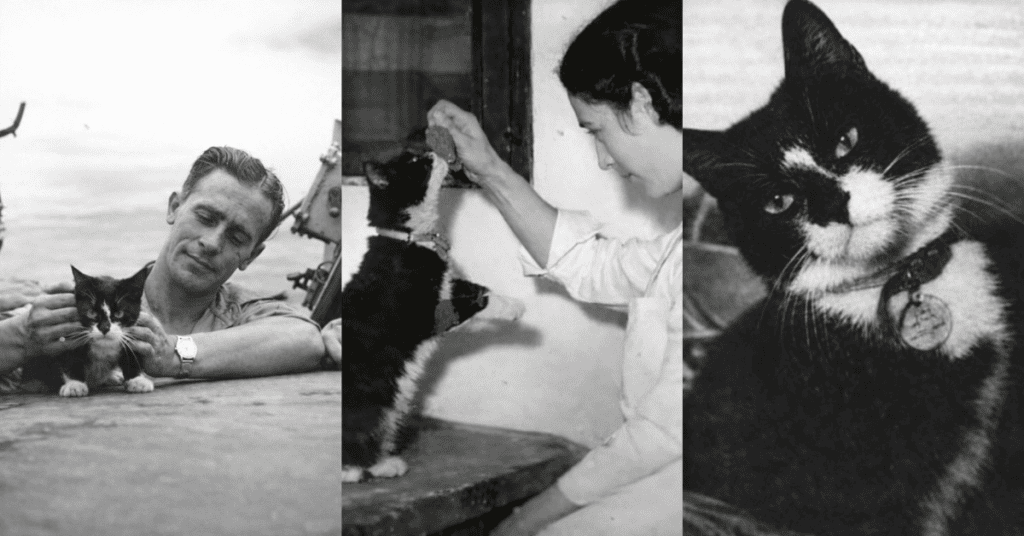
Despite his injuries, the cat began hunting relentlessly. He prowled the ship’s dark compartments, killing rats night after night. Sailors started noticing the difference almost immediately. Food stores stabilized. The infestation eased. Spirits lifted. Simon became more than a mascot he became a symbol of survival.
The crew credited him with saving their rations and, quite possibly, their lives.
For 101 days, HMS Amethyst remained under siege. When the ship finally escaped under cover of darkness and reached safety, Simon was still aboard. He was treated by the crew, fed scraps, and given a place of honor. Newspapers back home seized on the story. The idea of a wounded stray cat helping a trapped warship endure captured the public imagination.
In recognition of his actions, Simon was awarded the Dickin Medal the animal equivalent of the Victoria Cross. He remains the only cat ever to receive it for bravery in combat.
Sadly, Simon did not live long after his return. He died later in 1949 from illness likely worsened by his wartime injuries. His funeral was attended by sailors, officers, and members of the public. He was buried with full naval honors.
Simon never knew he was a hero. He didn’t understand medals or history. He did what animals and sometimes people do best in moments of crisis: he endured.
In a war defined by politics, artillery, and power, one small stray reminded the world that survival can come from the most unexpected places.
And sometimes, courage has whiskers.