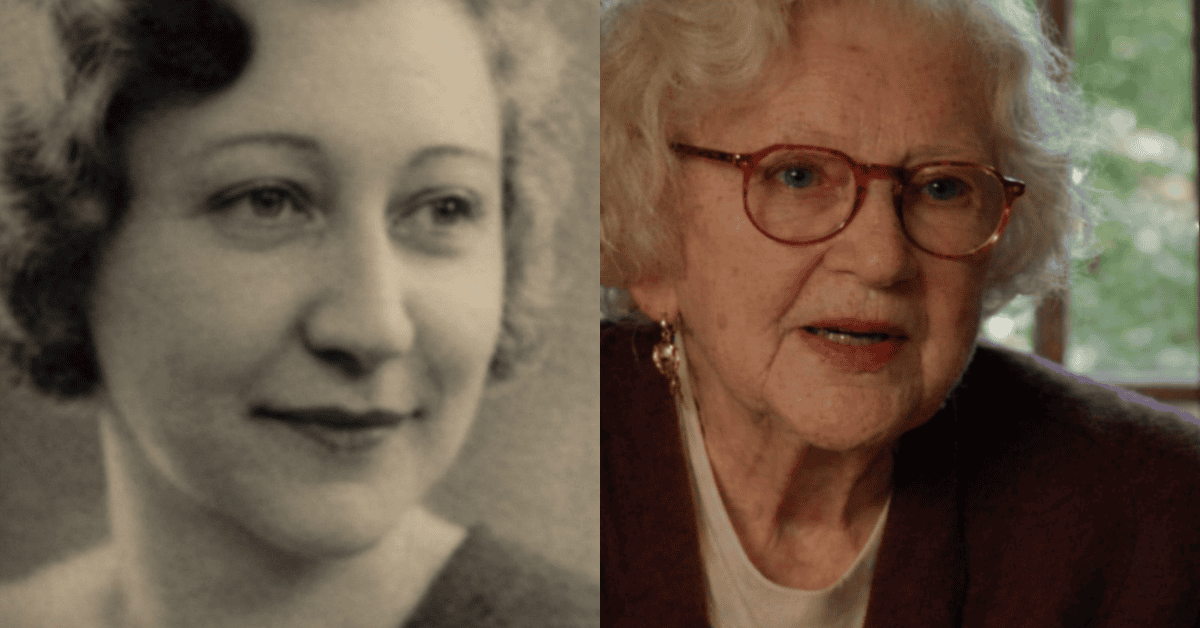
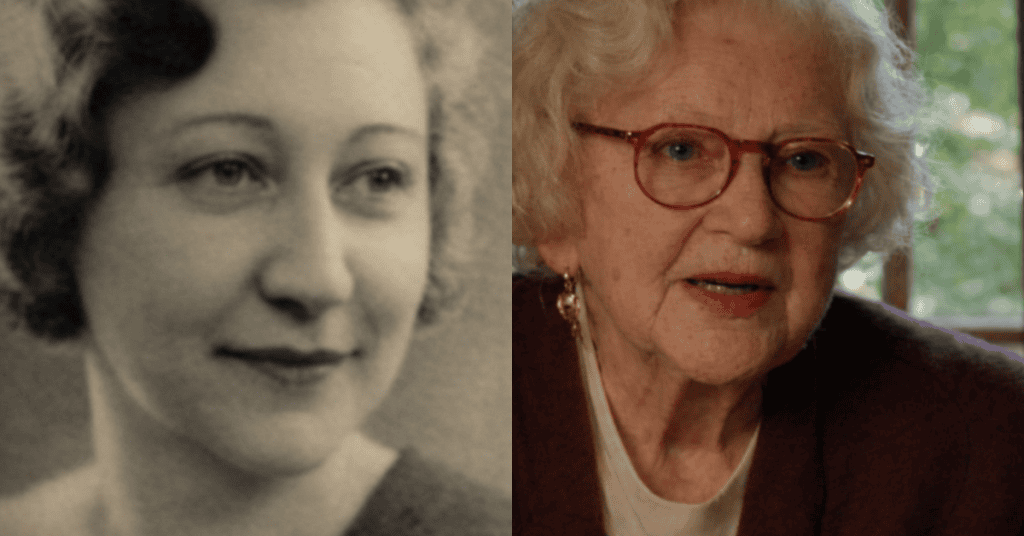
Miep Gies never set out to be a hero.
She was an ordinary office worker living in Amsterdam when the Nazis occupied the Netherlands during World War II. Like millions of others, she faced shortages, fear, and constant surveillance. Unlike most, she chose to act quietly, consistently, and without expectation of recognition.
In 1942, Miep and her husband Jan agreed to help Otto Frank and his family go into hiding. The decision carried a simple consequence if discovered: execution. There were no protections, no rewards, and no guarantees of survival.
Still, she said yes.
For more than two years, Miep helped hide Anne Frank, her family, and four others in a secret annex above Otto Frank’s office. Every weekday, she went to work as usual. In between, she brought food, books, news, and comfort to the people living in silence just a few feet above her.
She never framed her actions as bravery.
She later said she did what anyone with a conscience would do.
But the risks were constant. Food was rationed. Neighbors watched closely. Any knock on the door could mean arrest. Miep learned to control her fear, knowing that panic could cost eight lives.
In August 1944, the hiding place was betrayed.
The Franks and the others were arrested and deported. Miep arrived at the annex shortly after the raid. The rooms were ransacked. Papers were scattered across the floor. Evidence of life of thought was everywhere.
She could have walked away.
Instead, she gathered what remained.
Among the papers was Anne Frank’s diary.
Miep saved it without reading it, believing she would return it to Anne after the war. She did not know Anne would die in Bergen-Belsen. She did not know the diary would become one of the most important documents of the 20th century.
After the war, Miep gave the diary to Otto Frank, the sole survivor of the annex. He later published it, honoring his daughter’s wish to be a writer.
The world would come to know Anne Frank.
But Anne herself knew Miep simply as someone who showed up.
Miep Gies never sought praise. Even after the diary became famous, she resisted the word “hero.” She insisted that bravery belonged to those who died resisting, not those who survived helping.
Yet her role mattered profoundly.
Without Miep, the diary might have been destroyed. Without her, Anne’s voice might have vanished with the millions of others the Nazis tried to erase.
Miep Gies lived to be 100 years old.
Her legacy is not loud or dramatic. It is steady. It is the reminder that history is often preserved not by the powerful, but by ordinary people who choose decency when cruelty becomes law.
She did not fight with weapons.
She fought with presence.
And because of her, the world still hears a young girl’s voice—speaking across generations, refusing to be silenced.