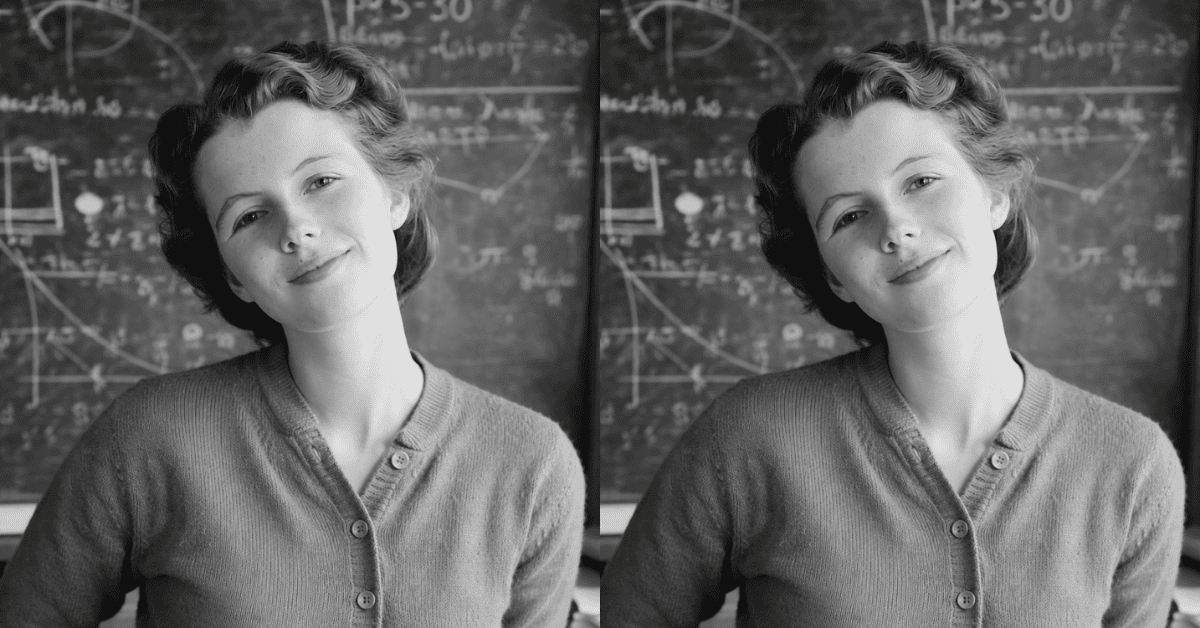
In 1941, as World War II raged across Europe and North Africa, a 19-year-old woman working in near-total secrecy helped change the course of naval warfare in the Mediterranean. Her name was Mavis Batey, and she was one of the young codebreakers at Britain’s Government Code and Cypher School at Bletchley Park.
Batey had been recruited straight from university. Like many of the women at Bletchley, she was sworn to absolute secrecy under the Official Secrets Act. The work was exhausting, highly technical, and relentless. Days blurred into nights as teams raced to decipher encrypted enemy communications before the information became useless.
One of the greatest challenges facing British intelligence was the Italian Navy’s use of the Enigma cipher machine. Similar to the more widely known German Enigma, it scrambled messages into complex codes that changed daily. Breaking it required both mathematical skill and creative insight.
In early 1941, Batey made a critical breakthrough. She identified a predictable element in Italian naval signals—an entry in a coded message that gave her and her colleagues the foothold they needed. From that opening, they were able to reconstruct the key settings for the Italian naval Enigma.
The decrypted messages revealed that the Italian fleet was planning an operation against Allied shipping near Cape Matapan, off the coast of Greece. Armed with this intelligence, the Royal Navy positioned its forces strategically.
In March 1941, during the Battle of Cape Matapan, British forces ambushed the Italian fleet at night. Using radar and the element of surprise, they inflicted devastating losses, sinking several heavy cruisers and destroyers. The victory significantly weakened Italy’s naval power in the Mediterranean and protected crucial Allied supply routes.
At just 19 years old, Mavis Batey had played a direct role in that success.
Yet for decades, no one outside a small circle knew her name. The achievements of Bletchley Park remained classified long after the war ended. Many of the women who worked there returned to ordinary lives, unable to share the extraordinary nature of what they had done.
Only later, when records were declassified, did the scale of their contribution become public. Batey went on to become a historian and later spoke about the importance of preserving Bletchley Park’s legacy.
Her story is a reminder that history is often shaped not only by generals and politicians, but by young people working quietly behind locked doors—solving problems that save lives.
At 19, Mavis Batey helped crack a code.
And in doing so, helped turn the tide of war.