
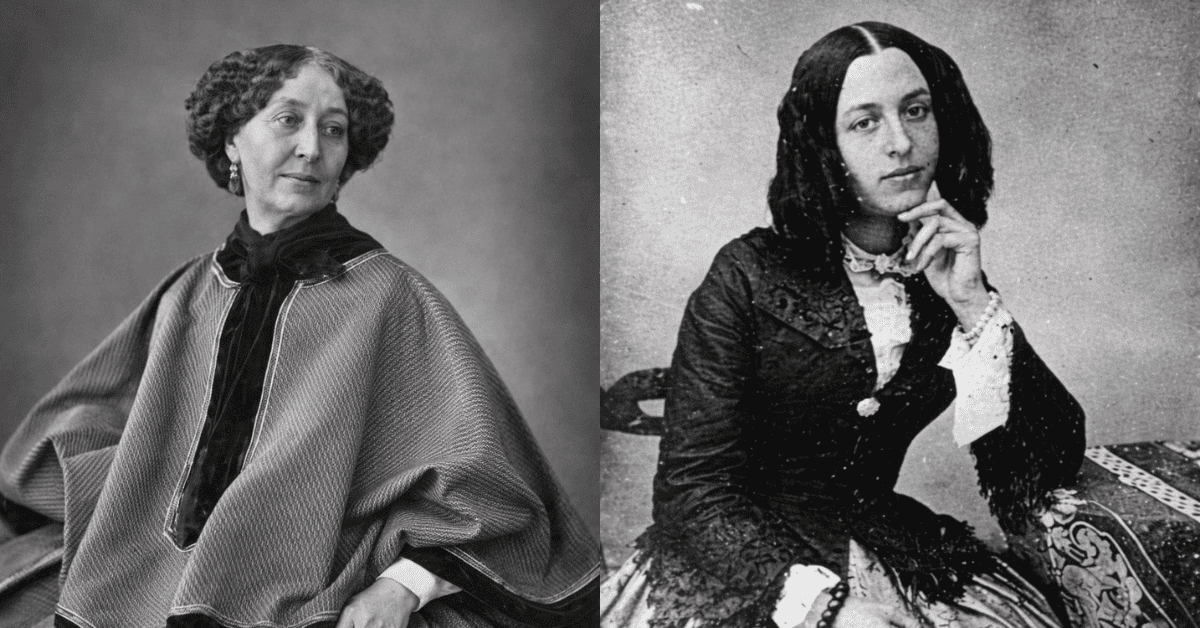
George Sand, born Amandine Lucile Aurore Dupin in 1804, became one of the most influential writers of 19th-century France- yet her literary legacy is inseparable from the bold personal choices that allowed her to build it.
In her time, French law required women to obtain special police permission to wear men’s clothing. Trousers were considered improper, even illegal without authorization. For most women, the rule reinforced a larger social order: limited mobility, constant supervision, and exclusion from intellectual life.
Sand saw clothing not merely as fabric, but as access.
By adopting male attire, she gained practical freedoms. Men’s clothing was less expensive and more durable, but more importantly, it allowed her to move through Paris more freely. She could enter cafés, theaters, and intellectual circles without the same scrutiny imposed on women. In an era when reputation determined survival, that mobility was power.
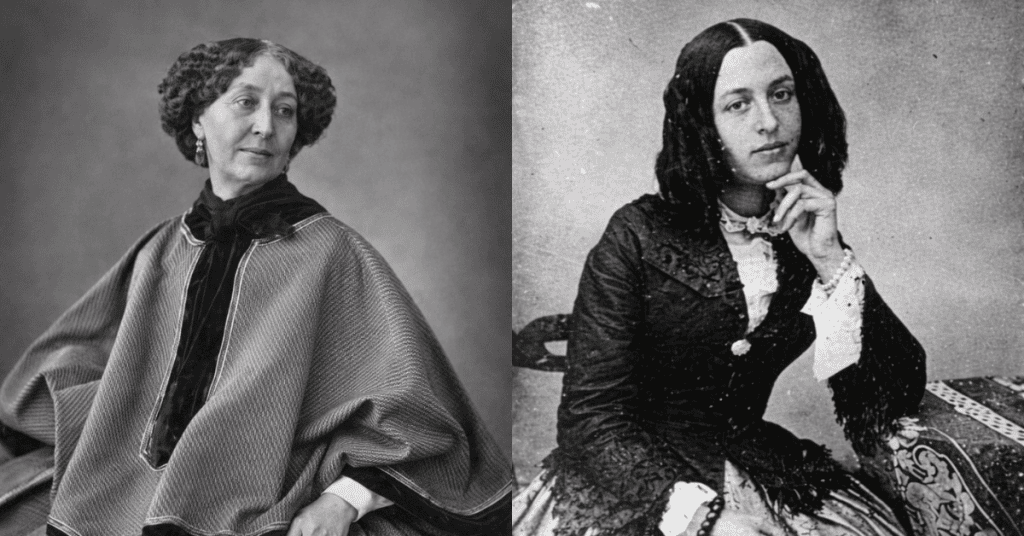
She went further. Aurore Dupin became “George Sand,” a male pseudonym that ensured her work would be judged more seriously in a literary marketplace dominated by men. Female authors were often dismissed as sentimental or trivial. Sand’s chosen name disrupted those assumptions before a single page was read.
Her writing was prolific and ambitious. Over her lifetime, she authored more than 70 novels, along with plays, essays, political texts, and memoirs. Her works explored themes of social justice, rural life, romantic independence, and women’s autonomy. She challenged traditional marriage norms, questioned rigid gender roles, and expressed sympathy for working-class struggles.
Sand was also known for her high-profile relationships, including her affair with composer Frédéric Chopin. Unlike many women of her era, she lived openly, loved publicly, and refused to conform to expectations of quiet domesticity.
Critics often attacked her personal life more than her writing. She was labeled scandalous, immoral, even dangerous. Yet her readership continued to grow. Her ability to combine storytelling with political and social commentary made her one of the most widely read authors in Europe during her lifetime.
George Sand did not disguise herself to disappear.
She transformed herself to be seen.
By reshaping her identity, she carved out space in a system designed to exclude her. Her rebellion was not loud protest in the streets—it was strategic, deliberate, and sustained through words.
Today, she stands not only as a literary giant of French Romanticism, but as a symbol of how identity itself can become a tool of resistance.
George Sand didn’t simply wear trousers.
She wore freedom—and wrote it into history.