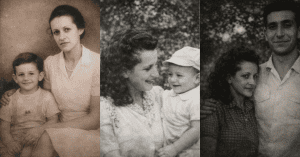
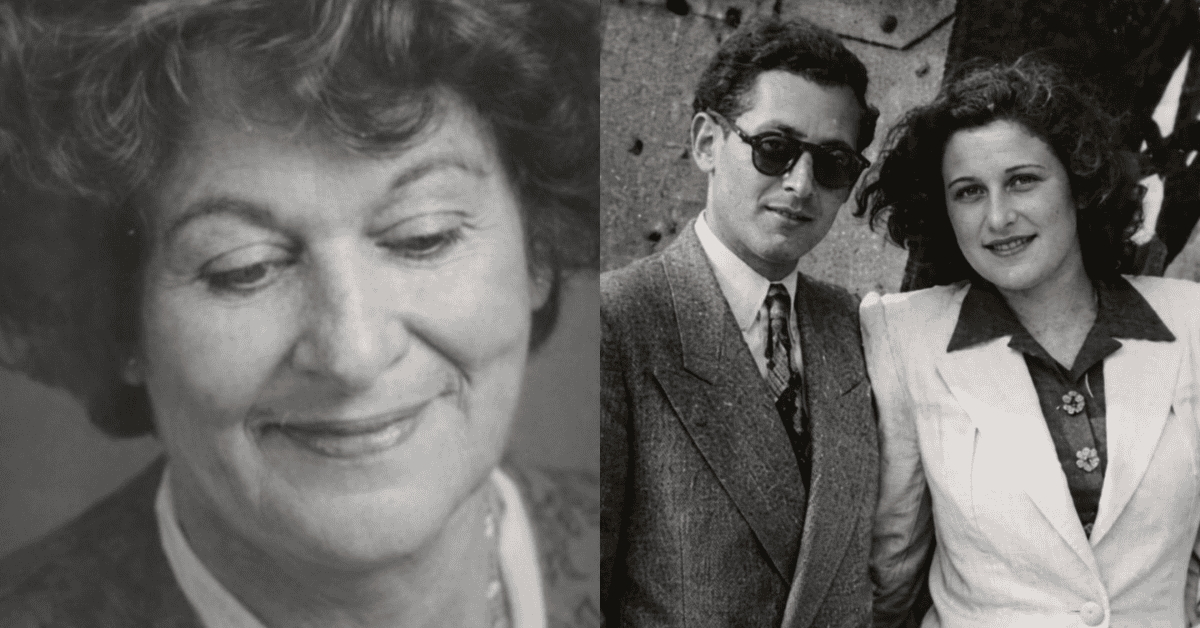
On May 7, 1945, as the Second World War in Europe came to an end, Gerda Weissmann Klein stood at the edge of survival itself. She was 20 years old, alone, and weighed just 68 pounds. Her body was exhausted beyond measure after a 350-mile death march through winter, hunger, and loss. Most of her family had been murdered in the Holocaust.
She did not know what her future would be only that she was still alive.
That day, American forces arrived in Volary, Czechoslovakia. Among them was Lieutenant Kurt Klein, a German-born Jewish American who had fled Nazi persecution years earlier and returned to Europe as a U.S. Army intelligence officer.
When he encountered Gerda, she was standing outside a factory, weak and barely able to comprehend that liberation had truly come.
As the story goes, Kurt held a door open for her.
It was a small gesture. Ordinary. Human. After years of brutality and dehumanization, it felt extraordinary.
Gerda later said that in that moment, her sense of humanity returned. Not because the war was over—but because someone treated her with dignity again.
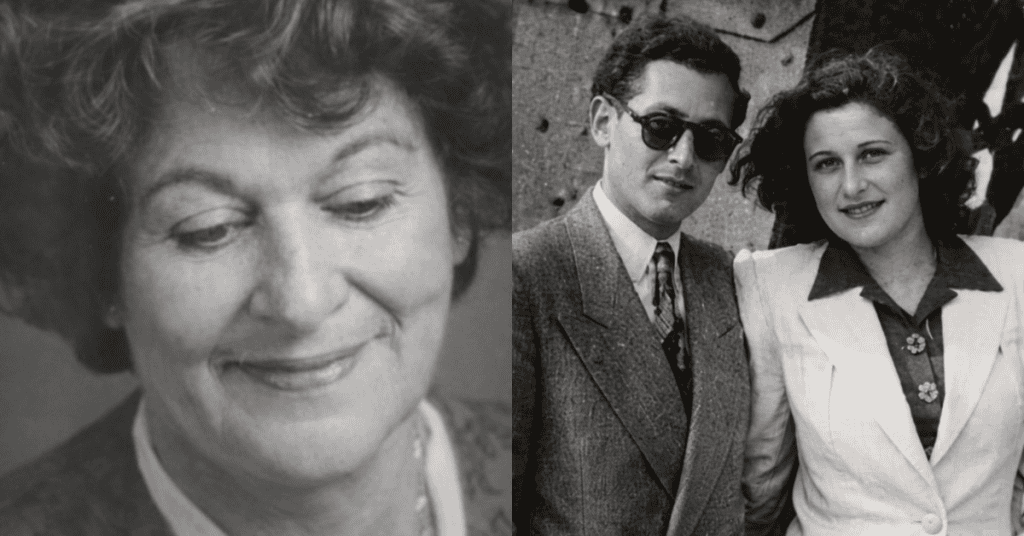
Their connection grew slowly. Gerda was recovering physically and emotionally, learning how to live after surviving what should have been impossible. Kurt, who had lost family to the same regime that had imprisoned her, understood without needing explanation.
A year later, on June 18, 1946, they married in Paris.
What followed was not just a love story, but a life of purpose.
Gerda and Kurt settled in the United States and spent the next 56 years together. Gerda became one of the most influential Holocaust educators in the world. She spoke to students, world leaders, and millions through her memoir All But My Life. Her testimony helped preserve memory, truth, and humanity in the face of denial and forgetting.
Kurt supported her mission quietly, consistently, believing that remembrance was a responsibility not a choice.
Gerda often emphasized that survival did not mean forgetting. It meant bearing witness. She spoke not only about suffering, but about kindness the rare, fragile moments that helped people endure.
The door Kurt held open became symbolic. Not of romance alone, but of restoration. After years of being hunted, starved, and stripped of identity, Gerda was seen again as a person.
Their marriage lasted until Kurt’s death in 2002. Gerda continued her work until her own passing in 2022, never wavering in her belief that stories matter especially the ones rooted in truth.
Their meeting at liberation reminds us that history is not only shaped by violence, but by what comes after.
Sometimes, the first step toward healing isn’t freedom itself.
It’s a door held open and the life that follows.