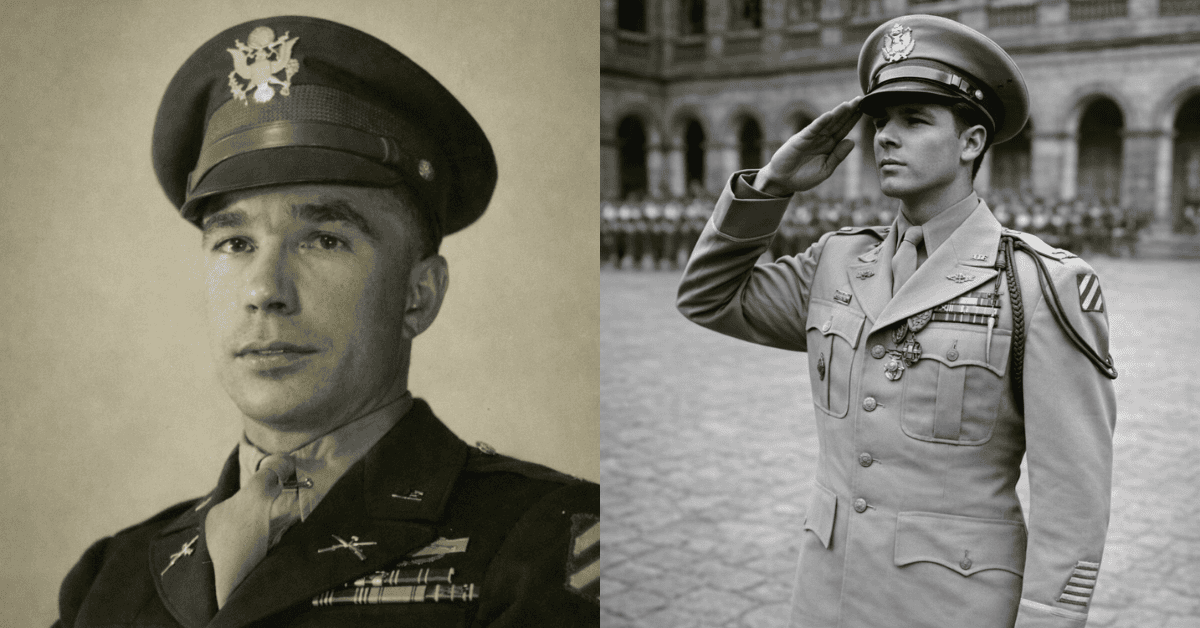
In January 1945, near the town of Houssen, France, First Lieutenant Garlin Murl Conner made a decision few soldiers could imagine.
German forces were advancing. His unit, part of the U.S. 3rd Infantry Division, was under heavy attack. Conner had already been wounded multiple times earlier in the war. That day, he was again hit and bleeding. But retreat was not an option. The German assault threatened to overrun his battalion.
Conner crawled forward under intense enemy fire to an exposed observation point. From there, he could see German troops massing for attack. Communication lines were fragile. Time was collapsing.
He made a choice that would define his life.
Conner directed American artillery fire onto his own position.
The explosions landed so close that shrapnel and debris tore through the area around him. The risk was enormous. A slight miscalculation could have killed him instantly. But the barrage halted the German advance. The assault broke. His battalion held its ground.
He survived the artillery strikes he had ordered.
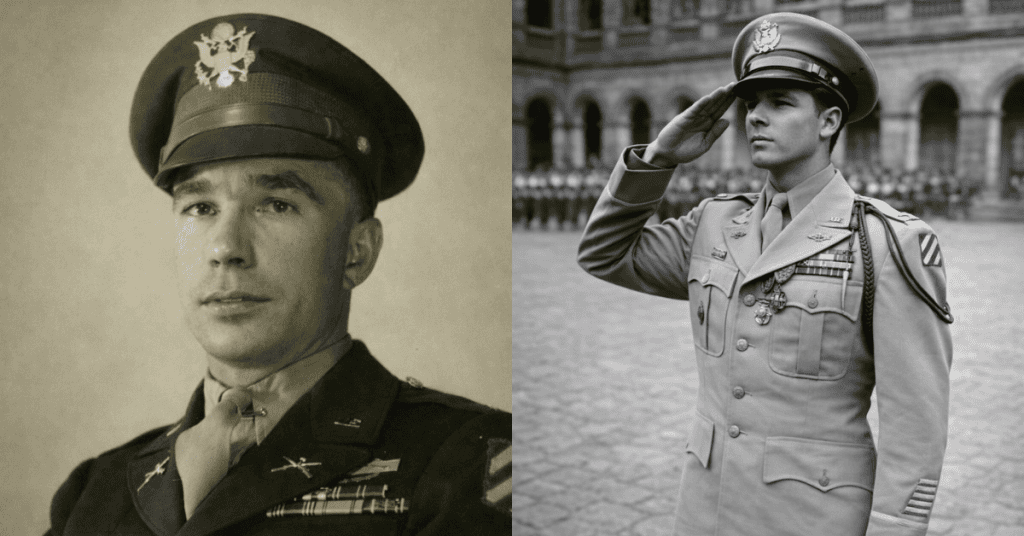
By the end of World War II, Garlin Murl Conner had become one of the most decorated American soldiers of the conflict. He received the Distinguished Service Cross, multiple Silver Stars, Bronze Stars, and Purple Hearts. Yet the Medal of Honor—the nation’s highest military award—never came.
The recommendation paperwork was reportedly lost or misplaced in the postwar years.
For decades, his actions remained largely unknown outside military circles. Conner returned to Kentucky, lived quietly, and rarely spoke about the war. He did not campaign for recognition.
But his wife, Pauline Conner, believed the full story deserved to be told.
Years after his death in 1998, she began pushing for a formal review. She gathered records, tracked down witnesses, and worked through layers of military bureaucracy. It was a long, exhausting effort that took nearly two decades.
Finally, in 2018—73 years after the battle President Donald Trump posthumously awarded Garlin Murl Conner the Medal of Honor. Pauline accepted it on his behalf at the White House.
The citation recognized what had happened in that frozen French field in 1945: a wounded officer had deliberately called artillery onto himself to save hundreds of men.
Garlin Murl Conner never sought fame. He did not tell his story loudly. But history eventually caught up with him.
It took 73 years.
But the record was corrected.