
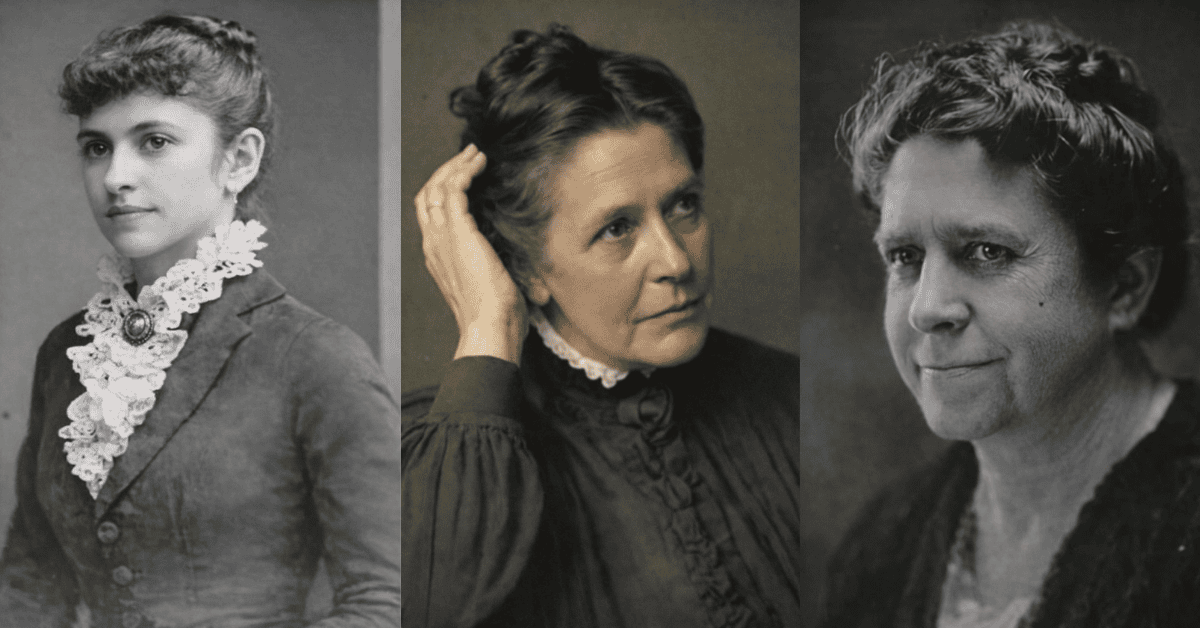
When women began entering factories in large numbers in the late 19th and early 20th centuries, industrial progress came with a brutal cost.
Factories were designed for output, not for human bodies especially not women’s bodies. There was often no clean drinking water, no proper ventilation, no toilets, and no place to wash. Long hours, cramped spaces, and filth were treated as normal. Illness was blamed on workers themselves, not on the conditions they endured.
Florence Kelley refused to accept that lie.
Born in 1859, Kelley was a social reformer, lawyer, and one of the most relentless advocates for working-class women and children in American history. She believed that poverty and disease were not moral failures they were policy failures.
While others debated theory, Florence gathered evidence.
She investigated factories, sweatshops, and tenements, documenting conditions most people in power never saw. She exposed how the lack of sanitation led directly to disease, disability, and death among women who had no choice but to keep working. Tuberculosis, infections, and exhaustion were common. Pregnancy made conditions even more dangerous.
Florence Kelley made the invisible visible.
As the first chief factory inspector of Illinois, she used her position to push for enforcement not just recommendations. She argued that sanitation was not a luxury or a courtesy. It was survival. Clean water, restrooms, and basic hygiene were not special treatment they were the minimum required for life.
Her work helped lead to groundbreaking labor reforms, including limits on working hours for women, child labor laws, and improved workplace standards. She later became a leader of the National Consumers League, using public pressure to hold companies accountable for how their workers were treated.
What made Kelley dangerous to those in power was her clarity.
She connected sanitation to equality. If women were expected to work like men, they deserved workplaces that did not destroy their bodies. If society profited from their labor, it was responsible for their safety.
These ideas were radical at the time.
Business owners accused her of exaggeration. Politicians warned that reforms would hurt productivity. Florence Kelley responded with data, testimonies, and persistence. She didn’t frame her arguments as charity. She framed them as justice.
Over time, her work reshaped labor law in the United States. Standards for sanitation, safety, and worker protection became expectations rather than afterthoughts. What once seemed unreasonable became obvious.
Florence Kelley didn’t just improve factories.
She changed how society understood responsibility.
She showed that when systems make people sick, the problem isn’t weakness it’s design. And she proved that dignity at work begins with something as simple, and as powerful, as clean water and a place to wash your hands.
Sanitation became a right.
And with it, a step toward equality.