During the Vietnam War, thousands of military working dogs served alongside American troops, forming bonds that went far beyond duty. These dogs were not just animals trained for war—they were protectors, companions, and often the difference between life and death. It is estimated that dog-handler teams helped save around 10,000 U.S. servicemen, detecting ambushes, locating hidden enemies, and warning soldiers of danger long before it was visible.
These dogs were trained for highly specialized tasks. Some were scout dogs, moving ahead of patrols to detect enemy presence. Others were sentry dogs, guarding bases at night, alert to the slightest unfamiliar sound or movement. Their senses – especially smell and hearing- gave them an edge no human could match. Handlers trusted them completely, often forming deep emotional connections in the harsh and unpredictable conditions of jungle warfare.
For many soldiers, their dog was more than a partner—it was a lifeline. Stories from veterans often describe how these animals saved entire units from walking into deadly traps. In a war where danger was constant and often invisible, these dogs brought a level of security that machines and weapons could not provide.
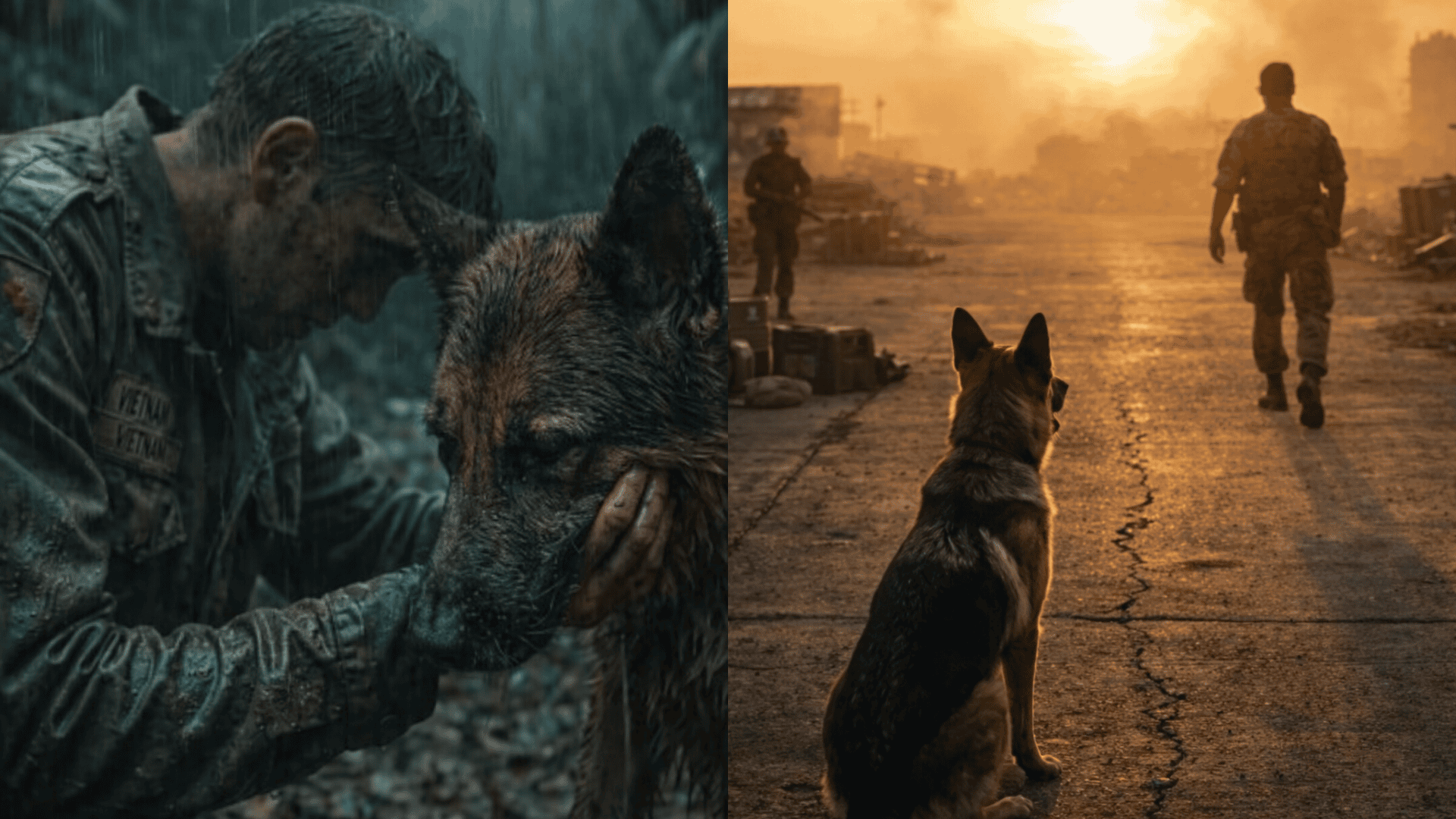
However, the end of the war brought a heartbreaking outcome for many of these loyal animals. Despite their service, military working dogs were officially classified as “equipment” by the U.S. government at the time. This designation had devastating consequences. Out of approximately 5,000 dogs that served in Vietnam, only about 200 were brought back to the United States.
The remaining dogs faced grim fates. Around 2,000 were euthanized, while many others were left behind in Vietnam, often handed over to local forces or simply abandoned. For the handlers who had fought beside them and relied on them, this was a painful and deeply emotional loss. Many soldiers tried to adopt or bring their dogs home, but were denied due to military policy.
In later years, this chapter of history sparked widespread criticism and reflection. Veterans and animal advocates pushed for change, arguing that these dogs deserved recognition and humane treatment for their service. Over time, policies evolved, and today military working dogs are more likely to be retired and adopted rather than abandoned.
The story of Vietnam War dogs is both inspiring and tragic. They served with loyalty, courage, and unwavering dedication, saving thousands of lives. Yet, their fate reminds us of how easily even the most loyal heroes can be overlooked. Today, they are remembered not just as tools of war, but as silent warriors who stood beside soldiers when it mattered most.