
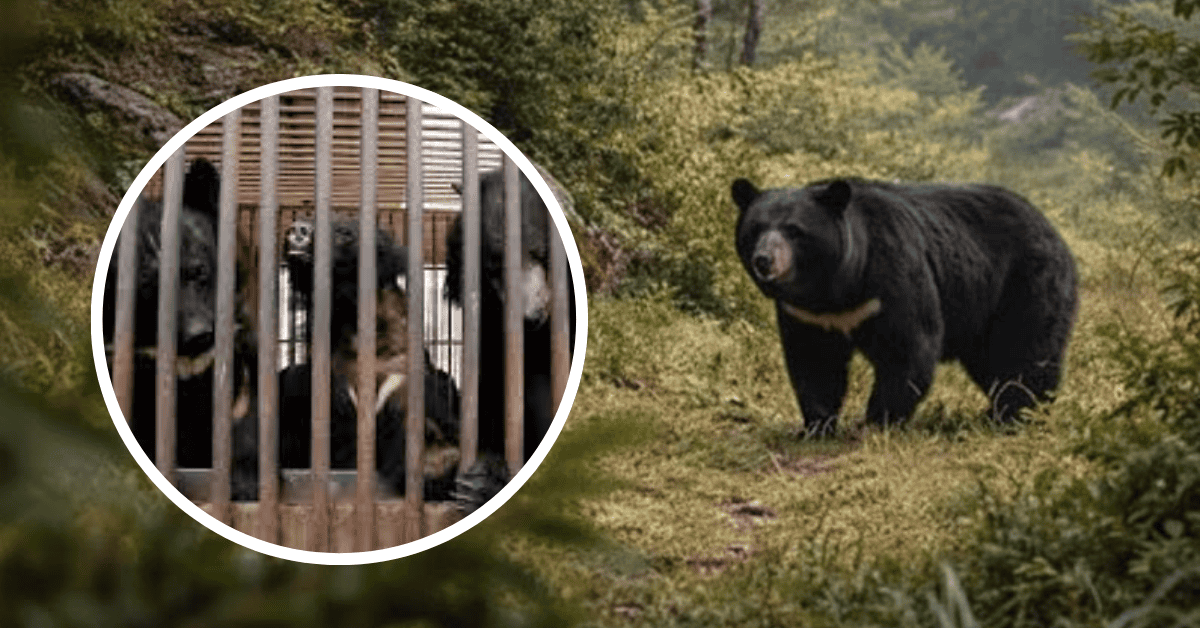
It took more than forty years to stop something that, deep down, everyone already knew was wrong.
In South Korea, bear bile farming was once legal, regulated, and quietly accepted. For decades, Asiatic black bears were kept in captivity so their bile could be harvested for traditional medicine. The practice began in the early 1980s, a time when alternatives were limited, and regulations focused more on maintaining supply than on preventing animal suffering. Bears spent years confined in small steel cages, often enduring repeated extraction of bile while living in unnatural conditions.
Over time, however, public awareness began to shift. Animal welfare organizations documented the cruelty of the practice, publishing shocking images and reports that revealed the long-term suffering these animals endured. At the same time, modern medicine was evolving. Synthetic alternatives to the active compound in bear bile were widely available in hospitals, making the continued use of live bears medically unnecessary. The industry, once justified by tradition and perceived medical need, was becoming increasingly indefensible.
The turning point came in January 2024, when the South Korean government finally passed legislation banning the breeding of bears for bile, the extraction process itself, and the slaughter of bears for this purpose. The law established a clear timeline: by January 2026, all remaining bile farms must close. The government also pledged funding to compensate farmers who depended on the industry for their livelihoods and to relocate surviving bears to sanctuaries where they could live out their lives safely.
This change did not happen overnight. It was not a sudden moral epiphany but a long-delayed recognition that the system had outlived its purpose. The law does not erase the suffering of the past, but it ensures that the future will be different. For the bears, it represents a chance at freedom and dignity; for society, it is a step toward aligning tradition with compassion.
South Korea’s decision also carries significance beyond its borders. In many parts of the region, similar practices continue. By taking decisive action, South Korea has shown that traditions can evolve without cultural collapse and that progress, though sometimes slow, can be permanent.
This story reminds us that change is often incremental. It may take decades for society to confront uncomfortable truths, even when everyone already senses that something is wrong. Yet when awareness, science, and compassion converge, even long-standing injustices can be corrected. For the bears who will never know the fear of bile extraction again, and for the society that finally said “enough,” this law marks the quiet but enduring triumph of empathy over custom.