On November 25, 1963, a quiet stillness settled over Washington, D.C., as the nation gathered to say goodbye to President John F. Kennedy. Just three days earlier, his assassination had stunned the world, leaving behind grief that felt both deeply personal and overwhelmingly public. Now, under a gray sky, America watched as the funeral procession moved slowly through the capital.
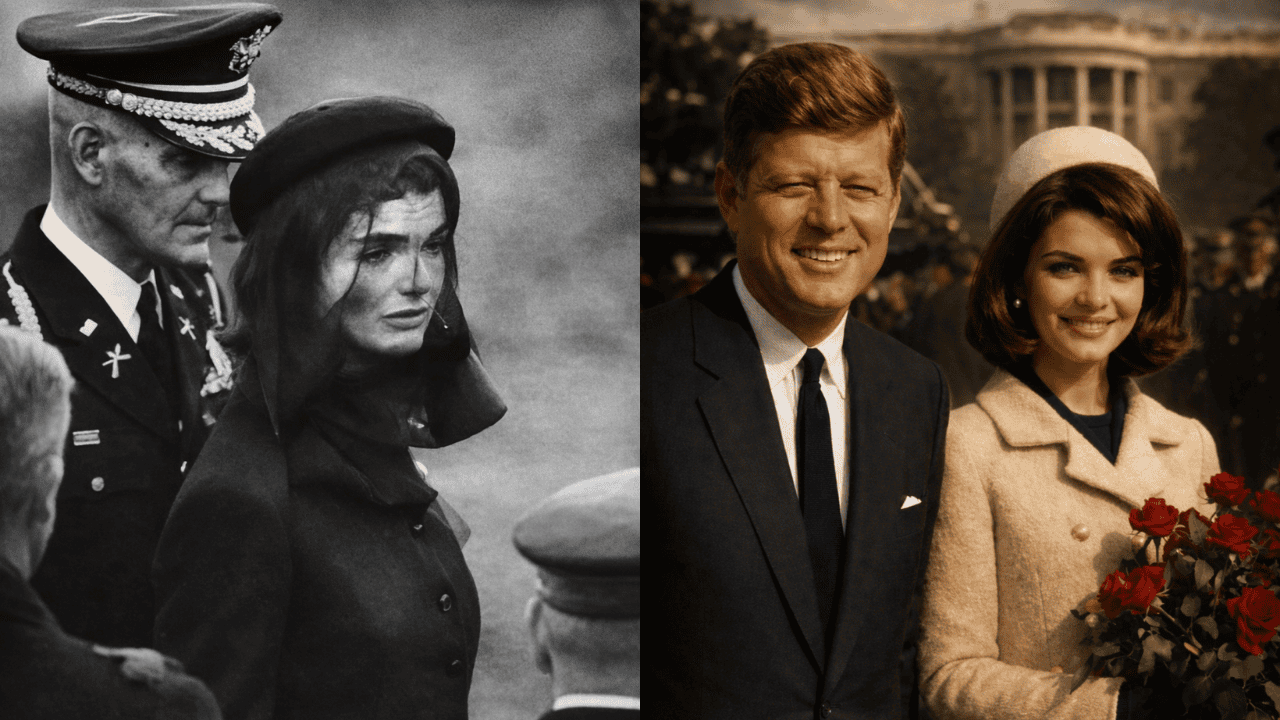
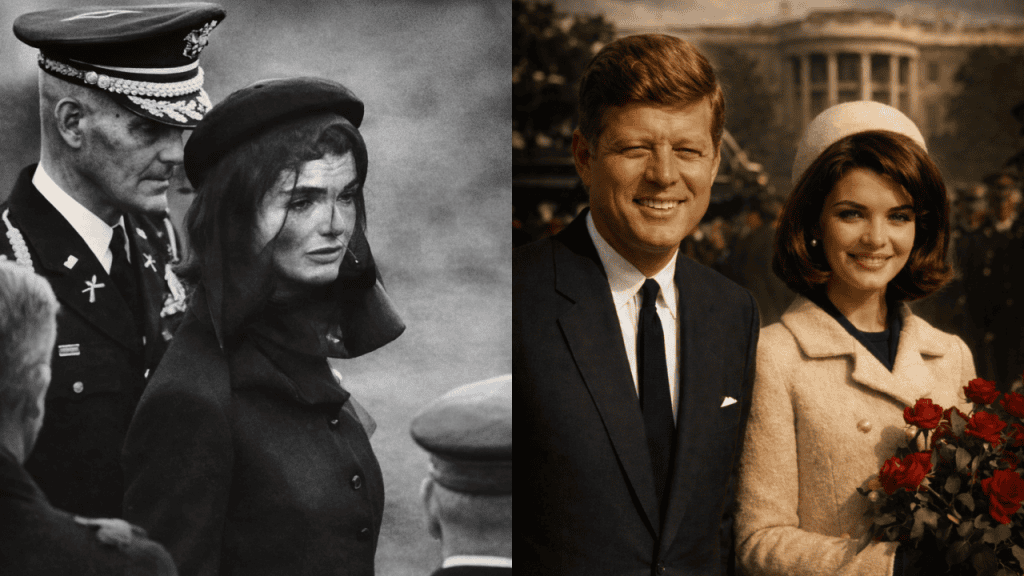
At the center of it all was Jacqueline Kennedy.
In the days following the tragedy, she had made a series of deliberate choices ones that would shape how the moment would be remembered. Drawing inspiration from Abraham Lincoln’s funeral, she understood the power of ritual and symbolism. This was not just a farewell for a president; it was a moment that would define how a nation mourned.
She chose to walk.
Behind the caisson carrying her husband’s flag-draped coffin, Jacqueline Kennedy stepped forward into the public eye, not out of obligation, but with purpose. Dressed in black, her face partially veiled, she became a symbol of composure in the midst of unimaginable loss. Every step she took was watched by millions, yet she moved with quiet dignity, transforming her grief into something the nation could hold onto.
The procession itself was filled with meaning.
A riderless horse followed, boots reversed in the stirrups a long-standing military symbol of a fallen leader. The steady beat of drums echoed through the streets, marking time in a way that felt both solemn and unending. At Arlington National Cemetery, the eternal flame was lit, a gesture Jacqueline herself had insisted upon, ensuring that Kennedy’s memory would endure beyond that day.
And then, there was a moment no one had planned.
As the ceremony unfolded, John F. Kennedy Jr., just three years old, stepped forward and raised his hand in a small, simple salute to his father’s coffin. It lasted only a second, but it carried a weight that words could not express. In that gesture, the personal loss of a family became something the entire country could feel.
The funeral was not only about mourning it was about steadiness.
In a time when shock and sorrow threatened to overwhelm, Jacqueline Kennedy’s presence offered something else: a sense of order, of grace, of quiet strength. She did not speak often, but her actions spoke clearly. She shaped the moment not through grand statements, but through careful choices that allowed a grieving nation to come together.
November 25, 1963, became more than a date of remembrance. It became a reflection of how dignity can exist alongside grief, how loss can be honored with purpose, and how even in the darkest moments, there can be a sense of unity.
In the silence of that day, America did not just say goodbye.
It learned how to mourn.