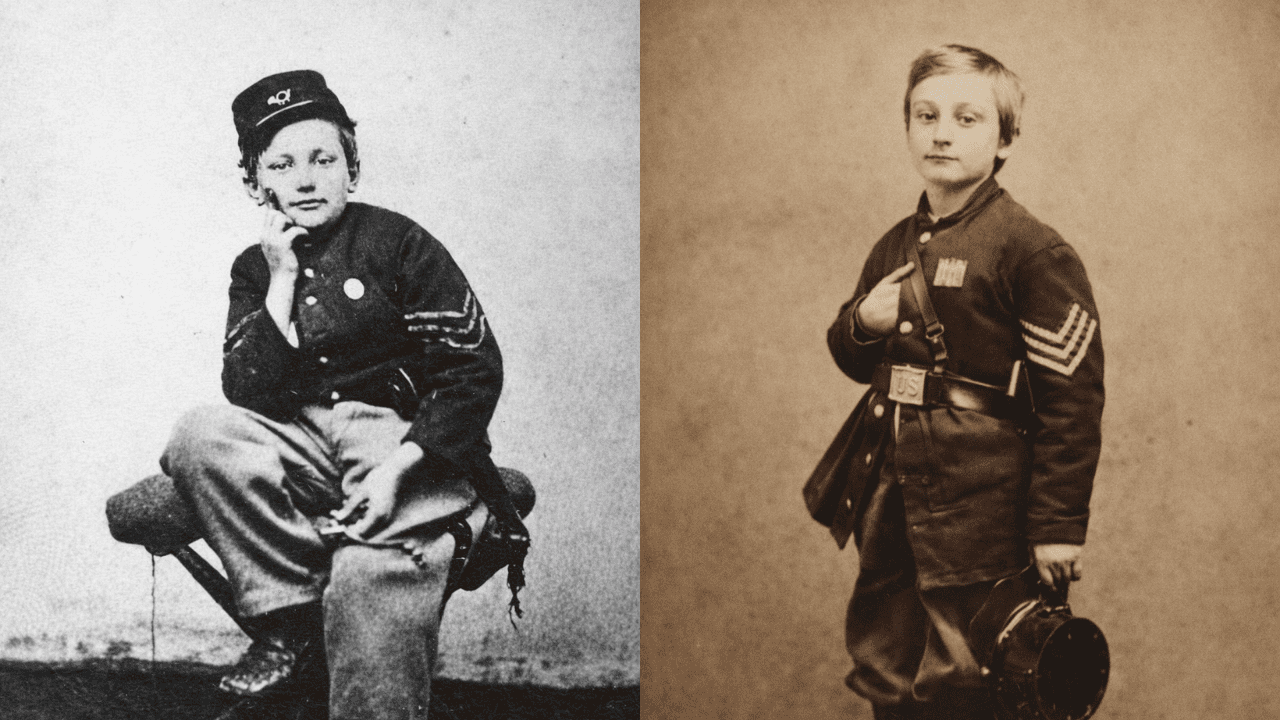
In 1861, as the United States descended into the chaos of the Civil War, thousands of men answered the call to fight. Among them though far younger than anyone expected was a determined boy named John Lincoln Clem.
He was just nine years old.
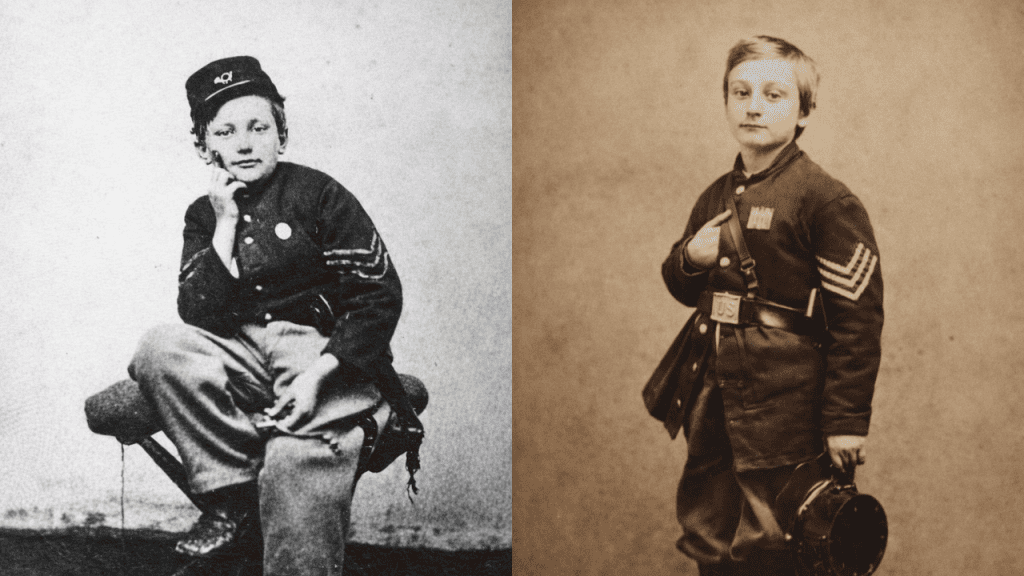
Too small to enlist and far too young for war, Clem was turned away when he tried to join the Union Army. But refusal did not stop him. Instead of going home, he stayed close to the soldiers, following them, helping where he could. Eventually, he found a place among them not as a soldier at first, but as a drummer boy, carrying rhythms that kept men marching and spirits steady.
Life in camp was no place for a child, yet Clem adapted quickly. Soldiers took him under their wing, and in time, he became part of the unit. He learned their routines, their hardships, and the constant presence of danger that defined their days.
But Clem was not content to remain on the sidelines.
By the time he was twelve, the war had already hardened him. During the Battle of Chickamauga in 1863 one of the fiercest and bloodiest battles of the conflict Clem found himself in the middle of combat. Armed with a sawed-off musket, he stood alongside grown men as the fighting closed in.
At some point during the chaos, a Confederate officer reportedly demanded his surrender.
Clem’s response was not what anyone expected from a boy his age.
He fired.
The shot struck the officer, allowing Clem to escape and continue moving with Union forces as the battle raged around him. It was a moment that would become part of his legend a story of courage that seemed almost impossible given his age.
In the aftermath, Clem’s actions brought recognition. He was promoted to sergeant, becoming one of the youngest noncommissioned officers in U.S. Army history. For many, he became known as the “Drummer Boy of Chickamauga,” a symbol of youthful bravery in a war that demanded far too much from everyone it touched.
But his story did not end there.
Clem remained connected to military life long after the war. As an adult, he formally joined the U.S. Army and went on to serve for decades, building a career that extended far beyond his childhood beginnings. He eventually retired as a brigadier general, a remarkable journey from the boy who had once been turned away for being too small.
John Clem’s story captures something rare the determination to belong, to serve, and to stand firm even when the world says you are too young, too small, or not ready.
In a war defined by sacrifice, his courage stood out not because he was expected to fight—but because he chose to.