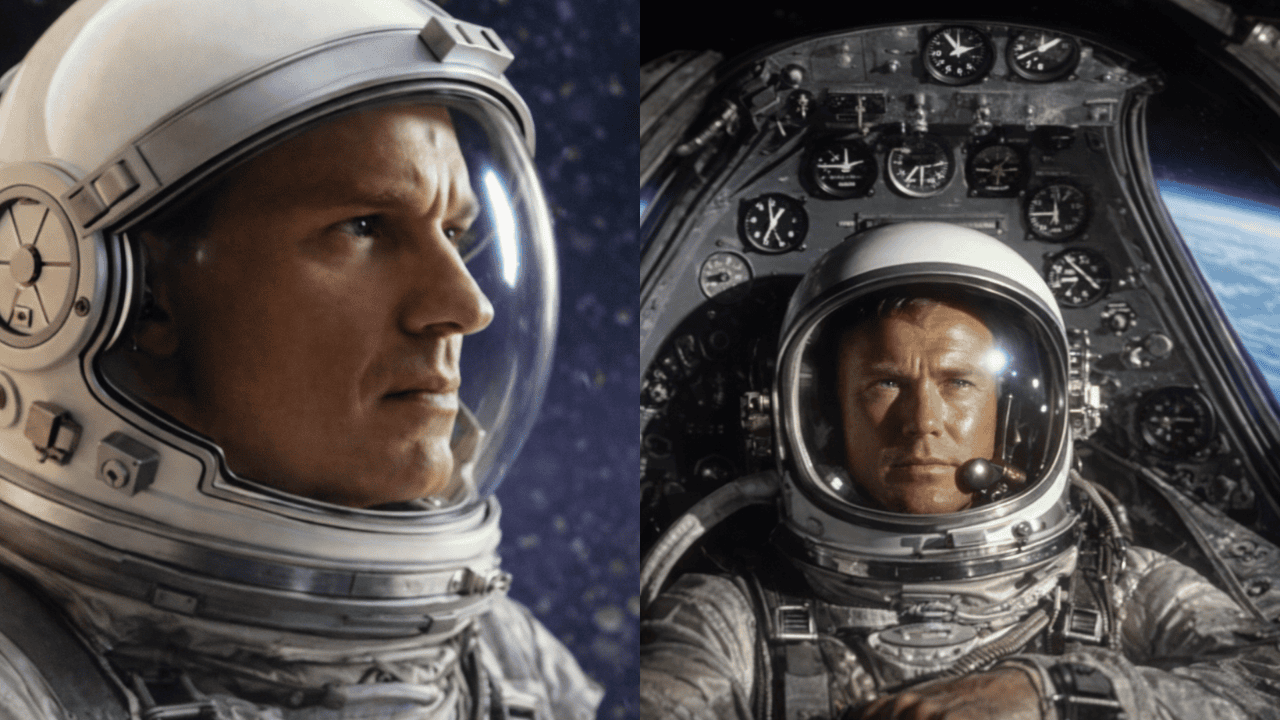
In May 1963, astronaut Gordon Cooper sat alone inside a spacecraft barely larger than a phone booth, circling the Earth at nearly 17,500 miles per hour. The tiny capsule, named Faith 7, was part of NASA’s Mercury-Atlas 9 mission, the final flight of the Mercury program. For nearly a full day, everything had gone according to plan. Cooper calmly completed orbit after orbit while scientists on the ground studied how the human body responded to long periods in space.
Then the spacecraft began to break.
It started with a faulty sensor that falsely signaled the capsule was already entering Earth’s atmosphere. Soon afterward, an electrical short circuit knocked out the automatic stabilization system that kept the spacecraft properly oriented. One by one, the instruments Cooper relied on went silent. Lights blinked out. Gauges stopped responding.
Inside the cramped capsule, Cooper suddenly found himself flying a spacecraft that had effectively lost its brain.
From 160 miles below, engineers at Mission Control could only watch and advise. They could send instructions by radio, but they could not repair the failing systems. Reentry into Earth’s atmosphere required precise alignment and exact timing. If the capsule entered at the wrong angle, it could burn up like a meteor. Too shallow, and it might skip off the atmosphere and drift helplessly into space.
Cooper understood the danger immediately.
Instead of panicking, he fell back on months of intense training. With the automatic systems gone, he prepared to guide the spacecraft manually—something no astronaut had ever done during a full orbital reentry.
First, he drew simple reference marks directly onto the spacecraft’s window to help align the capsule with Earth’s horizon. Then he relied on star patterns he had memorized during training, using them as natural navigation points in the darkness of space.
Finally came the most delicate step of all: firing the retrorockets that would slow the spacecraft enough to begin its fall back to Earth.
Without functioning onboard computers, Cooper had only one timing device left—a simple wristwatch strapped to his arm.
He carefully watched the seconds tick by. Too early, and the capsule might bounce off the atmosphere. Too late, and it could plunge dangerously off course.
At exactly the right moment, Cooper triggered the retrorockets manually.
The spacecraft shuddered as the rockets fired, and Faith 7 began its fiery descent through the atmosphere. Plasma flared outside the capsule as it streaked toward the Pacific Ocean.
Minutes later, the parachutes deployed, and the capsule splashed down in the water just a few miles from the recovery ship USS Kearsarge.
It was the most accurate landing of the entire Mercury program.
On that remarkable day, Gordon Cooper proved something extraordinary. Even when sophisticated technology fails hundreds of miles above Earth, human skill, discipline, and a calm mind can still guide a fragile spacecraft—and the person inside it—safely home. 🚀