
On a warm afternoon in Los Angeles in 1951, what began as an ordinary moment turned into something unforgettable. The La Brea Tar Pits famous for preserving ancient fossils sat quietly, their dark surfaces deceptively still. To most visitors, they looked harmless. But beneath that calm exterior was thick, sticky asphalt capable of trapping anything that stepped too far.
That day, a man named Grady Johnson learned just how dangerous they were.
When his dog wandered too close and slipped into one of the pits, panic replaced hesitation. The animal struggled, sinking into the heavy tar, unable to free itself. For Johnson, there was no time to weigh the risks or consider the danger.
He jumped in after him.
The moment he entered the pit, the reality became clear. The tar wasn’t just thick it clung, pulling at every movement, tightening its grip the more he struggled. What looked like a rescue quickly became a fight for survival. Each step was harder than the last, the ground beneath him refusing to let go.
But Johnson didn’t turn back.
Focused only on reaching his dog, he pushed through the resistance, fighting against a substance that had trapped animals for thousands of years. Around him, the same natural force that had preserved mammoths and saber-toothed cats now threatened to claim him too.
Help was already on the way.
Emergency crews rushed to the scene, knowing that time mattered. Rescuing someone from the tar pits wasn’t simple it required coordination, strength, and care. Pulling too quickly could make things worse. Moving too slowly could be just as dangerous.
Against the odds, they managed to reach both man and dog.
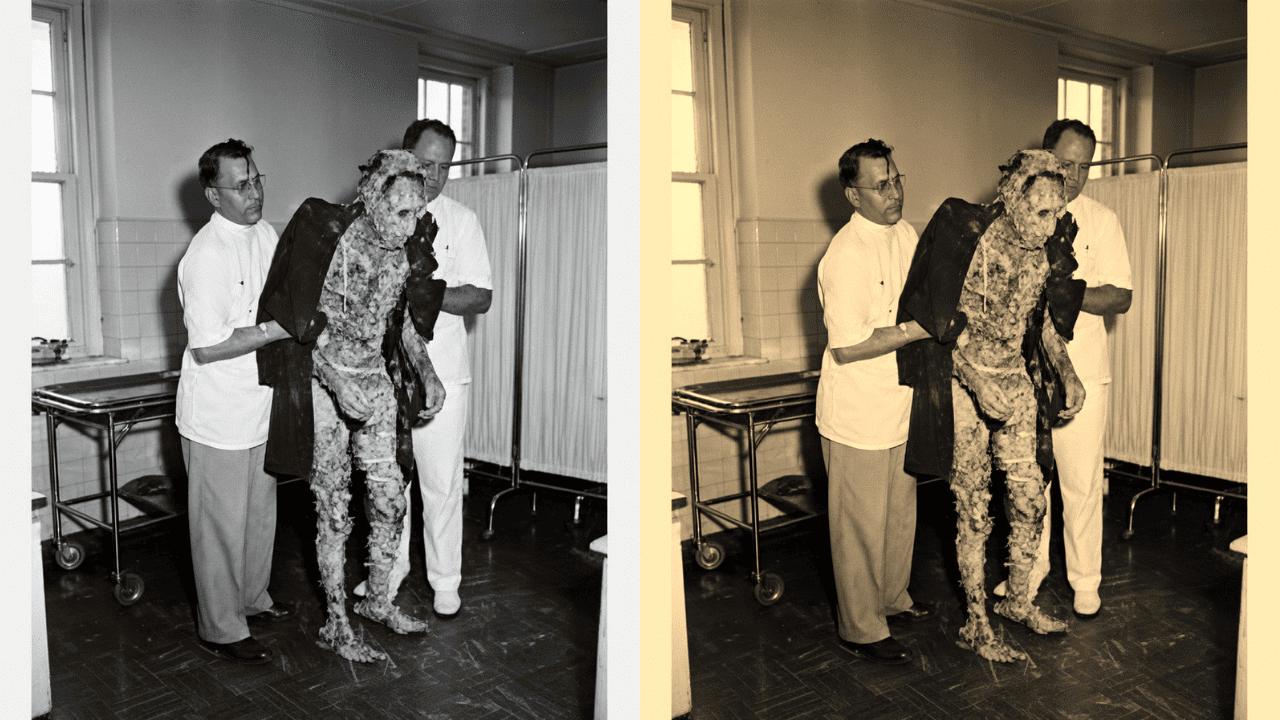
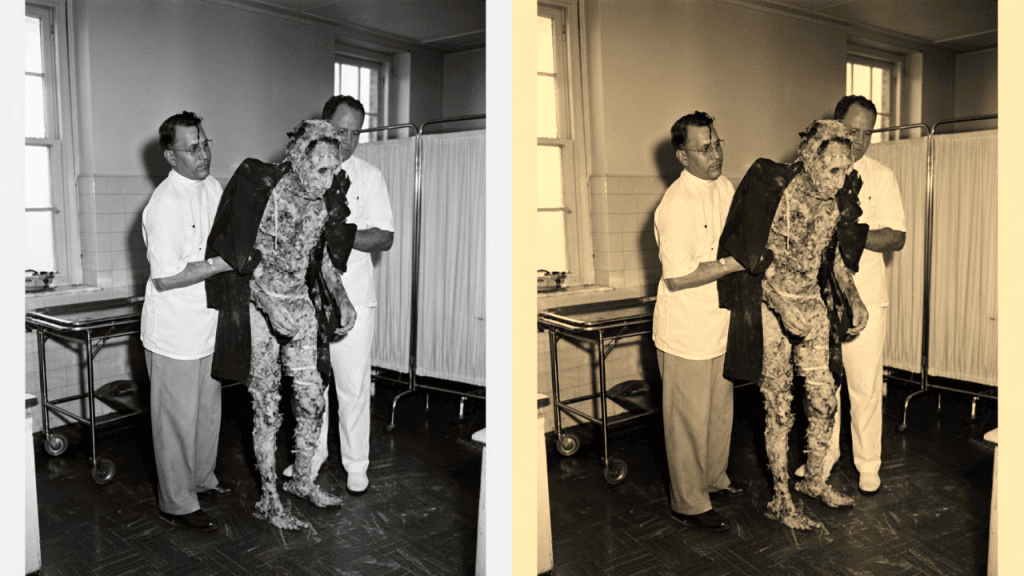
Covered head to toe in thick, black tar, Johnson was pulled free along with his pet. The image of him afterward his body coated like a living fossil would become one of the most striking reminders of what had happened that day.
Both survived.
The story of Grady Johnson is not about calculation or caution. It’s about instinct the kind that doesn’t pause to measure danger. In that moment, he didn’t see a deadly trap or think about history beneath his feet.
He saw his dog.
And that was enough.
The La Brea Tar Pits have held countless creatures over thousands of years, preserving them in time. But in 1951, they became the setting for something different not a story of loss, but of rescue.
A moment where love moved faster than fear and somehow, both made it back out.