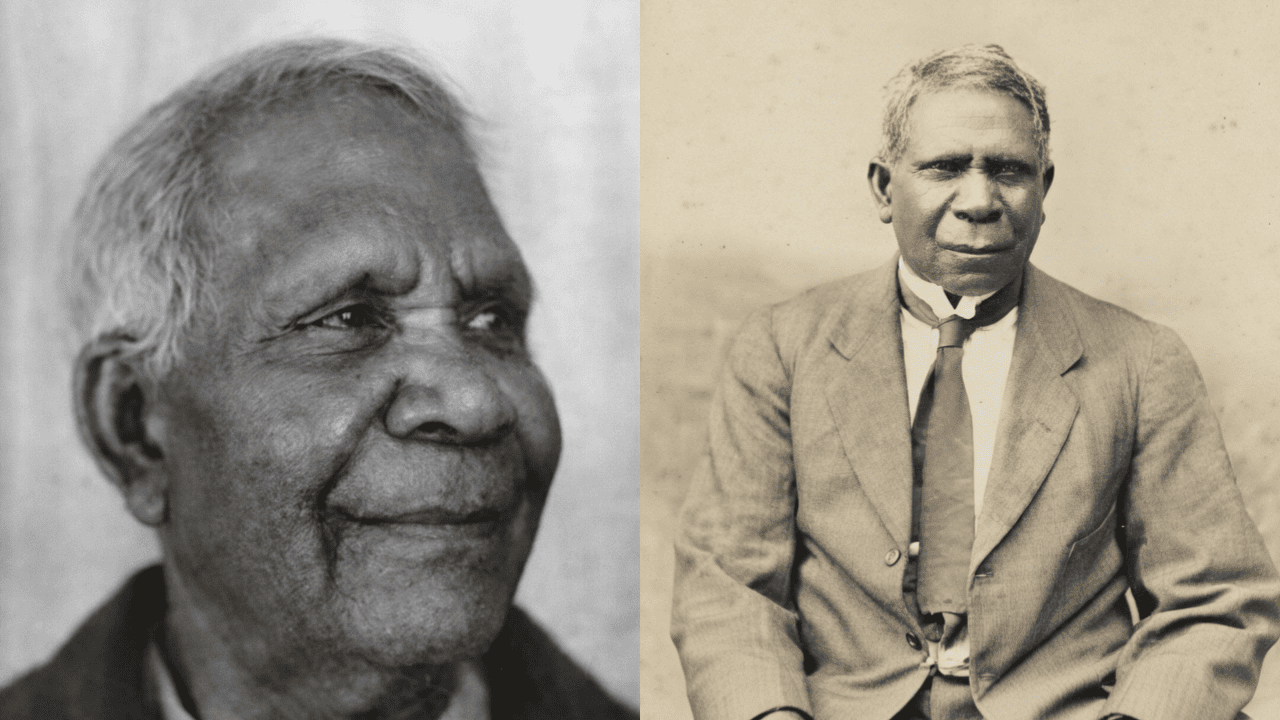
Born in 1872 on a mission station in South Australia, David Unaipon entered a world that offered him little opportunity. As an Aboriginal boy under colonial rule, his future was expected to be limited defined by restriction rather than possibility. By the age of thirteen, he was already working as a servant, his path seemingly decided for him.
But Unaipon refused to accept those limits.
In quiet moments, he educated himself. Without formal access to higher learning, he turned to books, observation, and relentless curiosity. He studied science, mechanics, and philosophy, absorbing knowledge wherever he could find it. What set him apart was not just intelligence, but imagination he saw possibilities where others saw boundaries.
Long before powered flight became common, Unaipon was already sketching ideas inspired by the movement of birds. He studied their wings, their balance, their motion through air, envisioning designs that echoed what would later become helicopter principles. Though he lacked the resources to fully develop these ideas, the thinking itself revealed a mind far ahead of its time.
His creativity extended into practical invention.
Unaipon developed a new design for sheep shearing, improving efficiency in one of Australia’s most important industries. He filed patents for his ideas, but like many Indigenous innovators of his era, he rarely received the financial recognition he deserved. His work was used, adapted, and often taken while he remained largely uncredited.
Yet invention was only part of his story.
Unaipon also became a writer, determined to preserve the stories and traditions of his people. At a time when Aboriginal voices were often ignored or silenced, he wrote about culture, spirituality, and identity. His work made him the first Aboriginal Australian author to be published in English, a milestone that carried both cultural and historical significance.
Still, recognition did not come easily.
He faced discrimination in everyday life denied accommodation, excluded from spaces others took for granted. His contributions were often overlooked, his achievements minimized. But he continued, driven not by recognition, but by purpose.
Over time, his legacy began to take shape.
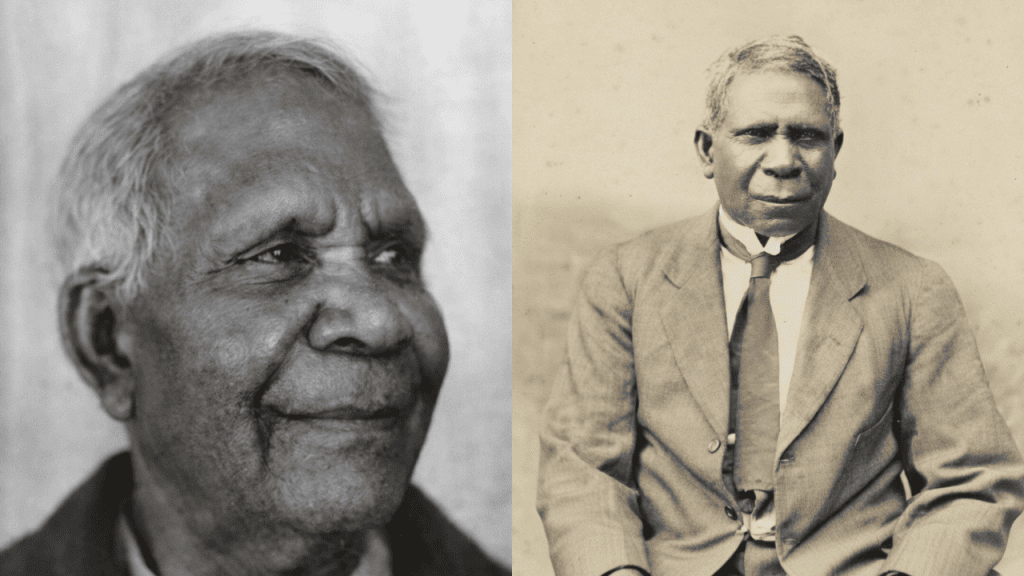
Today, David Unaipon is remembered as one of Australia’s most remarkable thinkers a man who bridged cultures, challenged limitations, and pursued knowledge in the face of systemic barriers. His image now appears on the Australian fifty-dollar note, a quiet but powerful acknowledgment of a life once pushed to the margins.
His story is not just about invention or intellect. It is about persistence.
In a world that tried to define him by what he could not do, David Unaipon spent his life proving what he could.