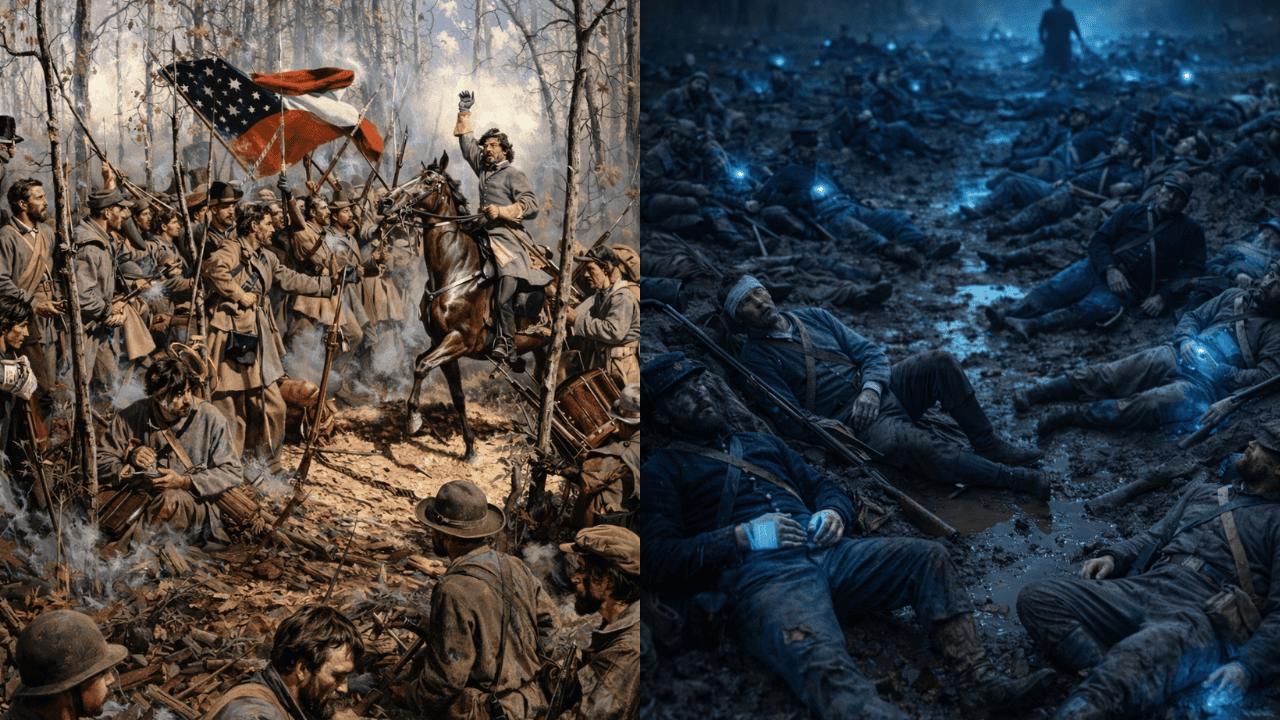
In April 1862, after the thunder of cannon fire faded at the Battle of Shiloh, a different kind of struggle began. The battlefield, soaked with rain and blood, became a place of suffering. More than 16,000 wounded soldiers Union and Confederate alike lay scattered across the muddy fields of Tennessee, many of them left where they fell for nearly two days.
There were not enough surgeons. Not enough supplies. Not enough time.
The wounded lay in the cold, exposed to the elements, their injuries untreated, their chances of survival slipping with every passing hour. Infection was often more deadly than the battlefield itself. Even those who survived the fighting faced a grim reality wounds that would fester, fever that would rise, and lives that would quietly fade.
But amid that darkness, something strange was noticed.
Some soldiers began to report an unusual glow coming from their wounds. In the night, faint blue light appeared along injuries soft, almost unreal against the mud and chaos of the battlefield. It was not something anyone could explain at the time. To the men who saw it, it felt almost like a sign something mysterious in a place filled with death.
What made it even more remarkable was what followed.
Those whose wounds glowed seemed more likely to survive.
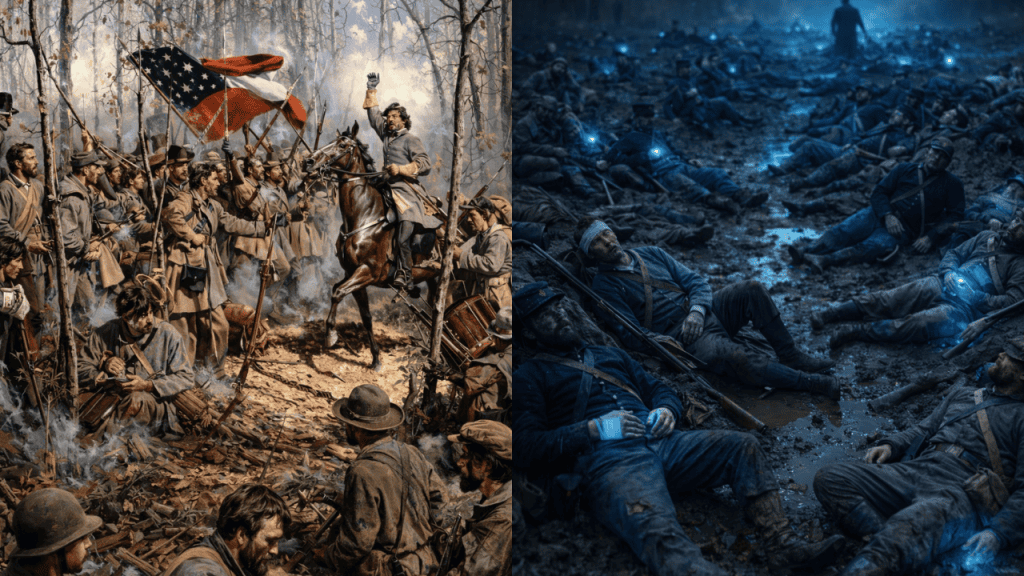
In a war where infection claimed countless lives, this small, unexplained detail stood out. Surgeons noticed it, soldiers whispered about it, but no one had the knowledge to understand it. The phenomenon became part of battlefield lore something remembered, but not fully understood.
It would take more than a century for an explanation to emerge.
In 2001, two teenagers researching the Battle of Shiloh proposed a theory that connected the strange glow to a natural cause. They suggested that a bioluminescent bacterium Photorhabdus luminescens may have been present in the soil. This bacterium, carried by certain nematodes, can emit a faint blue light and, more importantly, produces substances that kill harmful microbes.
In the cold, wet conditions of the battlefield, where soldiers lay exposed for hours, it’s possible that this bacterium entered their wounds. If so, it may have acted as a natural antibiotic reducing infection and increasing their chances of survival.
What once seemed mysterious may have been nature at work.
The story of the “Angel’s Glow,” as it later came to be called, remains one of the most unusual moments in Civil War history. It does not change the scale of suffering at Shiloh, nor does it lessen the tragedy of that battle. But it offers a rare glimpse of something unexpected a moment where, even in the midst of devastation, survival came from an unlikely source.
In a field of mud, pain, and silence, some wounds shone faintly in the dark.
And for those men, that small light may have meant the difference between life and death.