Boho interiors are loved for their relaxed atmosphere, natural textures, earthy colors, layered fabrics, and collected-over-time character. But bohemian style does not have to look predictable. Instead of filling a room with the same woven baskets, macramé, and neutral textiles, you can give classic boho décor a fresh twist by combining it with unexpected colors, modern furniture, dramatic patterns, or sophisticated finishes. The result can still feel warm and effortless while having a personality that makes the space stand out. Whether you prefer a subtle boho bedroom or a bold living room, adding one surprising design element can completely change the mood.
The beauty of a boho room is that there are few strict rules. You can mix vintage pieces with contemporary furniture, combine earthy neutrals with jewel tones, or introduce sculptural lighting into a space filled with natural materials. Plants, woven textures, rugs, wood, ceramics, and handmade accents can provide the familiar bohemian foundation, while an unexpected feature becomes the “twist.” These twelve boho room ideas show how to make the style feel more personal and contemporary without losing its cozy, artistic character.
1. Moody Boho With Deep Wall Colors
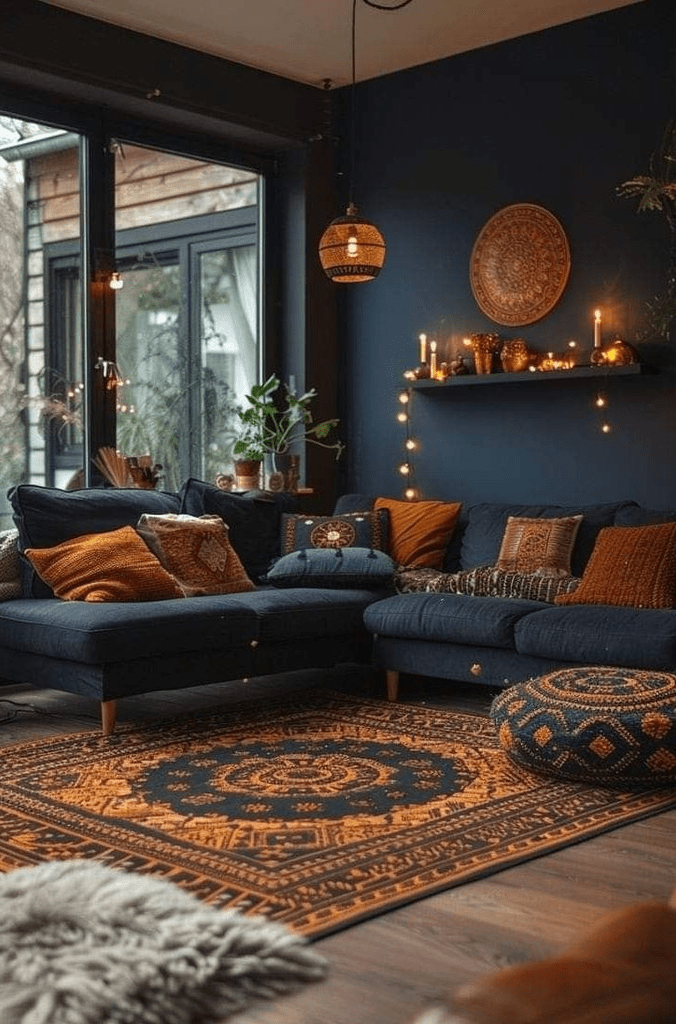
Give traditional boho style a dramatic makeover by replacing pale neutral walls with a rich, moody shade. Deep green, charcoal, warm brown, muted navy, or earthy burgundy can create a cozy backdrop for layered bohemian décor.
Against a darker wall, natural materials such as rattan, woven baskets, light wood, linen, and jute can stand out beautifully. Add warm lamps and candles to create an intimate atmosphere, particularly in bedrooms or reading corners.
The key is balancing the dark color with lighter textures. A cream-colored sofa, natural wood furniture, woven pendant light, or ivory bedding can prevent the room from feeling too heavy.
You can also introduce plants with large green leaves for contrast. Their organic shapes work naturally with the relaxed character of boho interiors.
This approach is perfect if you love bohemian decorating but want something more sophisticated and dramatic. Instead of relying entirely on bright, airy neutrals, the deeper color creates a cocoon-like feeling while still allowing the room’s natural textures and collected pieces to shine.
2. Minimalist Boho With Clean Lines
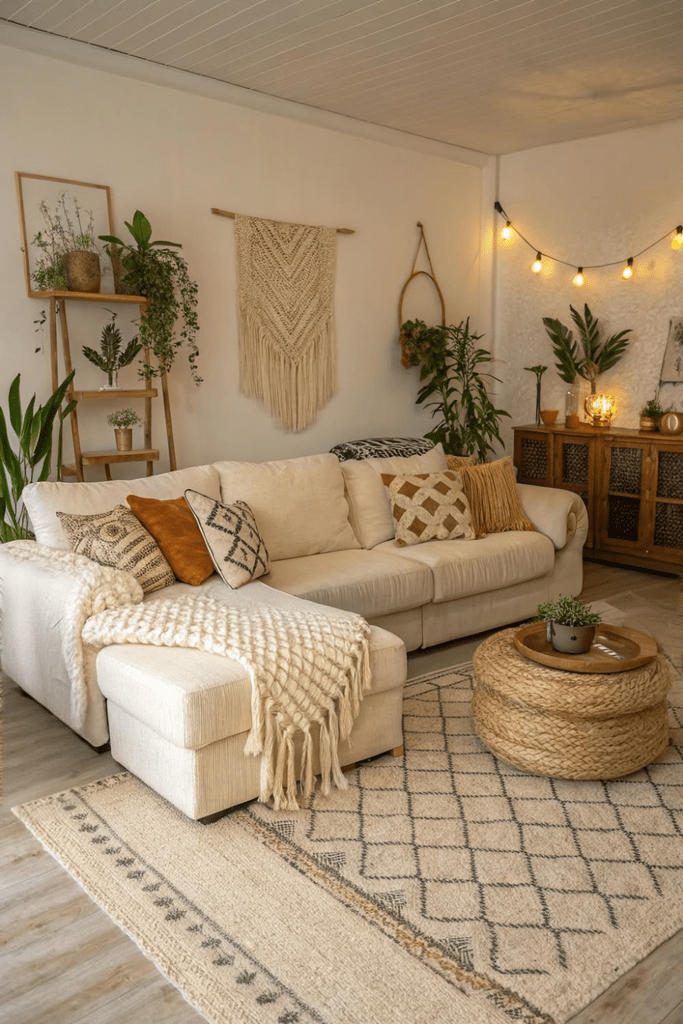
If traditional boho rooms feel too busy for your taste, combine bohemian warmth with minimalist design. Keep the color palette simple and let a few carefully chosen pieces create the personality.
Choose furniture with clean silhouettes, such as a streamlined sofa, simple wooden coffee table, or low-profile bed. Then add warmth through textured rugs, linen cushions, woven baskets, and handmade ceramics.
Rather than displaying dozens of decorative objects, choose a handful of meaningful pieces. A large piece of abstract artwork, an oversized plant, or a sculptural lamp can become the focal point.
Natural materials are especially important in minimalist boho spaces because they prevent the simpler design from feeling cold. Wood, cane, wool, cotton, rattan, and stone can introduce subtle layers without creating visual clutter.
This version of boho style is ideal for people who appreciate an uncluttered home but still want warmth and personality. It proves that bohemian interiors can feel refined and intentional while maintaining their relaxed character.
3. Boho With a Touch of Vintage Glamour
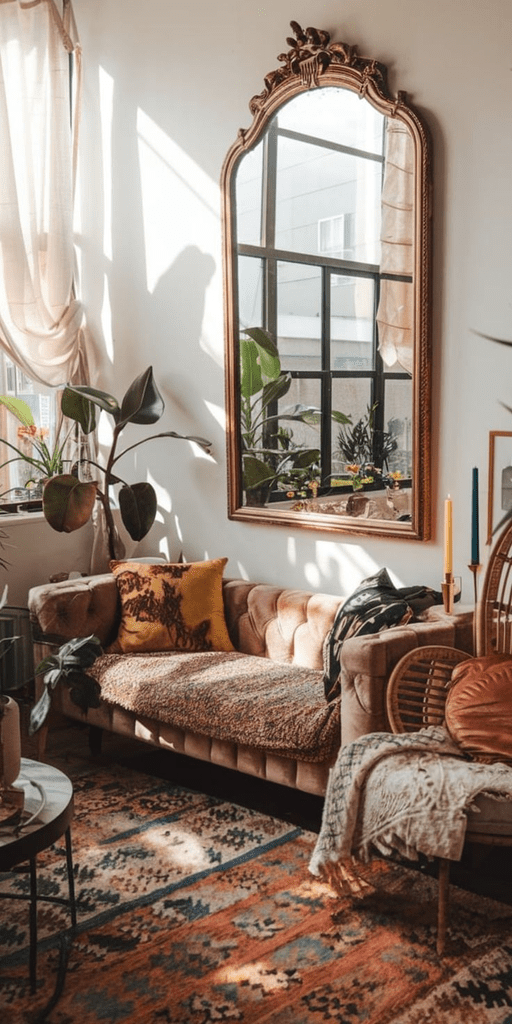
Give a relaxed boho room an unexpected dose of glamour by introducing vintage-inspired details. Think antique mirrors, brass lighting, velvet cushions, ornate side tables, or a statement chandelier.
The contrast between glamorous elements and casual boho textures creates an interesting balance. A velvet armchair can sit beside a woven basket, while a brass lamp can illuminate a rustic wooden console.
Keep the overall palette warm and earthy so the glamorous pieces feel integrated rather than out of place. Terracotta, cream, tan, olive, brown, and muted gold work particularly well together.
Vintage artwork or an old-looking rug can add another layer of personality. You do not need expensive antiques; even one decorative piece with an aged or vintage-inspired finish can create the desired effect.
This style works particularly well in bedrooms and living rooms because it combines comfort with a slightly elegant atmosphere.
The result is boho with more polish—relaxed enough for everyday living but sophisticated enough to feel special.
4. Colorful Boho With Jewel Tones
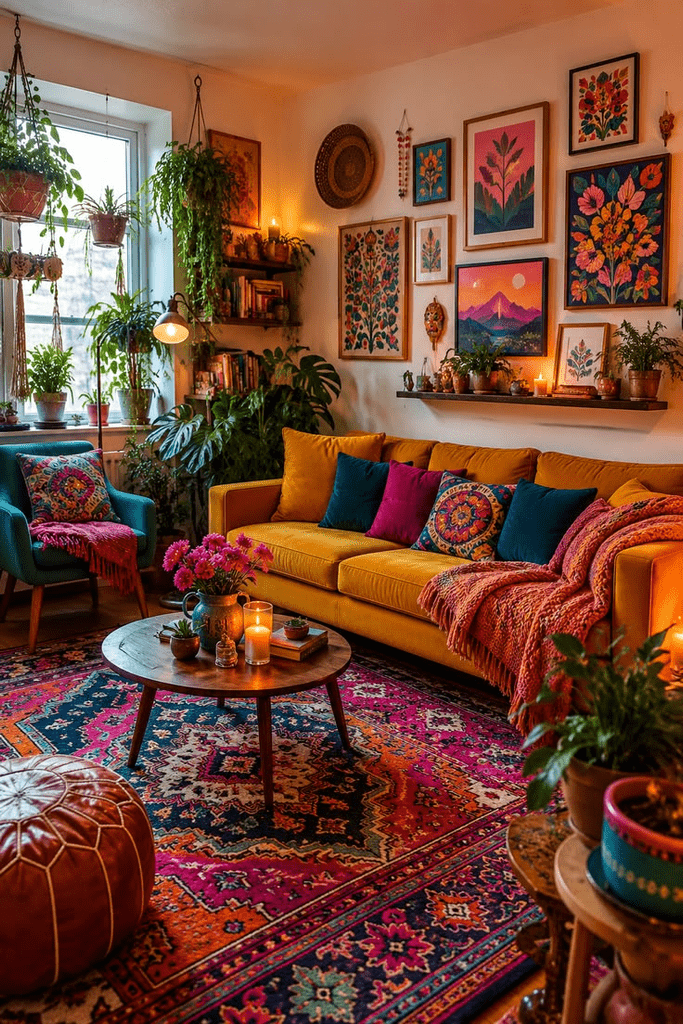
Boho interiors do not have to be limited to beige, cream, and brown. Add an unexpected burst of jewel tones such as emerald green, sapphire blue, deep purple, ruby, or mustard.
Start with a relatively neutral foundation and introduce color through cushions, artwork, curtains, rugs, or accent furniture. This keeps the room visually balanced while allowing the colorful pieces to stand out.
Mixing several rich colors can work beautifully when the shades have a similar intensity. You can also repeat one or two colors throughout the room to create cohesion.
Natural materials help soften the stronger palette. Pair colorful textiles with wood, rattan, woven baskets, plants, and neutral walls.
This approach is perfect for anyone who wants a boho room to feel energetic and expressive rather than understated.
The unexpected color combination can become the room’s defining feature, turning a familiar bohemian aesthetic into something much more individual.
5. Black-and-White Boho Contrast
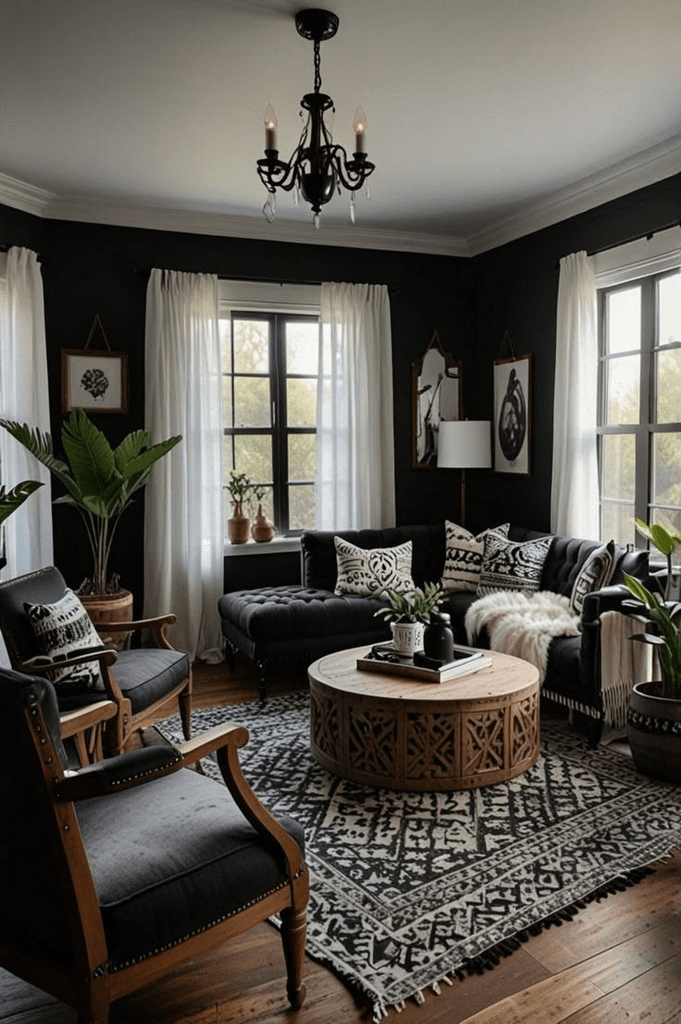
For a modern twist, build your boho room around a black-and-white palette. The strong contrast gives the relaxed style a sharper, more contemporary appearance.
Use white or warm cream as the main background and introduce black through furniture, lighting, artwork, patterned textiles, or window frames.
Natural textures are essential because they soften the high contrast. A woven rug, rattan chair, wooden stool, linen curtains, and handmade ceramics can keep the space from feeling overly stark.
Black-and-white geometric patterns can also work well in cushions or rugs. Avoid using too many competing patterns, however. Choose one or two statement patterns and let the surrounding textures remain relatively simple.
Green plants can provide an organic visual break and complement the natural side of boho design.
This combination is particularly attractive for modern apartments where you want bohemian warmth without creating a heavily layered or colorful interior.
The result feels artistic, relaxed, and contemporary at the same time.
6. Boho Coastal With Natural Blues
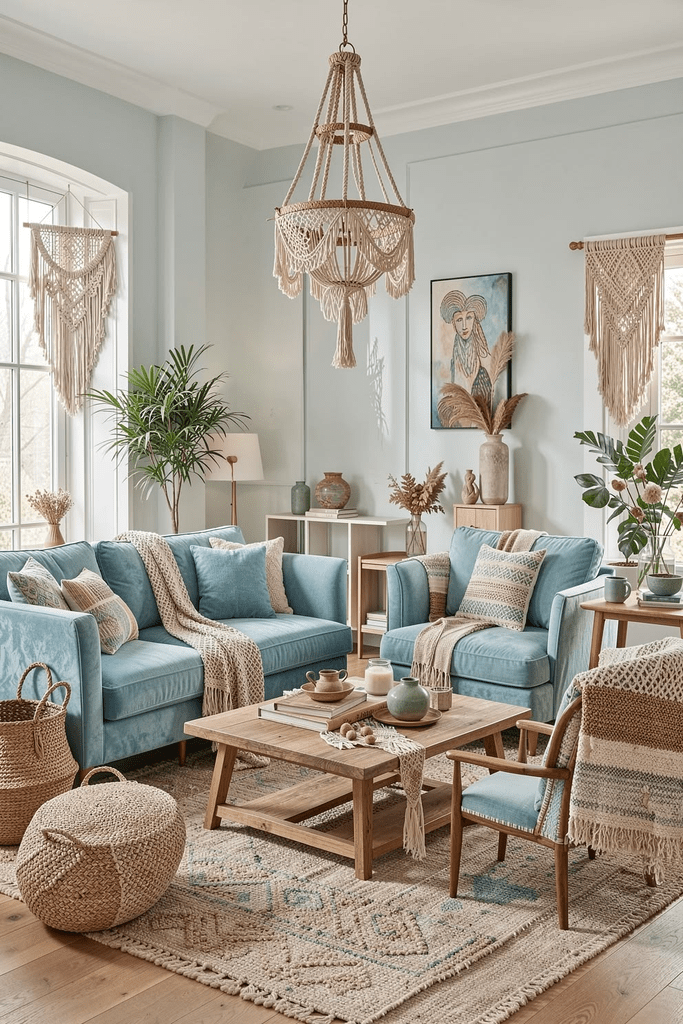
Combine bohemian textures with coastal colors for a room that feels relaxed and breezy. Instead of relying exclusively on warm earth tones, introduce soft blue, seafoam, sandy beige, and creamy white.
Choose natural furniture made from wood, rattan, cane, or woven materials. Add linen curtains, textured cushions, jute rugs, and lightweight throws.
For the coastal twist, incorporate subtle blue accents through pillows, artwork, ceramics, or a painted accent piece.
Avoid making the room too themed. You do not need seashells or nautical decorations everywhere. A few natural references to the coast are enough.
Large plants can enhance the relaxed atmosphere, while woven pendant lights can add warmth in the evening.
This style is particularly effective in bedrooms and living rooms because it creates a peaceful, casual environment. It combines the collected personality of boho interiors with the fresh simplicity associated with coastal design.
7. Industrial Boho With Metal Accents
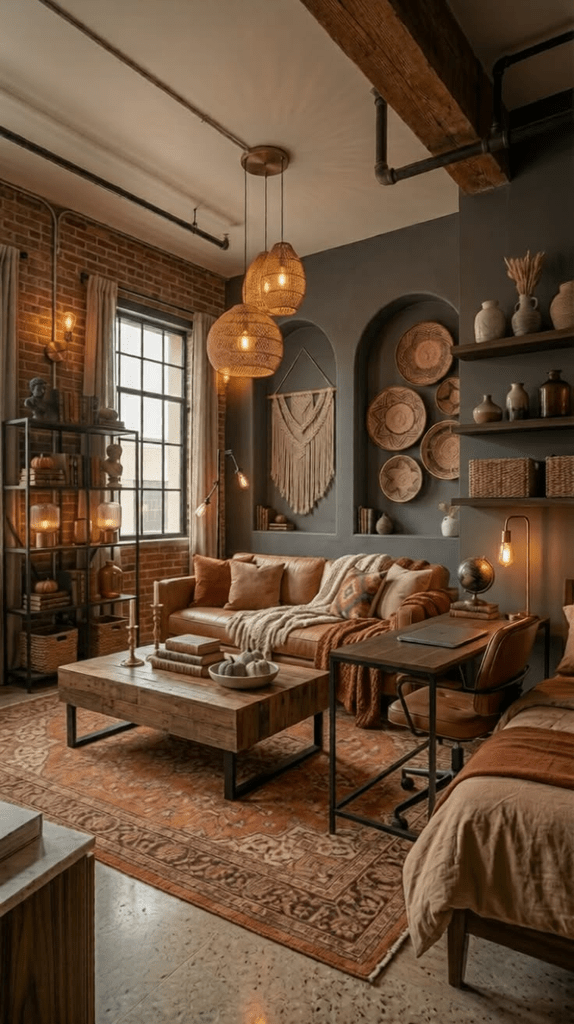
Bring an urban edge to bohemian décor by mixing natural textures with industrial materials. Exposed metal, black-framed furniture, concrete finishes, and simple lighting can create an unexpected contrast with woven and textile-heavy pieces.
Start with a comfortable foundation such as a soft sofa, textured rug, and wooden coffee table. Then add industrial elements through metal shelving, black lighting fixtures, or a steel-framed side table.
Plants can help bridge the two styles. Their organic shapes soften the harder lines of metal and concrete.
A vintage rug can also work beautifully in this setting because its worn texture contrasts with sleek industrial surfaces.
Keep the color palette relatively grounded with charcoal, brown, cream, black, rust, and natural wood tones.
This combination is ideal for loft-style apartments or modern homes where you want the warmth of boho décor without making the room feel overly traditional.
The contrast is what makes the space interesting: soft against hard, organic against geometric, and handmade against industrial.
8. Earthy Boho With Oversized Plants
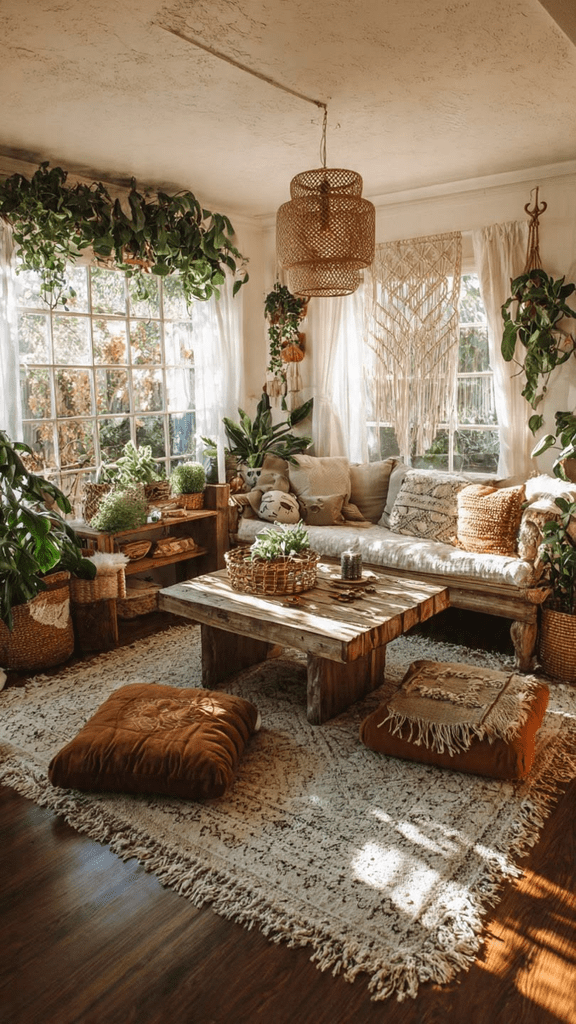
Turn greenery into the star of your boho room by using large plants as architectural features. Instead of treating plants as small decorative accessories, choose one or two substantial varieties that command attention.
A tall indoor tree can fill an empty corner, while a large leafy plant can sit beside a sofa or reading chair. Hanging plants can add another layer by drawing the eye upward.
Pair the greenery with earthy materials such as terracotta pots, woven baskets, wood furniture, linen upholstery, and natural fiber rugs.
Keep the surrounding décor relatively simple so the plants remain visually important. Large leaves can provide beautiful contrast against neutral walls and textured surfaces.
If your room does not receive enough natural light, select plants appropriate for the available conditions rather than choosing solely based on appearance.
This version of boho style feels organic and calming. It also brings the outdoors into the room without requiring an elaborate decorating scheme.
For plant lovers, this can be one of the easiest ways to make a bohemian interior feel distinctive and alive.
9. Scandinavian-Boho Fusion
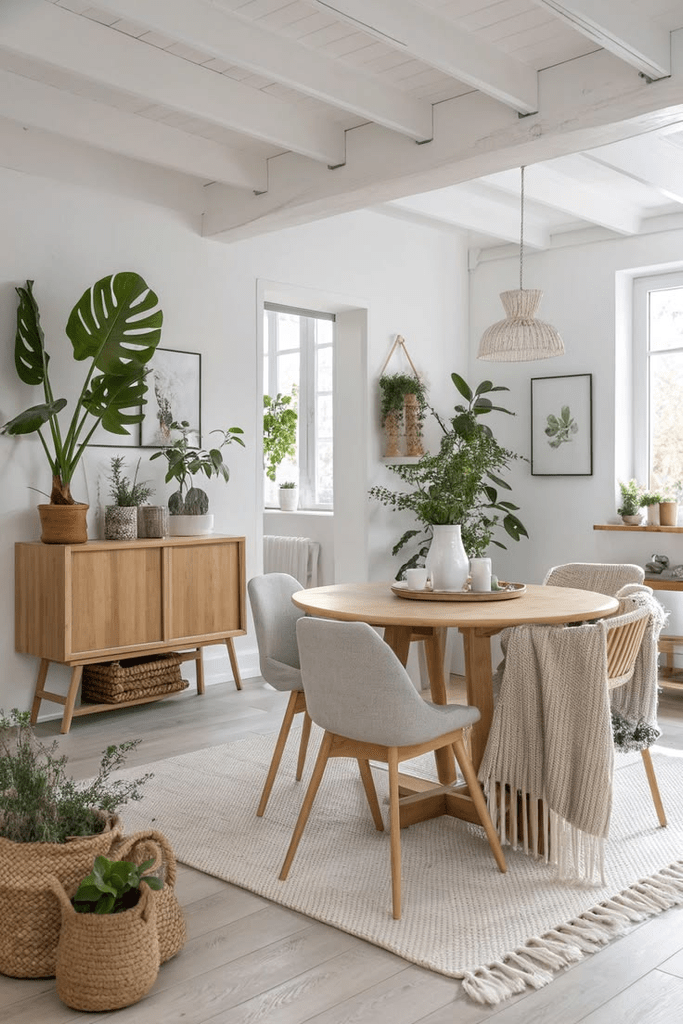
Combine Scandinavian simplicity with bohemian texture for a room that feels calm, warm, and uncluttered. This style works particularly well when you want the character of boho décor without excessive patterns.
Start with light wood furniture and a neutral color palette. Add woven baskets, textured cushions, soft throws, handmade ceramics, and natural fiber rugs.
Choose simple furniture silhouettes rather than heavily ornate pieces. The bohemian influence can come primarily from materials, artwork, and accessories.
Warm lighting is another important element. Paper-style pendant lights, simple table lamps, and soft ambient lighting can make the room feel inviting.
You can introduce subtle patterns through a rug or cushion while keeping the rest of the room relatively quiet.
This combination is especially effective in small spaces because the Scandinavian foundation keeps the room visually open while the boho details add warmth and personality.
The result is a relaxed interior that feels thoughtfully decorated rather than overcrowded.
10. Rustic Boho With Raw Wood
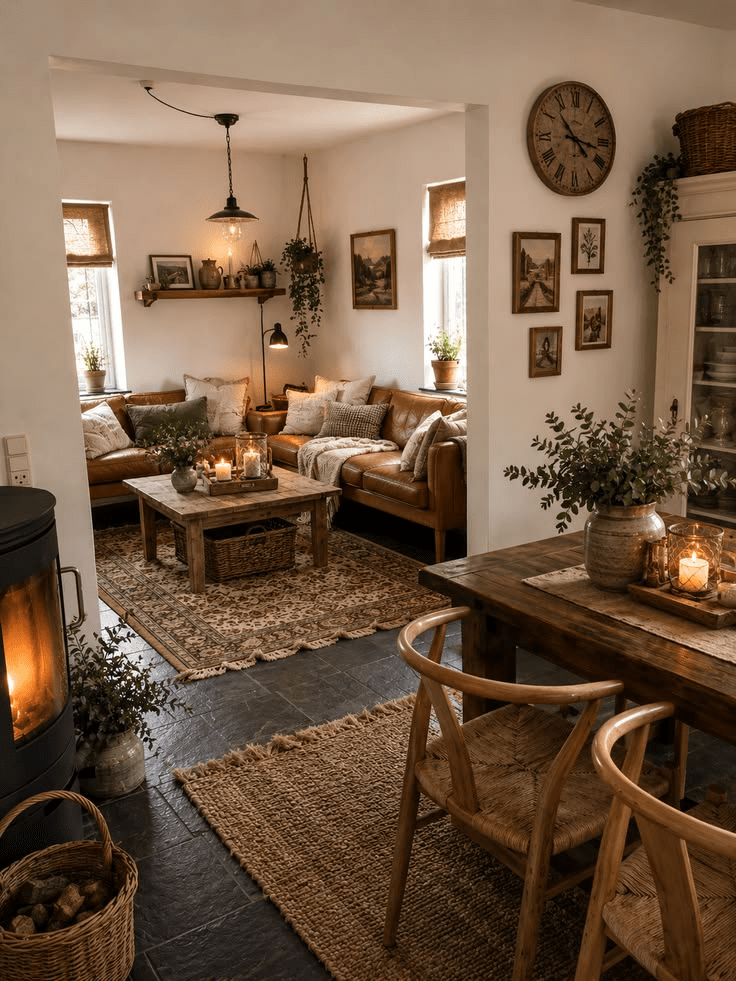
Add a rustic twist to your boho room by making natural, unfinished, or reclaimed wood a major feature. Wooden beams, rustic shelves, chunky stools, reclaimed furniture, or a raw wood coffee table can bring warmth and character.
Pair these elements with soft textiles such as linen, cotton, wool, and woven fabrics. A patterned rug can add visual interest while keeping the rustic foundation comfortable.
Choose earthy colors such as clay, sand, cream, olive, rust, and warm brown. These shades naturally complement wood.
Handmade ceramics and vintage accessories can make the room feel collected over time rather than overly coordinated.
You can also use wood as an accent wall or headboard if you want a stronger statement. Balance heavier wooden elements with lighter textiles and plenty of open space.
This style is especially appealing for bedrooms, cabins, and homes surrounded by nature. It creates a warm atmosphere that feels casual and authentic.
Rustic boho works because both styles celebrate natural materials and imperfections, making them easy to combine.
11. Boho With an Unexpected Statement Ceiling
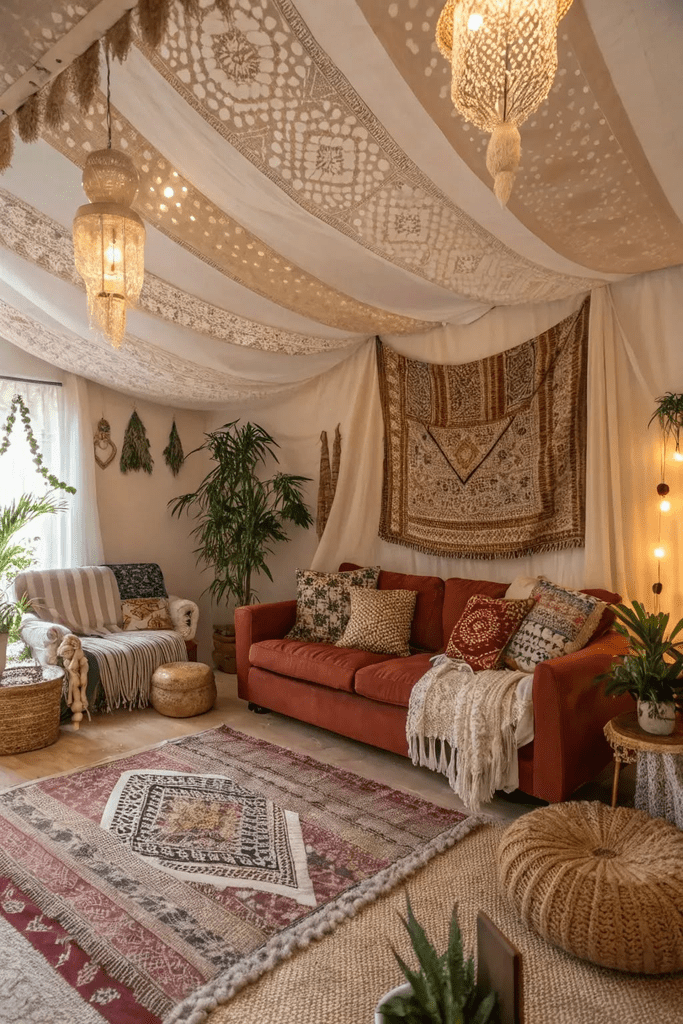
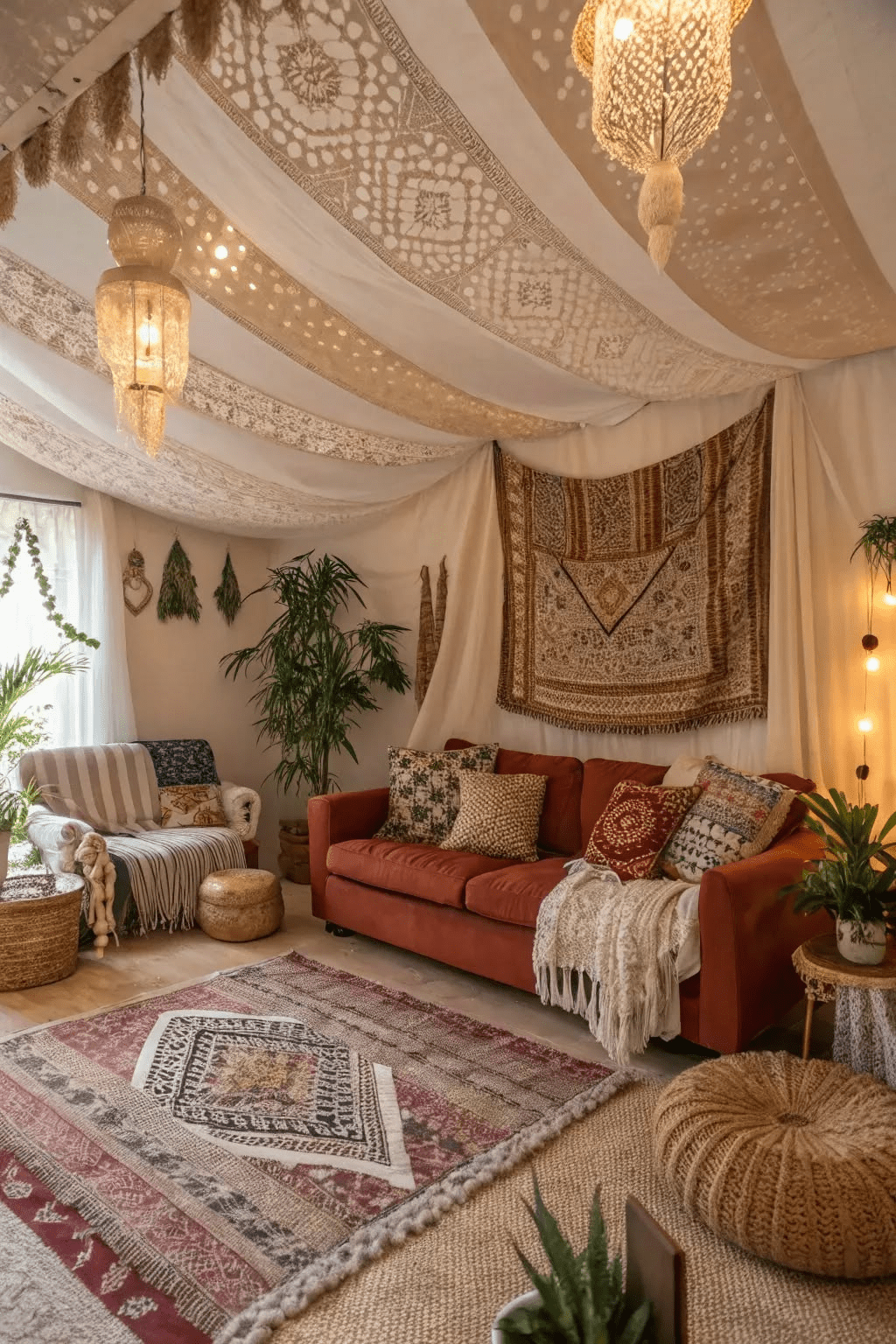
Most decorating attention goes toward walls and furniture, so an unusual ceiling can become the perfect boho twist. Consider a painted ceiling, exposed wood, woven pendant lights, decorative beams, or wallpaper above your head.
A warm-colored ceiling can make a bedroom feel more intimate, while a patterned ceiling can add personality to an otherwise neutral room.
If you prefer something subtle, use a collection of woven pendant lights or a large statement fixture as the focal point.
Keep the rest of the room relatively balanced so the ceiling does not compete with too many other dramatic features.
Natural materials work particularly well overhead. Rattan, wicker, wood, and paper-style lighting can enhance the relaxed atmosphere associated with bohemian interiors.
This idea is particularly useful if your walls and floors are already fairly simple. Rather than adding more objects around the room, you can create visual interest by drawing attention upward.
A statement ceiling gives the room an unexpected feature that visitors may not anticipate when they first enter.
12. Sophisticated Boho With Sculptural Furniture
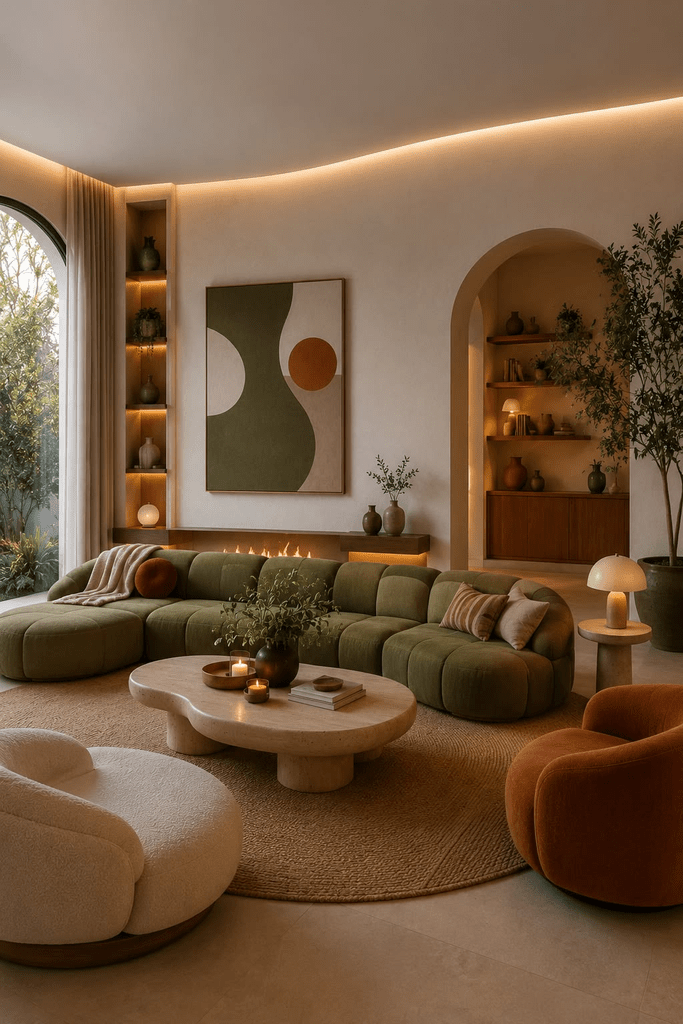
For the most contemporary twist, combine classic bohemian textures with sculptural furniture. Curved sofas, rounded chairs, organic-shaped coffee tables, and artistic lighting can give the room a sophisticated appearance.
Keep the palette relatively restrained with cream, taupe, warm brown, terracotta, olive, or soft black. Then let the shapes and textures provide visual interest.
A curved sofa paired with a round wooden coffee table can create a softer composition than traditional rectangular furniture. Add a textured rug underneath to anchor the arrangement.
Decorative ceramics, abstract artwork, and sculptural accessories can reinforce the artistic character without making the space feel cluttered.
Natural materials such as wood, linen, wool, rattan, and stone help maintain the boho connection.
This approach is ideal if you love bohemian décor but want your home to feel more modern and refined. The unusual furniture shapes become the unexpected element while the natural textures preserve the warmth.
It is boho style with a more curated, architectural personality.
Summary
Boho decorating becomes much more interesting when you move beyond the expected combination of neutral colors, woven baskets, and layered textiles. A simple twist can completely change the atmosphere of a room. Try deep, moody walls, bold jewel tones, black-and-white contrast, industrial metal, coastal blues, or oversized greenery to create a look that feels more personal.
You can also combine boho style with Scandinavian simplicity, rustic wood, vintage glamour, or contemporary sculptural furniture. The goal is not to follow every traditional boho element but to choose the textures, colors, and objects that reflect your personality. Start with a relaxed natural foundation, then add one unexpected feature that catches the eye. That contrast is often what turns a beautiful boho room into a memorable one.
Frequently Asked Questions
1. What makes a room boho?
Boho interiors typically feature natural materials, layered textiles, relaxed furniture, earthy colors, plants, handmade pieces, vintage accents, and a collected, informal atmosphere.
2. Can boho style look modern?
Absolutely. Pair boho textures with clean-lined furniture, neutral colors, sculptural shapes, or minimalist décor for a more contemporary interpretation.
3. What colors work best in a boho room?
Earthy shades such as terracotta, cream, tan, olive, rust, and warm brown are classic choices. Jewel tones, deep greens, muted blues, and even black can provide an unexpected twist.
4. How can I make a boho room look less cluttered?
Use fewer decorative objects and focus on larger statement pieces. Choose a consistent color palette and allow enough open space around furniture and accessories.
5. What materials work well in boho interiors?
Wood, rattan, cane, jute, linen, cotton, wool, ceramic, stone, and woven fibers are excellent choices for creating natural texture.
6. Can I mix boho with other decorating styles?
Yes. Boho pairs particularly well with modern, Scandinavian, rustic, coastal, industrial, and vintage-inspired styles. Combining styles is an easy way to create a more personalized room.
7. How do I add boho style without redecorating an entire room?
Start with a few elements such as a textured rug, woven baskets, linen cushions, plants, handmade ceramics, or a statement pendant light. Small changes can create a noticeable difference.
8. What is the easiest way to give a boho room a unique twist?
Choose one unexpected focal point. It could be a bold wall color, unusual furniture, dramatic artwork, an oversized plant, a statement ceiling, or a strong accent color.