
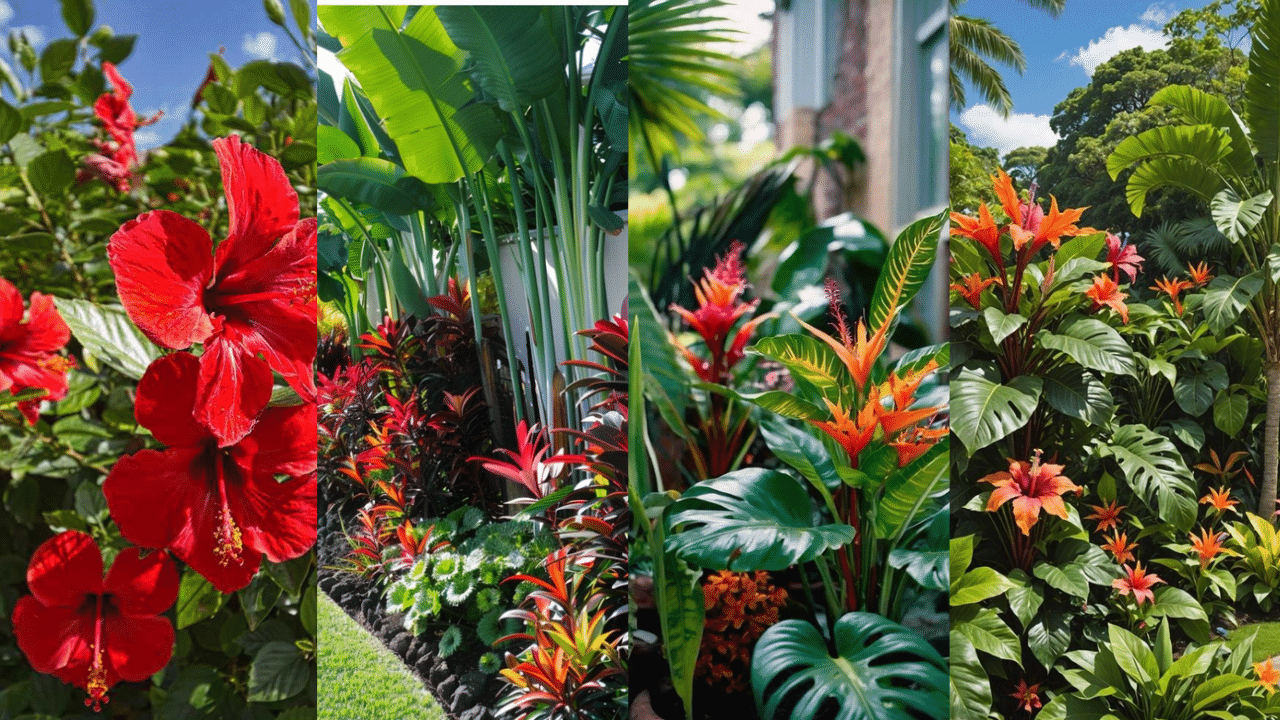
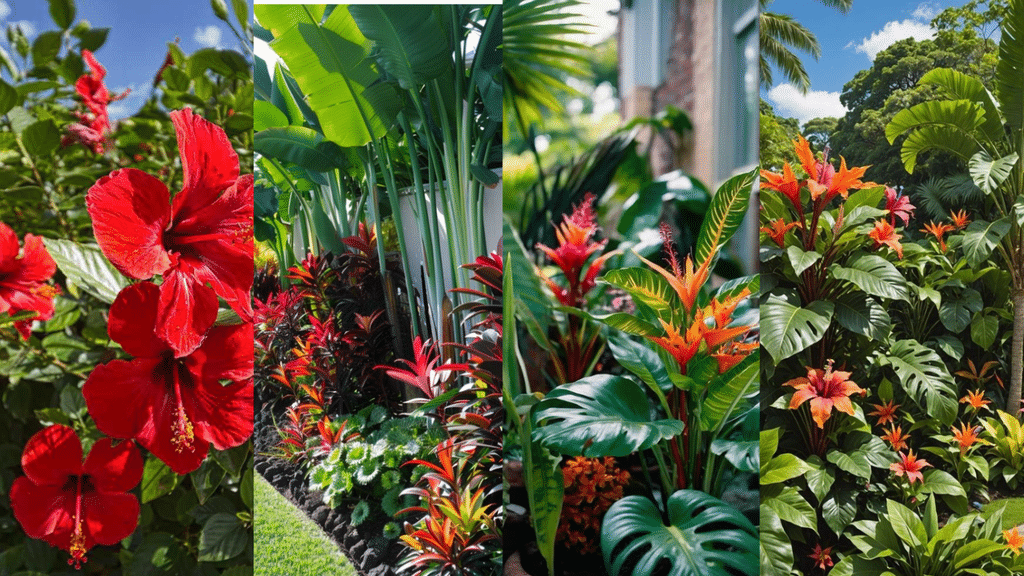
1. Tropical Hibiscus

Tropical hibiscus is a favorite for creating a vibrant garden filled with oversized, colorful flowers. Its blooms come in shades of red, pink, orange, yellow, and white, making it a striking choice for entrances, patios, and sunny garden borders.
This shrub grows well in warm conditions and can flower repeatedly when it receives enough sunlight, moisture, and suitable nutrients. You can grow it as a standalone feature plant, use it in a flowering hedge, or keep a compact variety in a large container.
Growing tip: Give hibiscus plenty of light and well-draining soil. Prune lightly to encourage bushier growth, and water regularly without leaving the roots waterlogged.
2. Ixora

Ixora is a popular tropical shrub known for its rounded clusters of small flowers and glossy green foliage. The blooms can be red, orange, pink, yellow, or coral, providing bright color in warm-climate gardens.
Its naturally dense growth makes it useful for low hedges, borders, and foundation planting. It also works well as a container shrub, especially when you want a neat, compact display of flowers.
Growing tip: Plant ixora in a sunny or lightly shaded spot with well-draining, slightly acidic soil. Avoid repeatedly applying lime or other materials that raise soil pH, as unsuitable soil conditions can lead to yellowing leaves.
3. Croton

Croton is a standout foliage shrub that brings year-round color even when it isn’t flowering. Its bold leaves may feature combinations of red, yellow, orange, green, and burgundy, making it ideal for tropical landscaping.
Use crotons to create colorful borders, highlight garden entrances, or add contrast beside plants with plain green leaves. They can also be grown in decorative pots on patios and balconies. Different varieties have distinct leaf shapes, from narrow and twisting to broad and dramatically patterned.
Growing tip: Bright light generally helps croton maintain vivid foliage, while protection from strong winds and sudden temperature changes helps prevent leaf damage. Wear gloves when pruning because its milky sap can irritate skin.
4. Bougainvillea

Bougainvillea is an eye-catching tropical shrub known for its brilliant pink, magenta, purple, orange, red, and white bracts. These colorful structures surround its small, less noticeable flowers and create a dramatic display in sunny gardens.
This plant is especially popular for covering fences, decorating walls, framing entrances, and adding color to patios. Depending on the variety and pruning style, bougainvillea can grow as a shrub, a climber, or a container-grown feature plant. Its drought tolerance once established also makes it useful in gardens where water conservation matters.
Growing tip: Choose a sunny location with well-draining soil. Avoid excessive watering and fertilizing with high-nitrogen products, which can encourage leafy growth at the expense of flowering. Be careful when pruning because many varieties have sharp thorns.
5. Gardenia

Gardenia is a beautiful evergreen shrub valued for its glossy, dark-green leaves and creamy-white flowers. Its rich fragrance makes it particularly appealing near entrances, seating areas, and garden paths where people can enjoy the scent.
Unlike brightly colored tropical shrubs, gardenia offers a softer and more elegant appearance. It works well in formal gardens, mixed shrub borders, and large containers. Its evergreen foliage provides structure throughout the year, while the flowers add seasonal interest.
Growing tip: Gardenias prefer acidic, well-draining soil, consistent moisture, and bright light with some protection from intense afternoon heat. They can develop yellow leaves when the soil is too alkaline or when drainage is poor, so suitable growing conditions are important.
6. Mussaenda

Mussaenda is a striking tropical shrub known for its unusual flower displays. Depending on the variety, it produces large, showy leaf-like bracts in white, pink, red, or cream around small central flowers. These bracts create the impression of oversized blossoms and make the plant stand out in tropical landscapes.
Mussaenda is a good choice for gardens that need a dramatic flowering feature. It can be planted as a specimen shrub, placed along a garden border, or grown in a spacious container where its colorful display can be appreciated.
Growing tip: Grow mussaenda in a warm location with bright light and fertile, well-draining soil. Water consistently during dry periods, and prune after flowering when needed to maintain a compact shape. Protect it from cold conditions, as many varieties prefer frost-free climates.
7. Jasmine

Jasmine is a popular choice for tropical gardens because of its delicate white flowers and pleasant fragrance. Some varieties grow as compact shrubs, while others develop into climbing plants that can be trained along trellises or fences.
Shrubby jasmine varieties are particularly useful near patios, pathways, and windows, where their scent can be enjoyed. Their simple white flowers also complement colorful tropical plants without competing with their bright foliage.
Growing tip: Choose a warm location with good light and well-draining soil. Water according to the variety’s needs, allowing the soil to drain properly between waterings. Prune lightly to maintain the desired shape and encourage fresh growth.
When selecting jasmine, check the species carefully because growth habits and flowering requirements vary. A compact shrub variety is generally a better choice for a small garden than a vigorous climbing type.
8. Copperleaf Plant

Copperleaf, also known as Acalypha wilkesiana, is grown mainly for its colorful foliage rather than its flowers. Its leaves can display combinations of copper, burgundy, bronze, pink, orange, and green, giving tropical gardens a rich, layered appearance.
This shrub is useful for colorful hedges, privacy screens, mixed borders, and garden accents. It creates an especially attractive contrast when planted beside green foliage plants or flowering shrubs. Different cultivars offer distinct leaf shapes and color patterns, so you can choose a variety that suits your landscape design.
Growing tip: Copperleaf generally prefers warmth, bright light, and fertile, well-draining soil. More light often encourages stronger leaf color, although protection from harsh conditions may be needed depending on the variety. Regular pruning helps maintain a dense, tidy shape.
Its colorful foliage makes it a useful option when you want a garden that remains visually interesting even between flowering seasons.
9. Firebush

Firebush is a tropical and subtropical shrub known for its clusters of orange-red tubular flowers and attractive green foliage. Its bright blossoms can add a lively appearance to sunny garden borders and informal landscapes.
One of its biggest attractions is its ability to draw pollinators. In suitable climates, its flowers can attract butterflies and hummingbirds, helping create a garden that feels active and full of life. Firebush can be grown as a flowering feature shrub or incorporated into a mixed tropical planting.
Growing tip: Plant firebush in a sunny location with well-draining soil. Water regularly while it establishes, then adjust watering according to local rainfall and soil conditions. Prune as needed to control its size and encourage bushier growth.
Firebush is especially suitable for gardeners who want a combination of vivid flowers and wildlife interest. Check the local climate and available space before planting because its eventual size can vary considerably.
10. Ti Plant

The ti plant, Cordyline fruticosa, is a tropical ornamental grown for its long, colorful leaves. Depending on the cultivar, the foliage can feature deep red, burgundy, pink, green, or purple tones, creating a dramatic accent in tropical landscaping.
Although it is often described as a foliage plant rather than a traditional woody shrub, its upright, bushy growth makes it a popular choice for tropical-style garden designs. Use it in containers, along pathways, near entrances, or as a colorful focal point among green-leaved plants.
Growing tip: Ti plants generally prefer warm conditions, humidity, and moist but well-draining soil. Bright filtered light often works well, while some varieties tolerate more direct sunlight once acclimated. Protect them from cold weather and harsh winds, which can damage the leaves.
Its architectural shape and vivid foliage make the ti plant a great option for adding height, texture, and tropical character to smaller gardens and patios.
Tips for Growing Tropical Shrubs Successfully
- Choose plants for your climate: Not every tropical shrub thrives in every region. Consider local rainfall, temperature, humidity, and seasonal conditions.
- Check sunlight requirements: Hibiscus and bougainvillea generally appreciate plenty of sun, while some foliage shrubs perform better with filtered light.
- Improve soil drainage: Many tropical shrubs prefer moist soil but struggle when their roots remain waterlogged.
- Prune appropriately: Light pruning can help maintain shape and encourage fuller growth, but the best timing varies by plant.
- Combine flowers and foliage: Pair flowering shrubs such as hibiscus and ixora with colorful foliage plants such as croton and copperleaf for a layered look.
- Allow enough space: Research the mature height and spread before planting shrubs close to walls, pathways, or one another.
The Royal Horticultural Society also recommends selecting tropical-style plants according to their growing conditions and using a mix of foliage shapes and flower colors to create a lush, layered landscape
Summary
These 10 tropical shrubs offer a range of ways to bring vibrant flowers, colorful foliage, fragrance, and a lush appearance to your garden. From the brilliant blooms of hibiscus and bougainvillea to the striking leaves of croton and ti plants, there is an option for different garden styles and spaces. Choose varieties suited to your climate, provide the right growing conditions, and combine different textures and colors to create an attractive tropical landscape.
Frequently Asked Questions
1. What are the most popular tropical shrubs for gardens?
Hibiscus, ixora, bougainvillea, croton, gardenia, and mussaenda are popular choices for their colorful flowers, decorative foliage, or fragrance.
2. Which tropical shrubs are best for colorful flowers?
Hibiscus, ixora, bougainvillea, mussaenda, jasmine, and firebush can all provide attractive flowers or colorful floral displays in suitable growing conditions.
3. Which tropical shrubs have colorful leaves?
Croton, copperleaf, and ti plant are excellent choices for gardens that need vivid foliage in shades of red, orange, pink, burgundy, yellow, and green.
4. Can tropical shrubs grow in pots?
Yes. Many varieties can be grown in containers, particularly compact hibiscus, ixora, gardenia, and ti plant varieties. Choose a pot with drainage holes and a size appropriate for the plant’s mature growth.
5. How do I maintain a tropical garden?
Provide suitable sunlight, well-draining soil, appropriate watering, and occasional pruning. Choose plants that match your local climate, and avoid overcrowding so each shrub has enough room to grow.
SEO Description
Discover 10 trending tropical shrubs for a lush, colorful garden. Explore flowering favorites, vibrant foliage plants, fragrant varieties, and simple growing tips to create a beautiful tropical landscape.