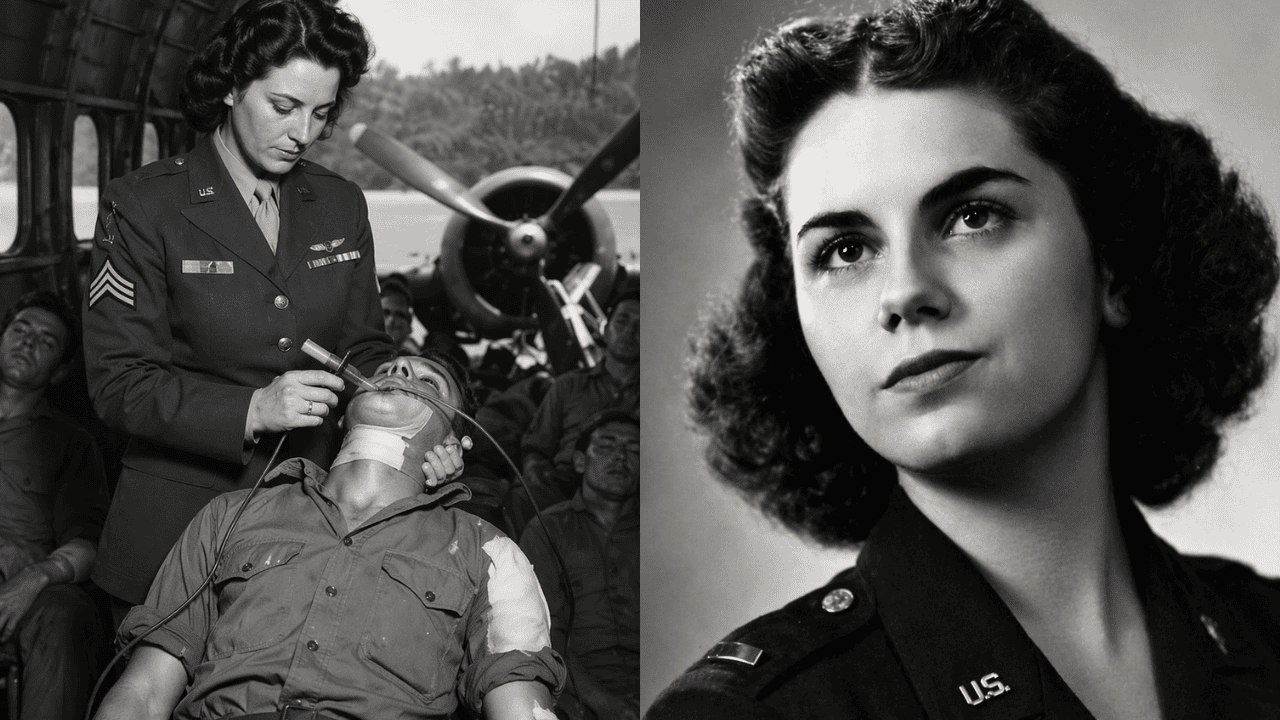
On September 24, 1944, during the fierce Battle of Peleliu in the Pacific Theater of World War II, a remarkable act of courage unfolded far from the front lines. In the aftermath of a devastating crash, one nurse stood between life and death for dozens of wounded soldiers—and refused to let any of them die.
1st Lieutenant Mary Louise Hawkins was aboard a C-47 Skytrain, transporting 24 injured soldiers to safety. These men were already in critical condition, many barely holding on. Then disaster struck. The aircraft crashed on a remote Pacific island, leaving the wounded in an even more desperate state. Hawkins herself was injured in the crash, but she immediately set aside her own pain to care for others.
Inside the wreckage, the situation was dire. The soldiers were fighting to breathe, bleeding heavily, and had no access to proper medical facilities. Without immediate intervention, survival seemed unlikely. Yet Hawkins acted without hesitation. Drawing on her training and instincts, she began treating the wounded with whatever resources she could find.
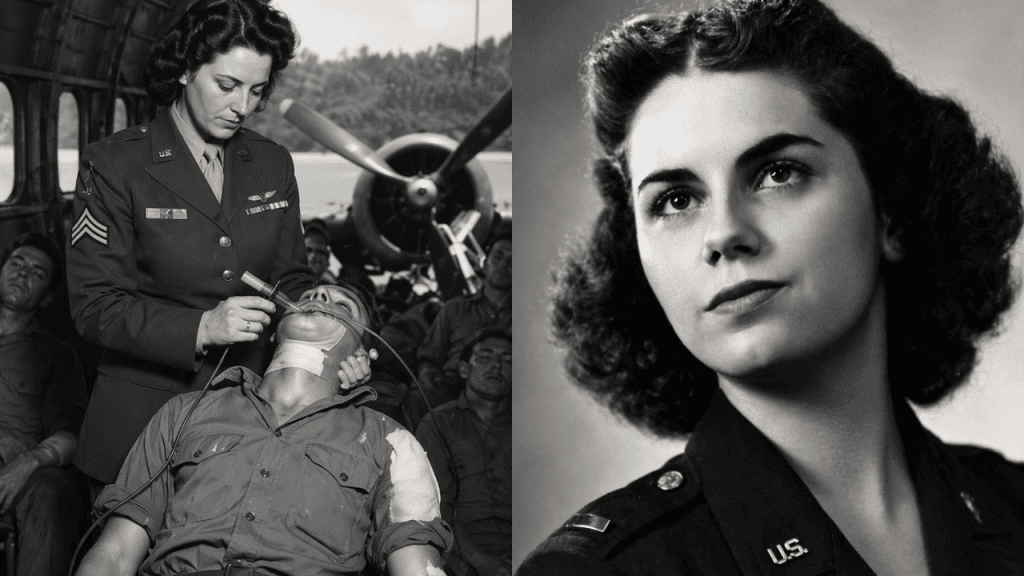
One soldier had suffered a catastrophic throat injury caused by a propeller. He was choking on his own blood and moments away from death. With no medical equipment available, Hawkins improvised. She removed a valve from a life vest and constructed a makeshift suction device to clear his airway. It was a quick, creative decision that saved his life.
For nearly 19 continuous hours, Hawkins worked without rest. She administered plasma, monitored injuries, and provided constant care under extreme conditions. At one point, she held the wounded soldier’s head in her lap for hours, ensuring he could continue breathing. Despite exhaustion, pain, and the overwhelming situation, she never stopped.
Through the long night, her determination never weakened. She remained focused, calm, and committed to keeping every man alive. Her actions were not driven by recognition or reward, but by a deep sense of duty and compassion.
When rescue teams finally arrived at dawn, the result was extraordinary—all 24 soldiers had survived.
Mary Louise Hawkins’ actions that day were more than an example of medical skill; they were a powerful display of human resilience and selflessness. In a moment when hope could have easily been lost, she became the reason it endured.
Her story reminds us that heroism is not always loud or visible. Sometimes, it exists in quiet endurance—in the decision to keep going, to keep fighting, and to protect others, no matter the cost.