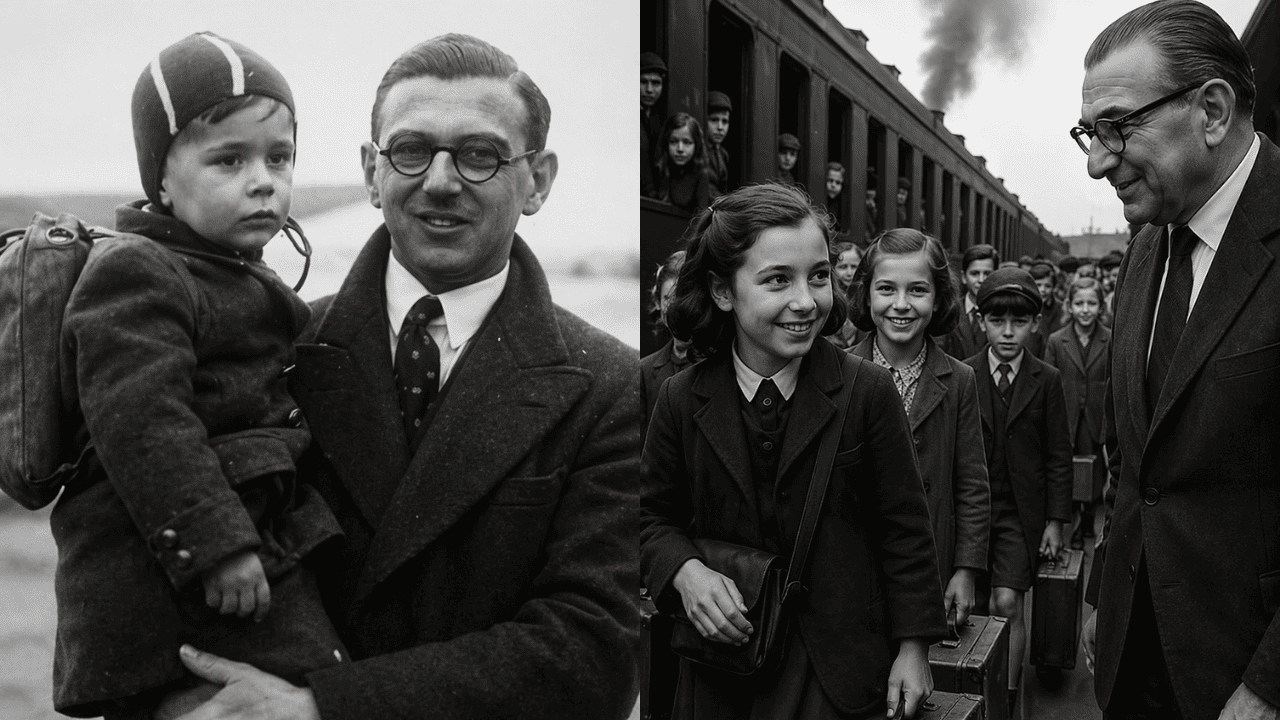
In 1938, as fear tightened its grip across Europe and the threat of war grew impossible to ignore, one man made a decision that would quietly change the course of hundreds of lives. Nicholas Winton was not a soldier, politician, or diplomat. He was a London stockbroker, planning what should have been an ordinary holiday. Instead, he chose to go to Prague—and what he witnessed there altered everything.
In the city, Winton encountered families living under the shadow of growing danger. The situation for Jewish refugees, especially children, was becoming increasingly desperate. Parents faced an unthinkable reality: the only way to save their children might be to send them away alone, to strangers, in a foreign land. It was a decision filled with heartbreak, but also hope.
Winton did not look away.
Working from a modest hotel room, he began organizing what would become a remarkable rescue effort. With no official authority and limited resources, he started compiling lists of children in need. He collected photographs, recorded personal details, and searched for ways to move them out of Czechoslovakia before it was too late.
Back in London, his life appeared ordinary on the surface. By day, he continued his work as a stockbroker. But at night, he dedicated himself fully to the mission. He wrote hundreds of letters to families across Britain, asking them to open their homes to children they had never met. He raised funds to meet government requirements and navigated complex bureaucratic systems, pushing paperwork through as time slipped away.
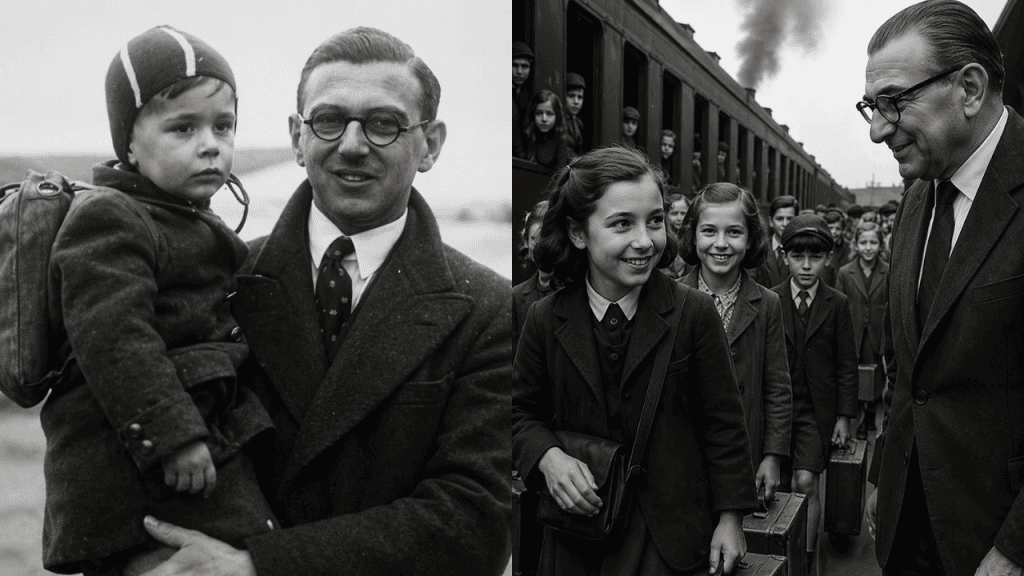
When official rules became barriers, Winton found ways to overcome them. His determination never wavered.
Between March and August 1939, a series of trains left Prague, each carrying children to safety in Britain. These journeys, later known as part of the Kindertransport, became lifelines. Each train represented not just a departure, but survival. For the children, it meant a future. For their parents, it often meant a final goodbye.
Then, on September 1, 1939, everything changed.
A final train, carrying around 250 children, was prepared to leave Prague. But that same morning, war broke out as Germany invaded Poland. Borders closed, and the train never departed. The children who were meant to be on that journey were never seen again.
In total, Nicholas Winton helped rescue 669 children.
What makes his story even more extraordinary is what came after. For decades, Winton never spoke about what he had done. His efforts remained unknown, quietly tucked away in personal records. It was only many years later, when his story was discovered, that the world began to understand the scale of his actions.
By then, those children had grown up. They had families of their own. Generations existed because one man chose to act when others hesitated.
Nicholas Winton’s legacy is not defined by recognition, but by impact. His story stands as a powerful reminder that even in the darkest moments of history, individual action can create lasting change. One decision—to help, to act, to not look away—can echo across generations.