
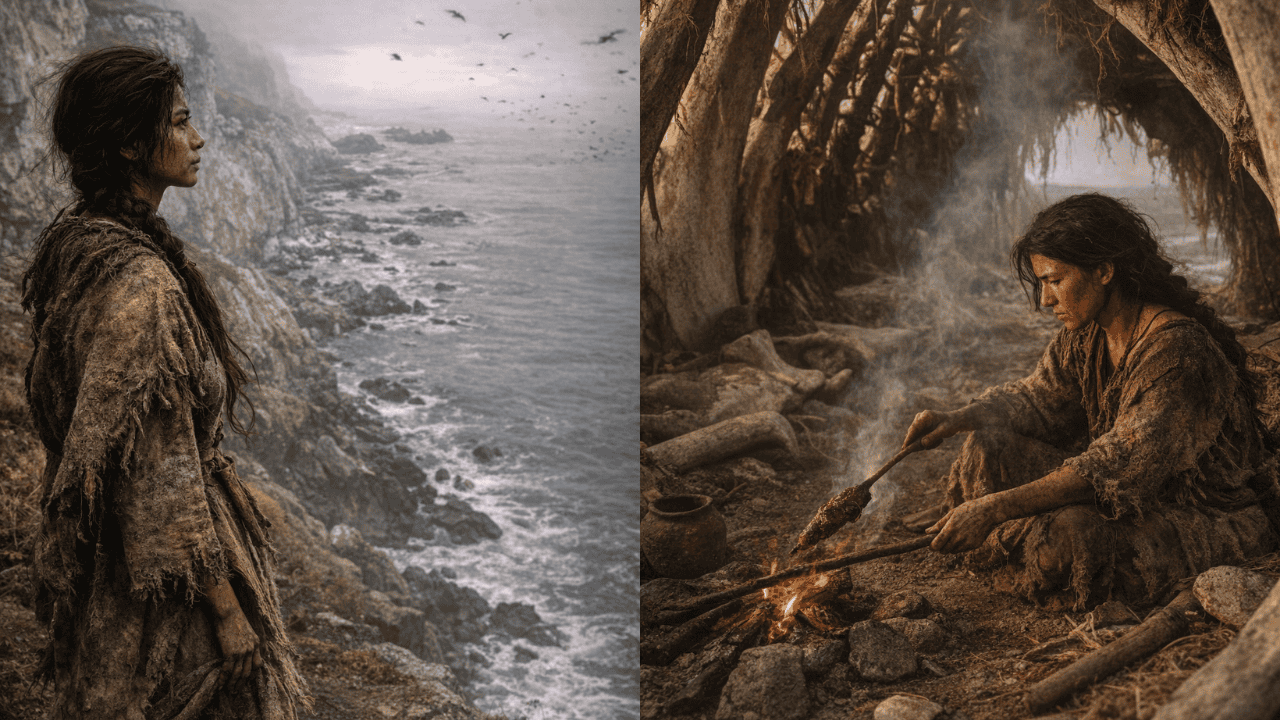
In 1835, a small rescue mission arrived at the windswept shores of San Nicolas Island, one of the most remote islands off the coast of California. Spanish missionaries and hunters had decided to remove the remaining Nicoleño people from the island and relocate them to the mainland. For generations, this small Native American community had lived in isolation on the rocky island, surviving by hunting seals, fishing in the cold Pacific waters, and gathering food along the rugged coastline.
As the group boarded the ship that would carry them away, the scene must have been tense and emotional. Leaving their homeland meant abandoning the only world they had ever known. Yet for one woman, the departure suddenly became unbearable for a different reason.
As the ship began to move away from shore, she realized something terrifying—her child had been left behind on the island.
Without hesitation, she made a decision that stunned everyone on board. She leapt from the departing vessel into the cold Pacific Ocean and swam back toward the rocky coast. By the time she reached land, the ship had already sailed too far away to return.
The vessel continued its journey to the mainland without her.
From that moment on, the woman was alone.
For the next eighteen years, she survived on San Nicolas Island in near total isolation. The island itself was harsh and unforgiving, surrounded by rough seas and steep cliffs. Yet she adapted to the landscape with remarkable resilience. She built shelters from whale bones and driftwood that washed ashore. She hunted seals along the rocky beaches and gathered shellfish from tidal pools. The ocean became her source of food, tools, and survival.
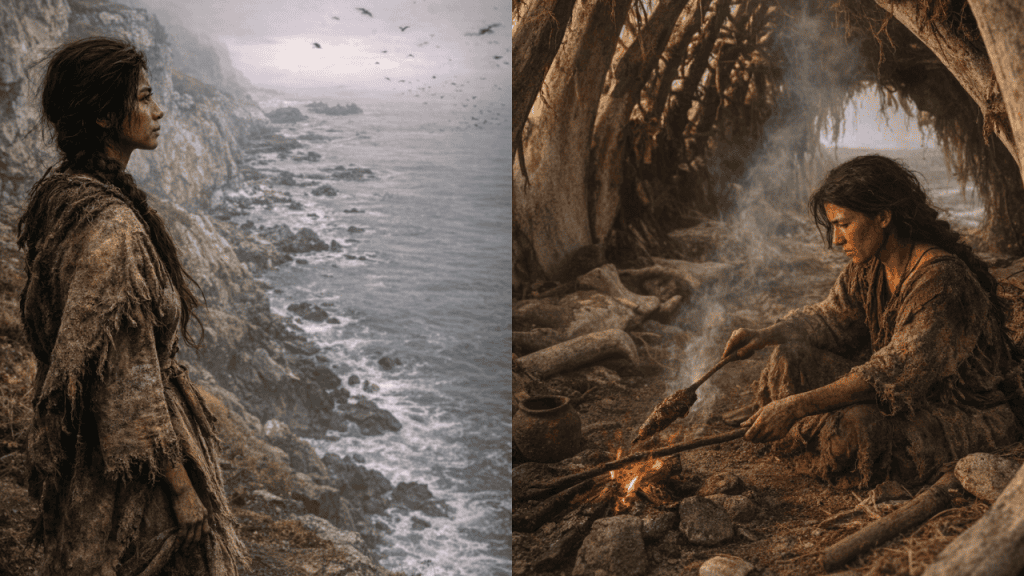
Over time, her story became little more than a rumor among sailors and hunters who occasionally passed the island. Some claimed to have seen a lone figure moving along the shoreline, dressed in garments made from bird skins and living among the windswept hills.
Years passed before anyone returned to investigate.
In 1853, nearly two decades after she had been left behind, a group of hunters finally found her. She was alive, healthy, and remarkably strong after surviving alone for so long. Though her isolation had separated her from the world for eighteen years, she had managed to endure one of the most extraordinary survival stories in American history.
When she was brought back to the mainland, people were amazed by her resilience. Because her native language was no longer understood by anyone around her, many details of her life on the island remained a mystery.
Her real name was never recorded.
History remembers her instead as Juana Maria, though she is more widely known as the “Lonely Woman of San Nicolas Island.” Her story would later inspire books, including the well-known novel Island of the Blue Dolphins, which introduced generations of readers to the remarkable tale.
Today, her life remains one of the most haunting and powerful stories of survival in North American history—a quiet testament to the strength of a single human being facing nearly two decades of solitude against the vastness of the Pacific Ocean.