In the summer of 1944, Warsaw was a city in flames. Buildings crumbled under constant bombardment, streets were filled with rubble, and the sound of gunfire echoed day and night. Amid this chaos, during the Warsaw Uprising against German occupation, an unlikely figure became a quiet symbol of courage—a small girl named Róża Maria Goździewska.
Róża was only eight years old. Like many children in Warsaw, her life had already been shaped by years of war, fear, and loss. When the uprising began on August 1, 1944, the city transformed overnight into a battlefield. Civilians hid in basements, and resistance fighters moved through ruins, trying to reclaim their city. Somewhere in those early days, Róża lost her father. The grief was heavy, but instead of retreating into hiding, she chose a different path.
In one of Warsaw’s damaged buildings, a makeshift hospital had been set up in a basement. It was dark, crowded, and filled with the wounded. Supplies were scarce, and volunteers did whatever they could to help. Róża found her way there and insisted on staying. Despite her age, she wanted to be useful.
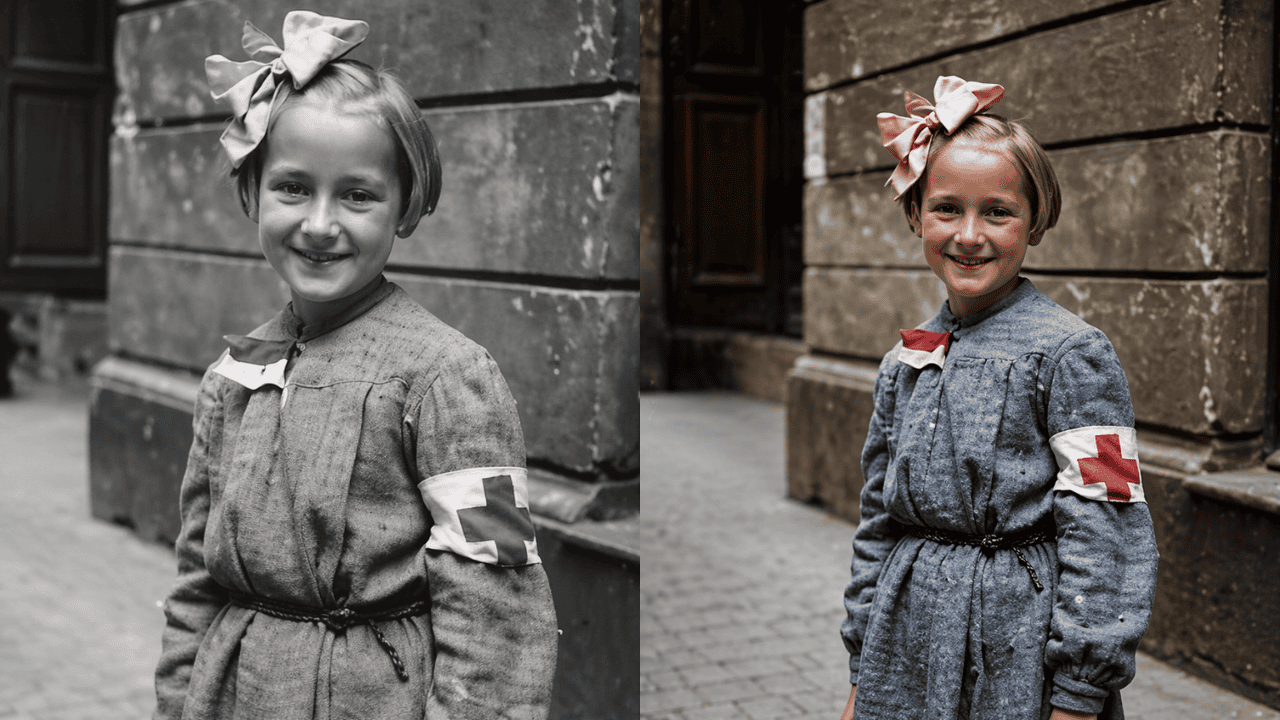
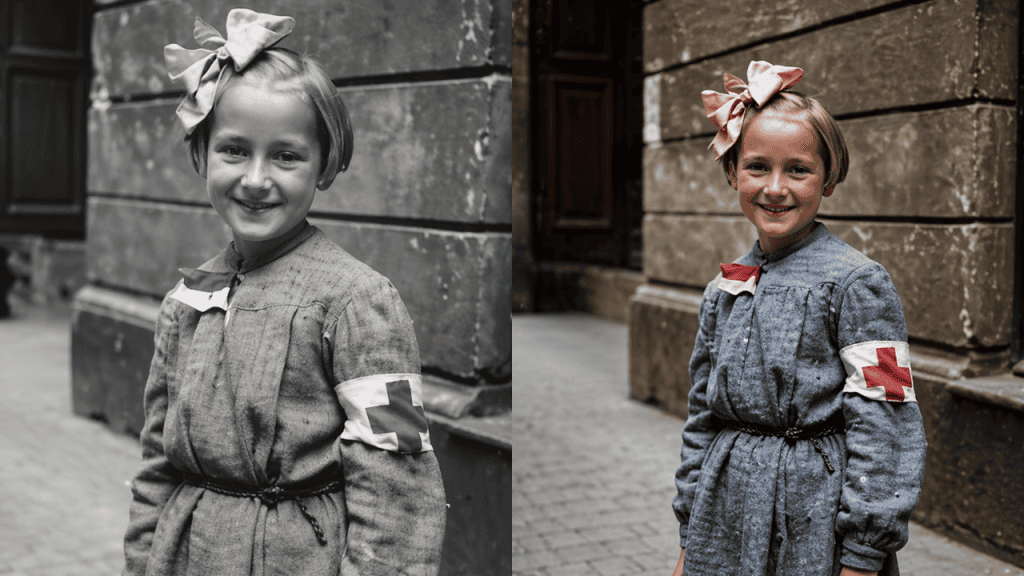
Someone gave her a Red Cross armband—far too large for her small arm, but she wore it with quiet pride. It marked her as a helper, a tiny nurse among exhausted doctors and volunteers. Day after day, she moved carefully through the cramped space, carrying cups of water to injured fighters, wiping their faces, and offering gentle words. Her presence brought a sense of calm that many desperately needed.
Outside, the city was being destroyed. Fires spread from building to building, and explosions shook the ground. Inside the basement, however, Róża remained steady. She did not panic or cry in front of the wounded. Instead, she focused on simple acts of kindness—holding a hand, whispering reassurance, or just sitting beside someone who was afraid. For the soldiers and civilians lying there, her bravery was deeply moving.
At some point during those difficult days, a photograph was taken. It showed Róża wearing her oversized helmet and Red Cross armband, her face serious but composed. The image captured something powerful: a child surrounded by war, yet standing firm with quiet determination. That photograph would later travel far beyond Warsaw, becoming a lasting reminder of her courage.
The Warsaw Uprising lasted 63 days and ended in tragedy. Much of the city was destroyed, and many lives were lost. Yet stories like Róża’s endured. She did not carry a weapon or lead troops into battle, but her strength came in another form—compassion, resilience, and the refusal to give in to fear.
Róża Maria Goździewska’s story reminds us that courage is not defined by age or size. Even in the darkest moments, small acts of humanity can shine brightly. In a city torn apart by war, an eight-year-old girl showed that bravery can live in the simplest gestures—and that even the youngest can leave a lasting mark on history.