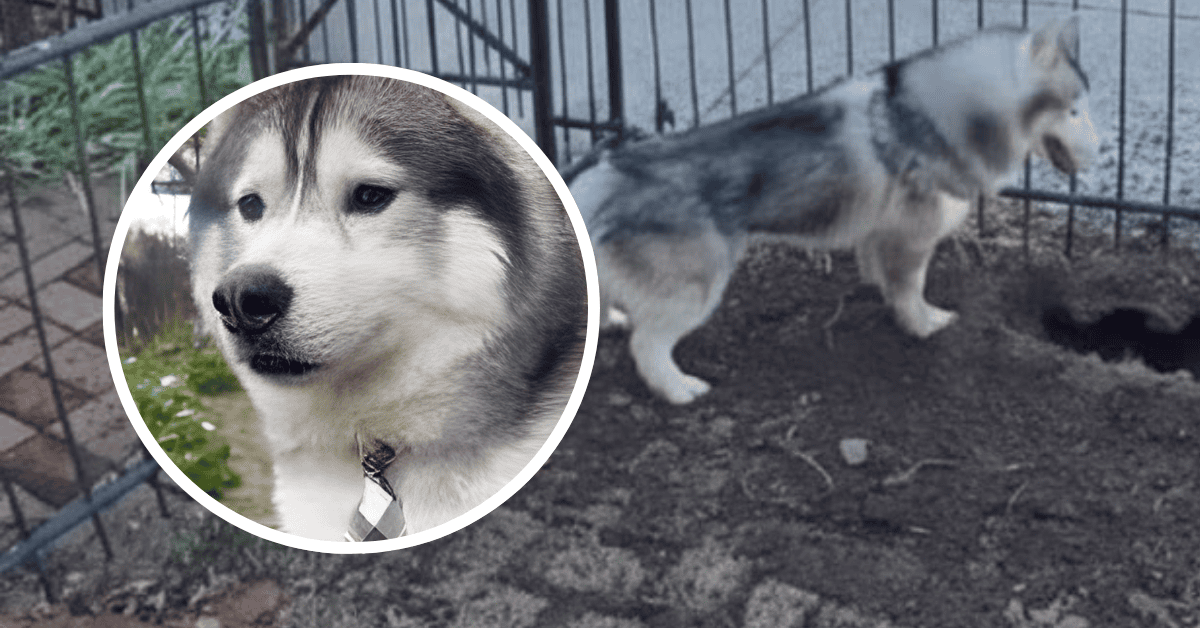
In December 2023, in a quiet Philadelphia neighborhood, a four-year-old husky named Kobe noticed something no human around him did. He kept digging at the same patch of ground in his family’s yard, again and again, with a focus that didn’t look like play or boredom. There was urgency in it. His owner, Chanell Bell, first laughed it off. Dogs dig. But something about Kobe’s persistence stayed with her, and instead of scolding him, she decided to pay attention.
Bell didn’t know what Kobe sensed, only that he wouldn’t stop. Acting on instinct of her own, she took a handheld gas detector and passed it over the spot her dog seemed obsessed with. The reading jumped immediately. Alarmed, she contacted the gas company. When emergency crews arrived, they confirmed what the detector suggested: there was a serious underground gas leak directly beneath the property.
The danger was not theoretical. Technicians explained that gas had been building up below the surface and that a single spark could have triggered an explosion. Something as ordinary as flipping a light switch, starting a car, or using a phone near the source might have been enough. Repairs were ordered on the spot. Crews shut down the line, fixed the leak, and conducted further inspections in the surrounding area. Those checks revealed additional vulnerabilities in nearby gas lines, which were also repaired.
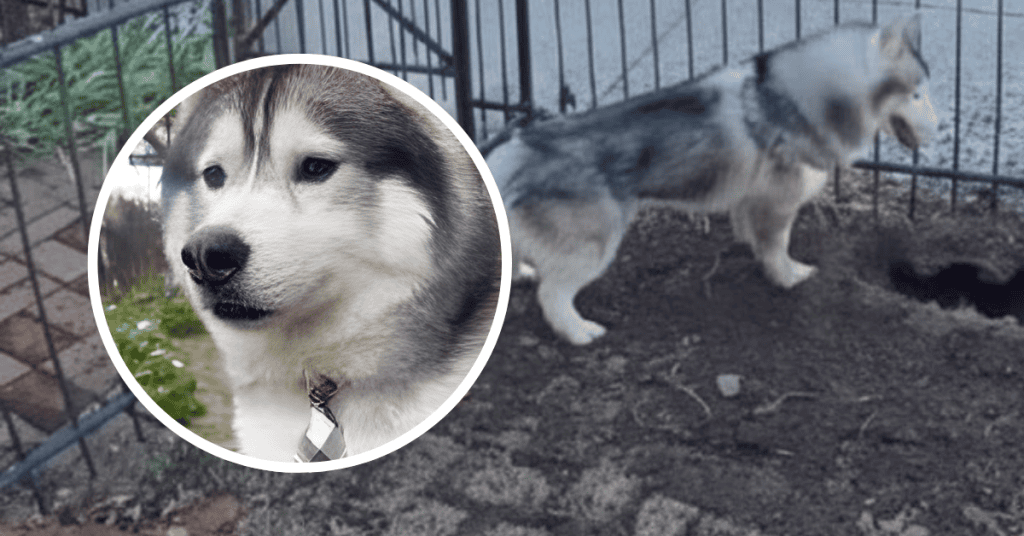
What started as a dog digging in the dirt ended up preventing what could have been a devastating accident, not just for one household but for an entire block. No alarms sounded. No sensors alerted the neighborhood. There were no warning signs posted, no smell strong enough to raise concern. The only signal came from a husky who refused to walk away.
Kobe wasn’t trained to detect gas. He wasn’t acting with heroic intent or awareness of risk. He was simply responding to something that felt wrong to him. Dogs experience the world through senses humans barely understand, and sometimes those senses notice danger long before technology does. But instinct alone wasn’t enough. What mattered just as much was that a human noticed, paused, and chose not to ignore what seemed inconvenient or strange.
In a world filled with alerts, systems, and safeguards, this moment didn’t come from innovation or policy. It came from attention. From a person willing to trust that an animal’s behavior meant something, even without an explanation.
Kobe didn’t save lives because he knew what he was doing. He saved lives because someone listened. Sometimes safety doesn’t arrive as a siren or a headline. Sometimes it arrives quietly, scratching at the ground, asking to be taken seriously.
It is a reminder that awareness is often unglamorous, easily dismissed, and easy to overlook. Real protection does not always announce itself dramatically. Sometimes it looks like patience. Sometimes it looks like curiosity. And sometimes it looks like trusting the quiet signals around us, before silence turns into something far more dangerous. Listening can be the difference between a day and disaster.