
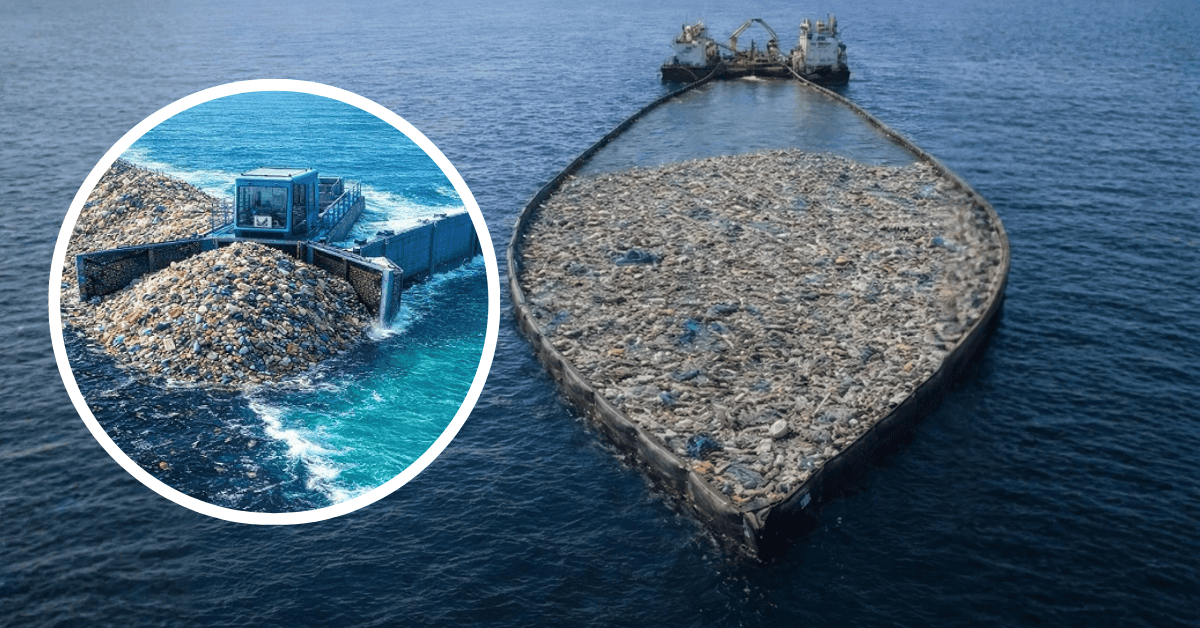
Dutch engineers have developed the world’s largest floating plastic collection system aimed at addressing the Great Pacific Garbage Patch, a massive area of ocean debris. The system is designed to remove plastic waste without harming marine life, using ocean currents to naturally guide debris into collection zones. This innovative approach works like a passive “vacuum,” unlike traditional methods that rely on active propulsion or nets.
Instead of using nets or mechanical systems that could endanger sea creatures, the floating barriers allow fish and plankton to pass through safely while funneling the plastic waste toward collection areas. The collected plastic is then periodically removed and recycled. The design of this system prioritizes environmental safety, offering an effective solution for the growing issue of marine plastic pollution.
The Great Pacific Garbage Patch contains millions of tons of plastic, much of which degrades into harmful microplastics that enter the food chain, damaging marine ecosystems. By removing larger debris, the system helps slow down this fragmentation process and provides an opportunity for the ocean to recover. While marine scientists acknowledge that cleanup efforts alone will not solve the broader problem of plastic pollution, they emphasize that combining large-scale waste removal with reduced plastic production can significantly contribute to the recovery of the ocean environment.