In the vast and often lawless stretches of the Arizona Territory during the 1880s, justice could be slow to arrive—if it arrived at all. Ranches were scattered across miles of dry desert, and many families lived far beyond the reach of town sheriffs or courts. In this harsh frontier world, survival often depended on courage, self-reliance, and the willingness to act when no one else could.
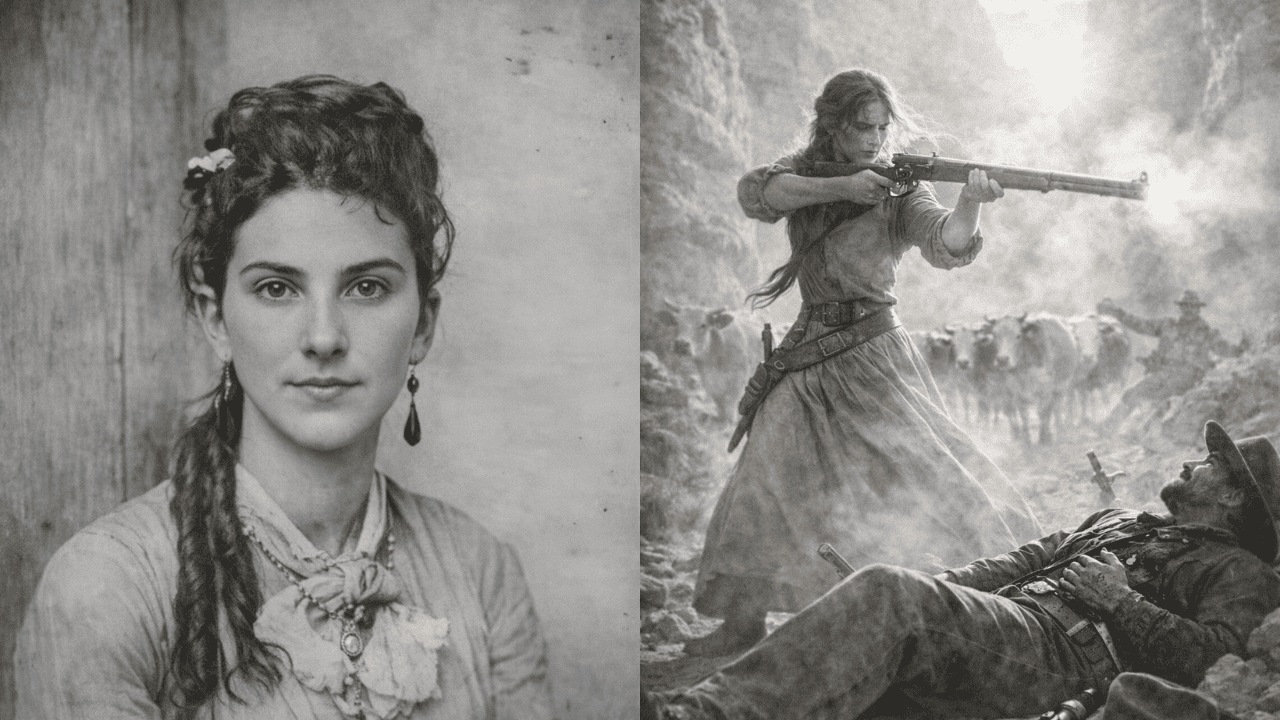
In 1883, seventeen-year-old Catherine “Cat” Dawson learned this reality in the most brutal way imaginable.
Cat lived with her family on a remote ranch roughly forty miles from the nearest town. Life on the frontier was never easy, but the Dawson family had managed to build a life among the dust, cattle, and endless horizon. One morning, however, violence arrived at their doorstep.
A group of six rustlers rode onto the property demanding cattle. These men were not strangers to intimidation. Rustling was common in the territory, and isolated ranchers were often easy targets.
Cat’s brother, James Dawson, refused to surrender their herd.
The confrontation ended in an instant. The leader of the rustlers raised his gun and shot James in the chest. As quickly as they had appeared, the men drove off with the cattle, leaving the ranch in stunned silence.
For most families in the territory, the only option would have been to wait for the law. But the nearest marshal was days away, and by the time he arrived the rustlers would be long gone.
Cat Dawson refused to wait.
Before dawn the next morning, she saddled a horse, filled her canteens with water, and took down the Winchester rifle she had been using since childhood. The desert around her stretched endlessly—dry plains, rocky hills, and scorching sun. Somewhere out there were the men who had killed her brother.
She followed their trail.
For four relentless days Cat tracked the rustlers across the Arizona desert. She followed hoofprints across dry washes and through narrow canyons, reading the land the way experienced riders often did on the frontier. The heat was punishing during the day, and the cold desert nights offered little comfort, but she pressed on.
Finally, she found them.
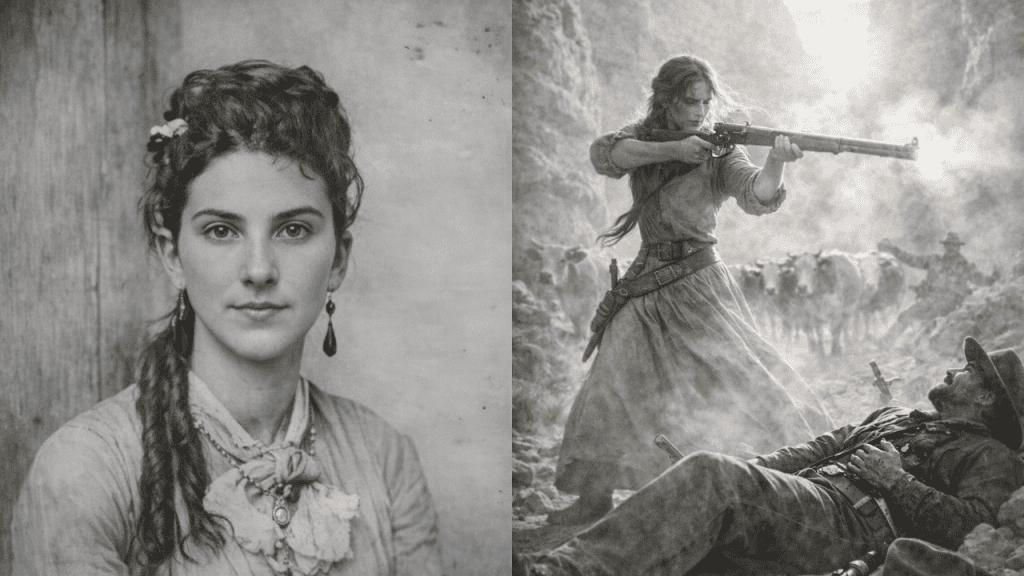
The rustlers had made camp inside a rocky box canyon, believing the remote location would keep them hidden. Cat waited for the right moment. As evening settled across the desert, she positioned herself above the camp with a clear view.
When the leader stepped into the open, she fired.
The bullet struck him, ending the man who had killed her brother. The remaining rustlers fled in chaos, abandoning the stolen cattle.
Cat gathered the herd and began the long ride back to the ranch.
When she returned home, she brought the cattle with her. According to stories later told in the region, she rarely spoke about what had happened. There were no speeches, no celebration, and no attempt to turn the event into legend.
But word spread across the Arizona Territory.
The story of the teenage rancher who tracked down a gang of rustlers alone became one of the frontier’s quieter but unforgettable tales—one that reflected the harsh realities of life in the American West, where courage sometimes arrived in the most unexpected form.