In 1917, as World War I continued to devastate Europe, an American sculptor named Anna Coleman Ladd quietly began work in Paris that would change lives in a deeply personal way. While the war is often remembered for its масштаб destruction and loss, Ladd’s contribution focused on something more intimate—the restoration of identity for soldiers who had suffered severe facial injuries in the trenches.
Trench warfare brought a new kind of horror. Explosions, shrapnel, and gunfire left many soldiers with disfigured faces, injuries so severe that they often made it difficult for them to return to public life. Beyond the physical pain, these men faced emotional and social isolation. Many felt unable to be seen, struggling with the loss of their appearance and, in many ways, their sense of self.
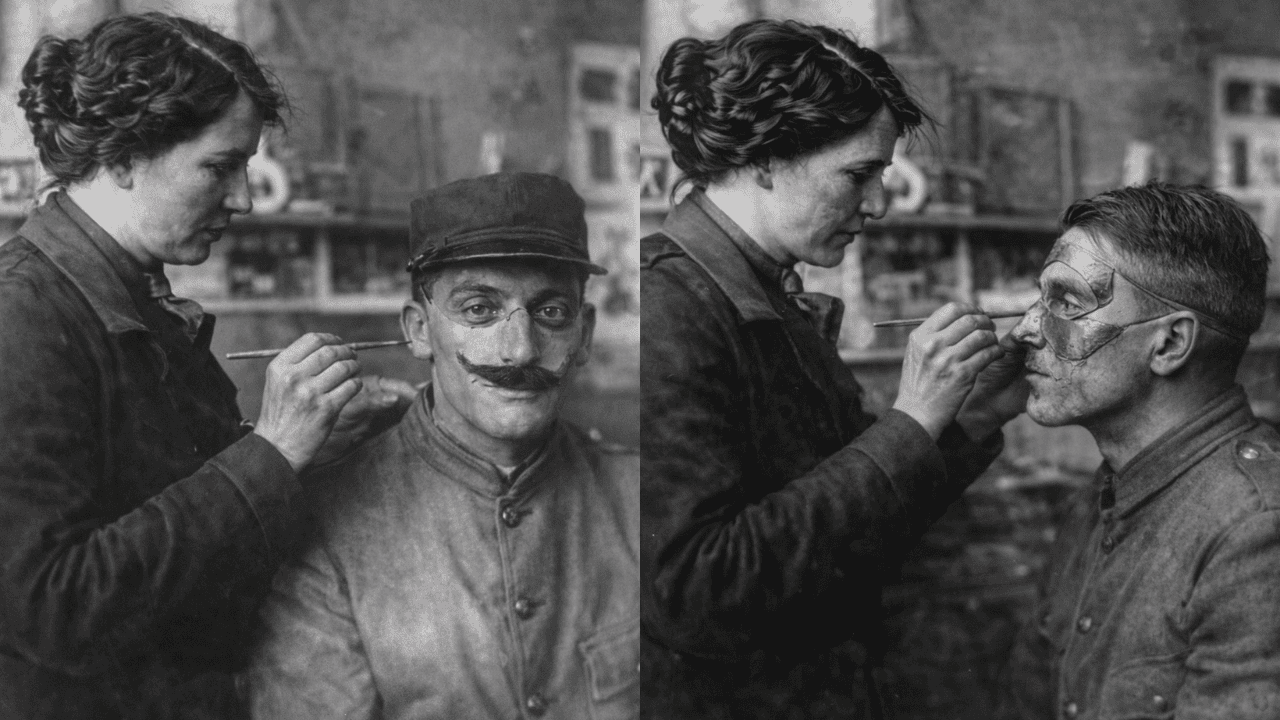
Recognizing this silent suffering, Anna Coleman Ladd used her artistic skills to offer a solution. Working with materials such as thin sheets of copper, she carefully sculpted facial masks designed to resemble the soldiers’ original features. These masks were then painted with great detail to match skin tone, hair, and even subtle expressions. Each piece was crafted individually, tailored to the unique structure of the wearer’s face.
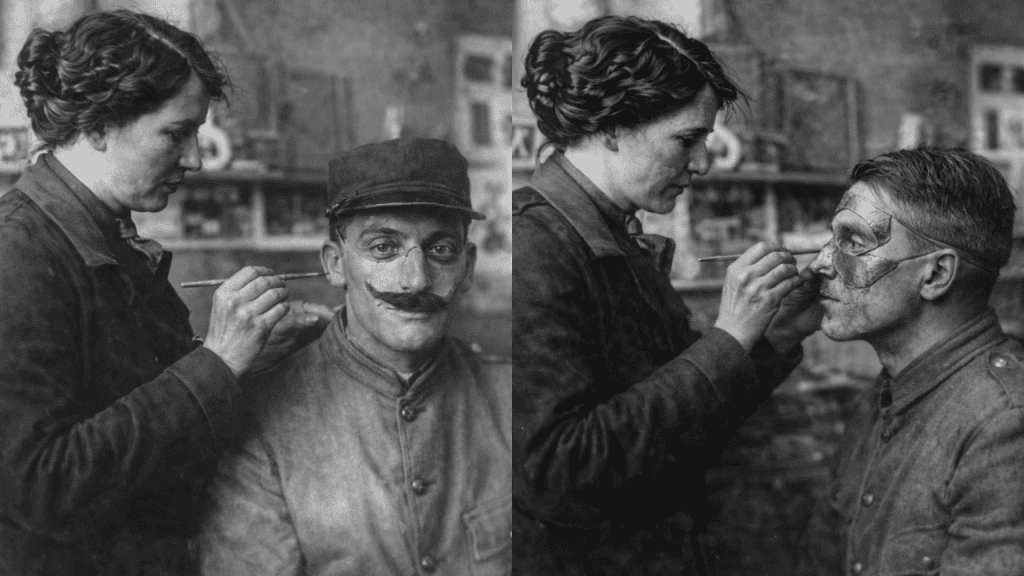
But Ladd’s work went far beyond artistry. It was an act of compassion. These masks were not simply cosmetic coverings—they were a means of restoring dignity. For many soldiers, wearing them meant they could step outside again without fear of shock or pity. It allowed them to re-enter society, reconnect with others, and reclaim a sense of normalcy that the war had taken from them.
Her studio in Paris became a place of quiet transformation. Soldiers arrived carrying the visible scars of war, and through Ladd’s careful work, they left with something invaluable—a chance to feel human again in a world that had nearly erased them.
Though her contributions were not always widely recognized at the time, Anna Coleman Ladd’s work remains one of the most humane responses to the brutal realities of war. She demonstrated how art and empathy can intersect to address even the deepest wounds.
Today, her legacy stands as a reminder that healing is not only about survival, but about restoring identity, confidence, and connection. In the aftermath of one of history’s deadliest conflicts, Ladd gave countless men something they thought was lost forever—the courage to be seen again.