Friends, what if the most powerful form of disaster relief didn’t come from a government agency, a massive corporation, or a viral fundraiser—but from one woman who simply understood her people?
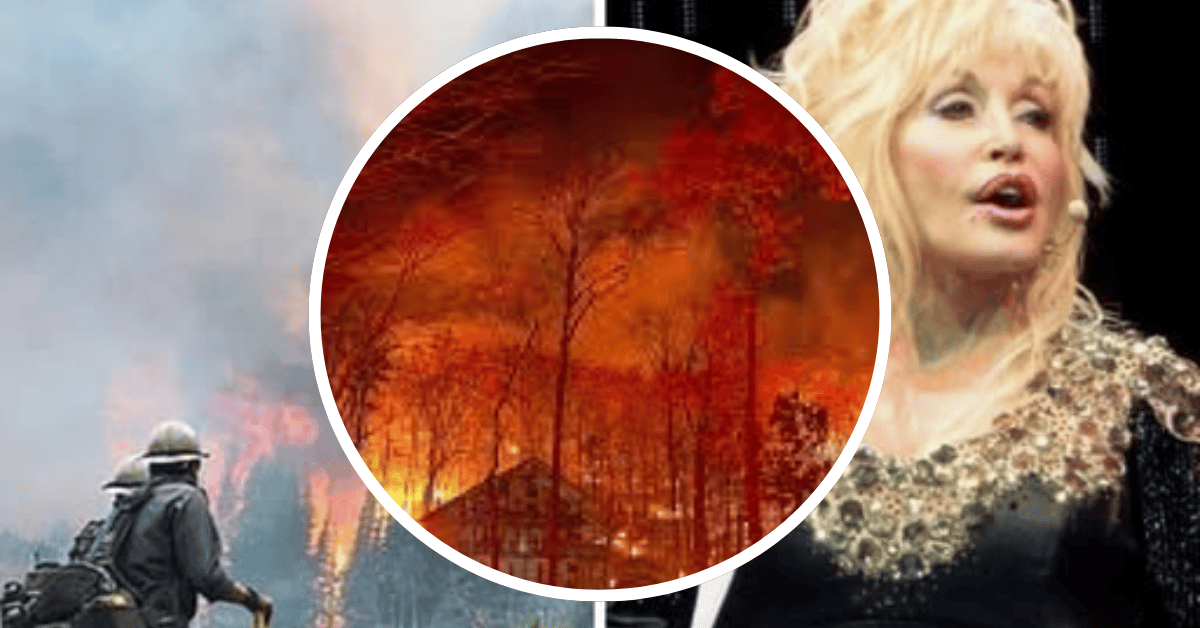
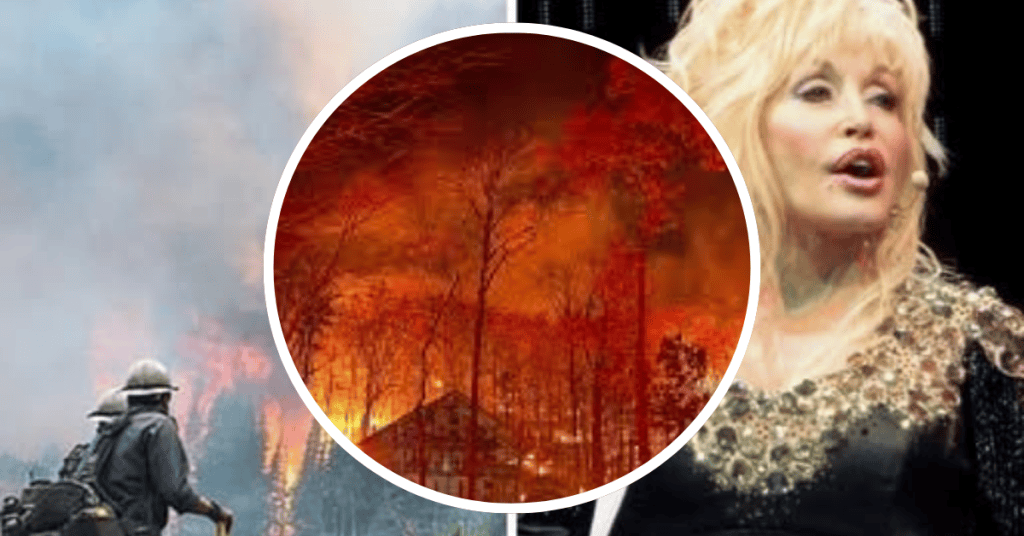
In November 2016, wildfires ripped through Gatlinburg and Sevier County, Tennessee, with terrifying speed. Fueled by drought and high winds, the flames jumped roads and hillsides, consuming homes, businesses, and memories in a matter of hours. Families escaped with little more than the clothes they were wearing. When the smoke cleared, entire neighborhoods were gone, and the long, exhausting process of recovery loomed ahead.
In the middle of that devastation, Dolly Parton stepped forward.
Not as a global superstar. Not as a symbol. But as a local.
Dolly grew up in these mountains. She knew the roads, the schools, the churches, and the quiet pride of the people who lived there. Long before the fires, her presence was already woven into the region’s daily life. Through Dollywood and its related businesses, she had become one of the area’s largest employers, supporting thousands of families in ways that rarely made headlines.
So when the fires ended, Dolly didn’t wait for bureaucratic systems to catch up. She didn’t ask people to share their pain publicly or prove their losses under the glare of cameras. She understood something simple: people didn’t need speeches—they needed stability.
That’s how the My People Fund was born.
Instead of complicated applications or symbolic gestures, the fund offered something radical in its simplicity. Families who lost their homes received one thousand dollars every month for six months. No strings attached. No conditions. Just steady, predictable support to help them breathe while insurance claims stalled and rebuilding plans crawled forward.
In total, more than nine million dollars were raised. Over 900 families were helped. Rent was paid. Groceries were bought. Gas tanks were filled. Kids stayed in school. Life, though shaken, didn’t completely collapse.
What made the effort so powerful wasn’t just the money—it was the dignity. Dolly trusted people to know what they needed most. She didn’t manage them. She didn’t market their suffering. She simply showed up and stayed consistent.
That approach caught national attention. The Federal Bureau of Investigation later honored Dolly for her leadership—not just for writing checks, but for organizing meaningful, immediate help when it mattered most. In a moment when systems often move slowly, her response moved at the speed of human need.
The twist in this story is easy to miss. The most effective disaster response wasn’t loud or branded. It didn’t rely on spectacle or slogans. It wasn’t about visibility—it was about presence.
It worked because it was personal. Because it was local. Because it was built on trust.
Dolly Parton didn’t rebuild Sevier County by acting above the community. She rebuilt it by standing inside it, shoulder to shoulder with the people she had always called her own.
Sometimes the best way to help isn’t to control, impress, or perform.
Sometimes the best way to rebuild a community is simply to trust it—and to mean it.