
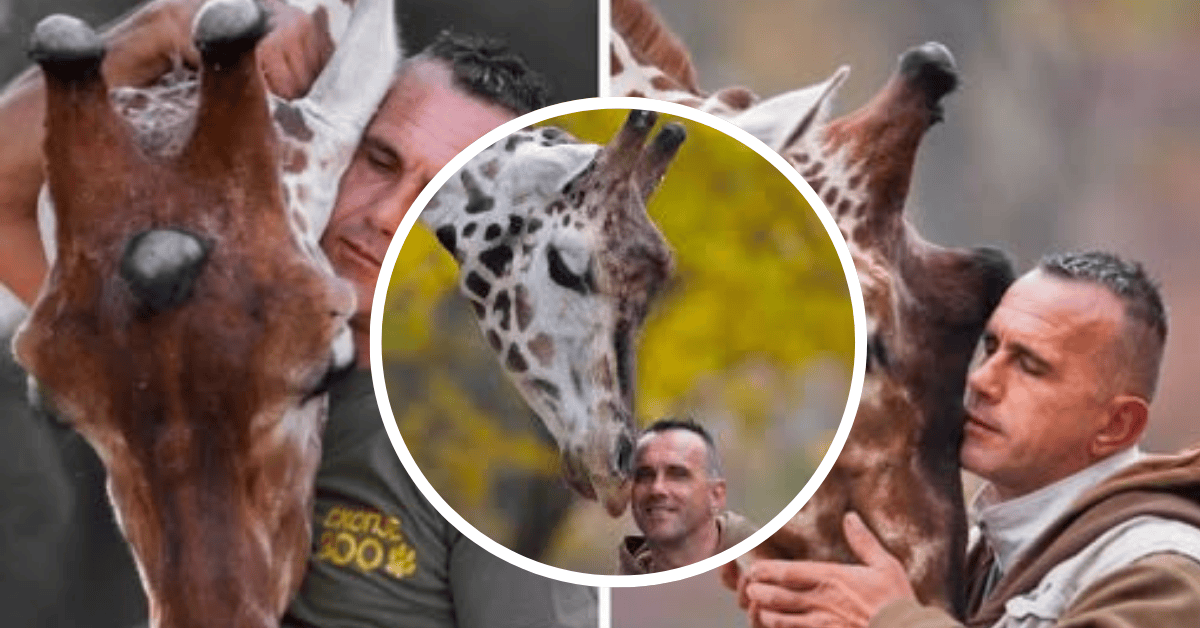
On the morning of November 26, 2023, staff at Skopje Zoo in North Macedonia shared news that rippled quietly but deeply through the community. Riste Trajkovski, a longtime zookeeper, had died suddenly in the early hours of the day. He was just 44 years old. For nearly a decade, his daily life had revolved around the zoo’s giraffes—feeding them, monitoring their health, and moving through the same routines that turn a job into a bond.
For many, the loss was already hard to process. Then, only hours later, the zoo released another announcement that felt almost unreal.
The zoo’s last remaining giraffe, a ten-year-old animal Trajkovski had worked with closely for years, also died that same day. Veterinarians and staff attempted to intervene, but the giraffe could not be saved. By nightfall, both a caretaker and the animal he had helped raise were gone.
There was no official statement connecting the two deaths. No shared illness. No accident. No claim of cause and effect. On paper, they were unrelated events that happened to fall on the same date—a tragic coincidence, nothing more.
And yet, people couldn’t stop talking about it.
Because anyone who has spent time around animals understands something that doesn’t always show up in reports or medical charts. Animal care—especially for large, sensitive animals like giraffes—is built on routine, familiarity, and trust. These animals learn voices, movements, and patterns. They respond to the presence of people they know. Care, when repeated day after day for years, becomes part of an animal’s environment as much as food or shelter.
When that continuity breaks suddenly, the effects aren’t always visible or immediate.
Stress doesn’t always announce itself. It can show up quietly—in appetite changes, in behavior shifts, in physical decline that has no single clear trigger. The absence of a familiar presence can matter, even if it can’t be measured or officially acknowledged.
This is why the story lingered.
Not because it proves a mystical bond or suggests something supernatural. But because it highlights how deeply interconnected lives can become through consistency and care. Riste Trajkovski wasn’t just an employee clocking in and out. He was part of the giraffe’s daily world. His routines shaped the animal’s sense of normal. And when he was suddenly gone, that world changed overnight.
Zoos are often discussed in terms of animals on display, but behind the scenes, they are built on relationships—quiet, repetitive, rarely noticed by visitors. When one side of that relationship disappears, the impact can ripple in ways that are difficult to document but impossible to dismiss.
The deaths of Trajkovski and the giraffe may never be formally linked, and they don’t need to be. The meaning of the story doesn’t come from causation. It comes from timing. From the way two losses collided on the same day, forcing people to pause and reflect on the unseen threads that tie caretakers and animals together.
Sometimes, meaning doesn’t arrive with answers.
Sometimes it arrives as a question we can’t quite let go of—one that reminds us how quietly, and how deeply, lives can become intertwined.