

Jessikah Inaba made history in the United Kingdom by becoming the country’s first Black and blind female barrister, an achievement that has been celebrated as a landmark moment for diversity and representation within the legal profession. At just 23 years old, Inaba successfully qualified for the Bar after completing a demanding five-year program at the University of Law in London. Born with bilateral microphthalmia, a condition that severely limits vision, she accomplished the feat entirely using Braille, navigating complex legal texts, case law, and academic requirements with remarkable determination. Legal organizations, including the Bar Council, hailed her success as a breakthrough, with Inaba herself describing her journey as shattering a “triple-glazed glass ceiling” composed of barriers related to her gender, race, and disability.
Inaba’s path to this historic milestone was far from easy, marked by both systemic obstacles and personal sacrifice. Accessible materials were often unavailable or insufficient, forcing her to spend countless hours transcribing textbooks, academic papers, and legal cases into Braille before she could even begin to study their content. The process was painstaking, requiring patience, precision, and endurance, and often meant that her workload was significantly heavier than that of her peers. On many occasions, she functioned on only three hours of sleep, balancing the demands of her rigorous studies with the physical and mental strain of navigating a world not designed for someone with her level of visual impairment. The pressure and exhaustion eventually led to serious health struggles, including a hospitalization in 2019, highlighting the toll that accessibility challenges can take on students and professionals with disabilities.
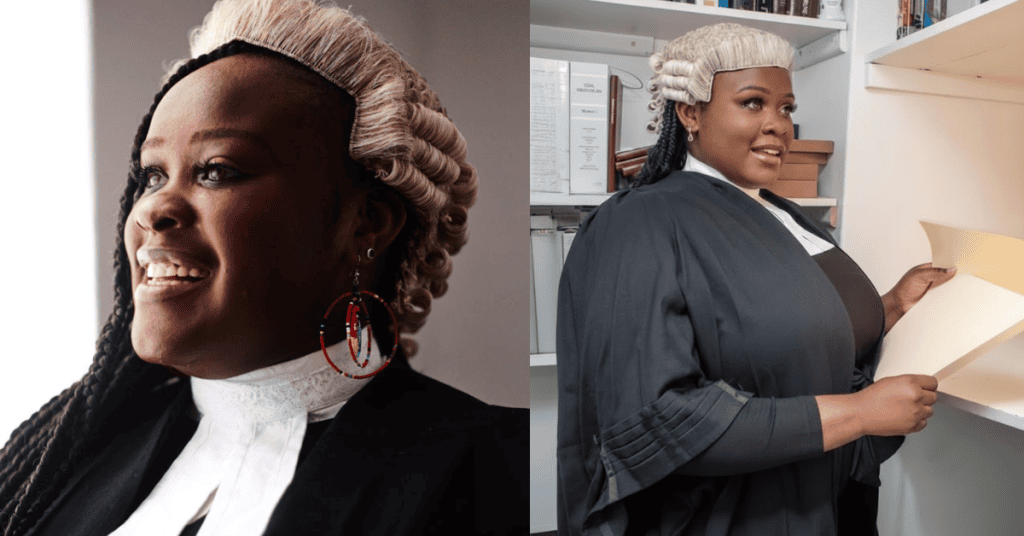
Despite these challenges, Inaba remained resolute, motivated by a vision of her future in law and a determination to serve as a role model for others facing similar obstacles. Along the way, she encountered moments of bias and skepticism within the legal field, yet she continued to persevere, drawing strength from her own capabilities and the support of mentors who believed in her potential. Her success demonstrates the impact of resilience, resourcefulness, and courage in overcoming barriers that might seem insurmountable.
Now, Inaba is preparing to pursue a pupillage, the final step in her journey to practicing as a fully qualified barrister. Beyond her personal ambitions, she hopes to use her platform to advocate for greater inclusivity and accessibility in the legal profession. By sharing her story, mentoring others, and highlighting the structural changes needed to accommodate marginalized individuals, she aims to ensure that future generations encounter fewer obstacles than she did.
Jessikah Inaba’s journey is a testament not only to extraordinary intelligence and hard work but also to the transformative power of perseverance, courage, and advocacy. Her achievement challenges long-standing assumptions about who can succeed in law and underscores the importance of creating systems that support, rather than hinder, individuals from diverse backgrounds. Inaba’s success is more than a personal victory—it is a beacon of possibility for others who face the intersecting barriers of race, gender, and disability.