
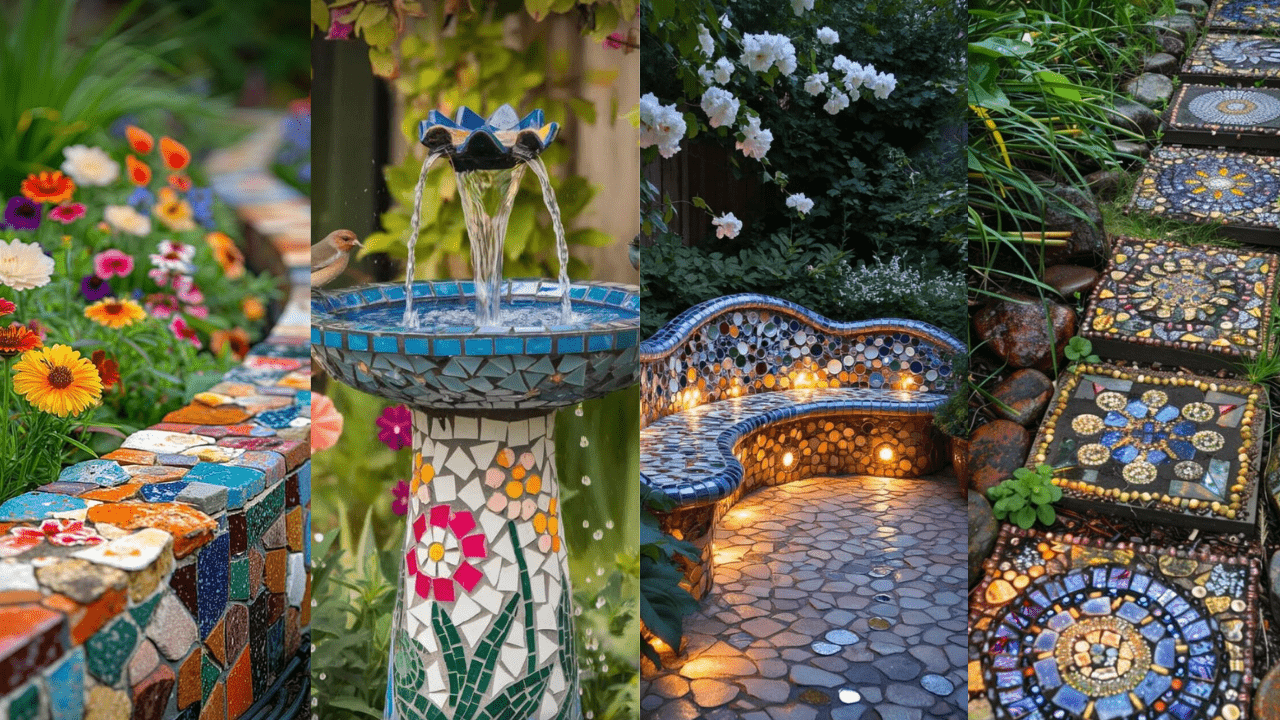
Mosaic garden art is a creative way to add color, texture, and personality to an outdoor space. By arranging small pieces of tile, glass, ceramic, stone, or other suitable materials into patterns, you can transform ordinary garden features into eye-catching decorations. Mosaics work particularly well because they can be incorporated into many different parts of a yard, from stepping stones and flower pots to benches, walls, pathways, and fountains. The original inspiration for this topic includes a range of projects designed to bring artistic character into gardens.
One of the best things about mosaic art in your garden is that you don’t need to make every project complicated. Small designs can have just as much impact as large installations, especially when their colors complement surrounding flowers and greenery. Recycled materials can also make beautiful mosaic pieces, giving old tiles, broken dishes, beads, or other suitable materials a second life. Cornell Garden-Based Learning notes that mosaics can be made from new, recycled, or found materials and incorporated into features such as pots, paths, benches, walls, and fountains. Before beginning an outdoor project, choose materials, adhesives, grout, and finishes that are appropriate for exterior conditions.
1. Mosaic Stepping Stones
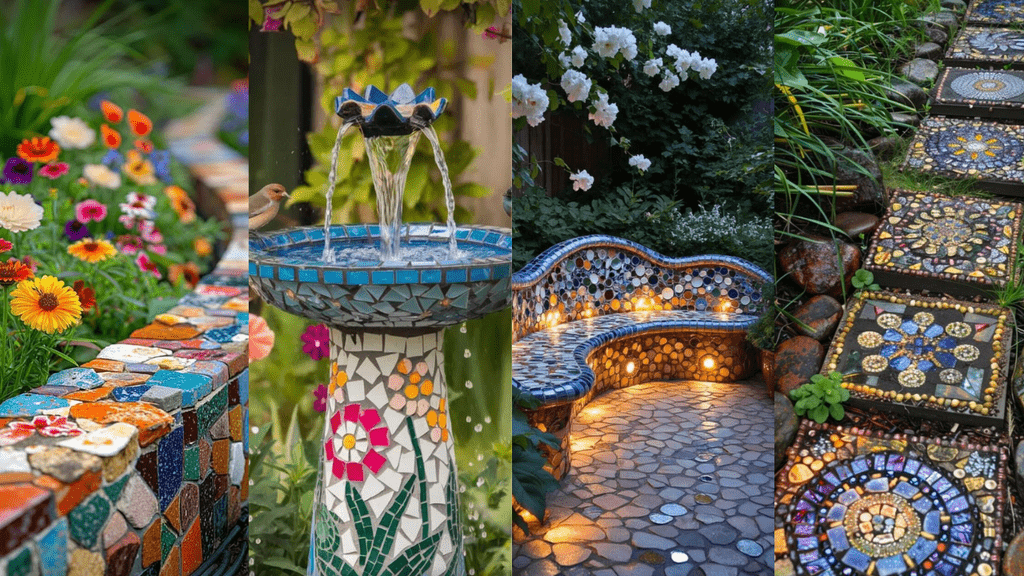
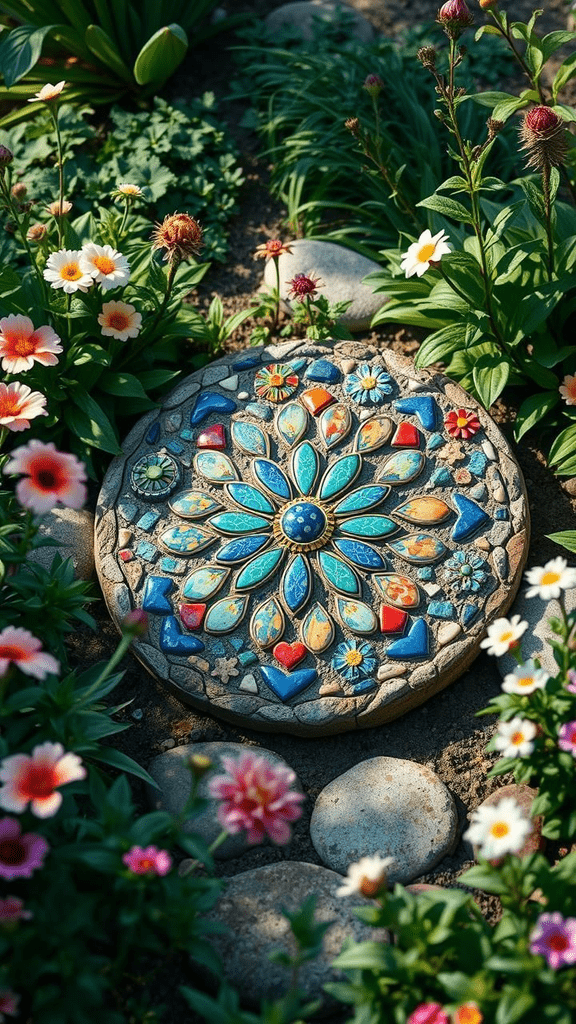
Mosaic stepping stones are a wonderful starting point if you want to combine artwork with a practical garden feature. Instead of leaving a pathway plain, you can decorate individual stones with colorful tiles, pebbles, glass pieces, or broken ceramics. Each stone can have its own design, or you can create a coordinated series using the same colors and patterns. Floral motifs, geometric shapes, stars, leaves, and simple abstract arrangements can all work beautifully.
Because stepping stones are exposed to weather and foot traffic, durability is especially important. Start with a strong, stable base and plan the design before attaching the mosaic pieces. The original DIY & Beyond article recommends mixing different tile sizes and using bright colors to make the stepping stones more visually interesting. Keep the finished surface as level as possible so the stones remain comfortable and safe to walk on. This project can also become a fun way to use leftover tiles from other crafts or home improvement projects.
2. Mosaic Flower Pots
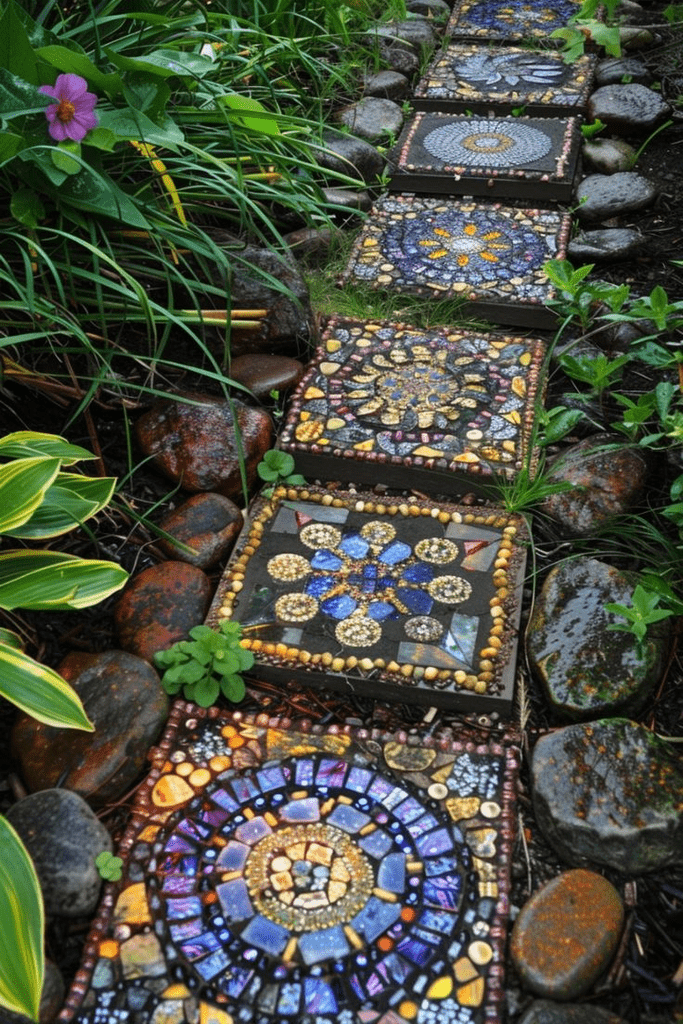
Give ordinary flower pots a colorful makeover with mosaic pieces. This is one of the easiest ways to introduce mosaic art into a garden because the project can be completed on a relatively small surface. Terracotta, ceramic, or other suitable pots can become decorative focal points when covered with colorful tile fragments, glass pieces, or carefully selected recycled materials.
Before gluing anything, arrange your pieces around the pot to see how the colors and shapes work together. You can create a repeating pattern, a random patchwork design, or a simple floral motif. The original inspiration suggests experimenting with different pot sizes and mixing colors to create a more dynamic arrangement. After the design is complete, use an exterior-appropriate finish to help protect it from outdoor conditions. Try coordinating the mosaic colors with the flowers or foliage inside the pots for a more cohesive garden design.
3. Decorative Mosaic Garden Bench
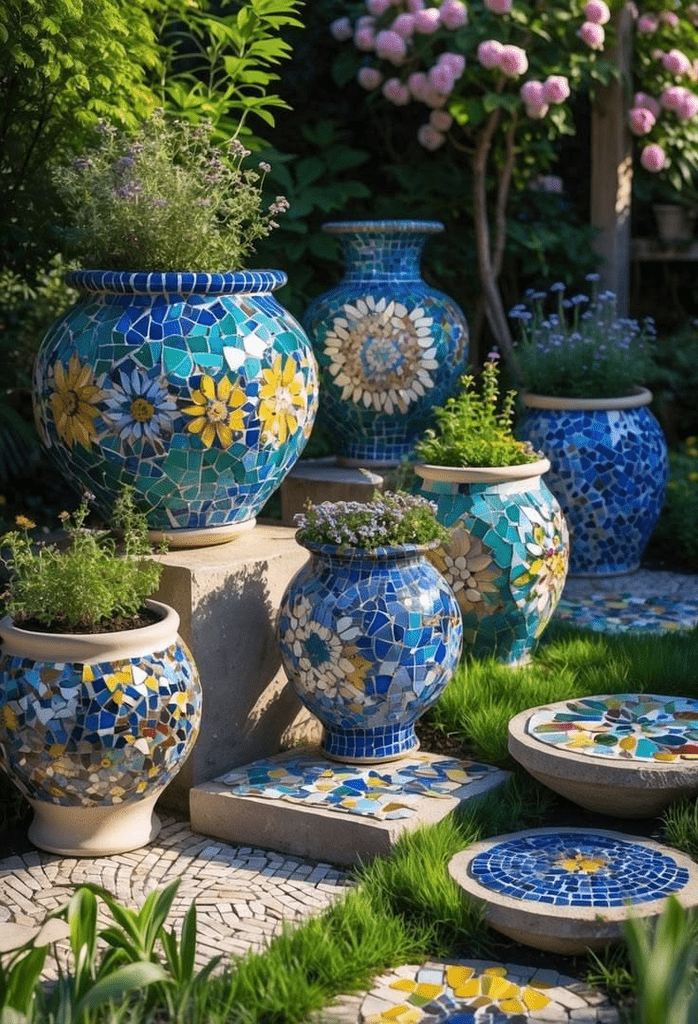
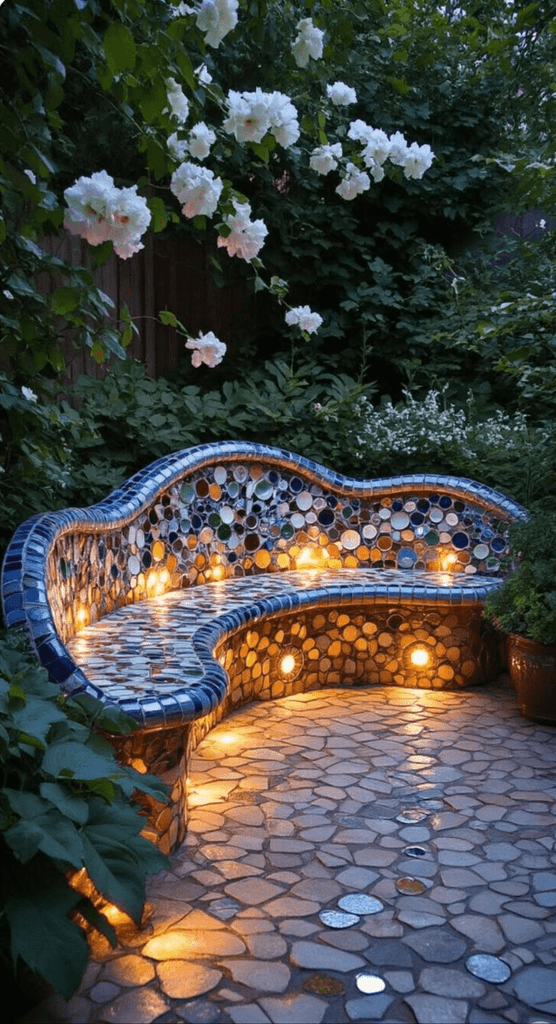
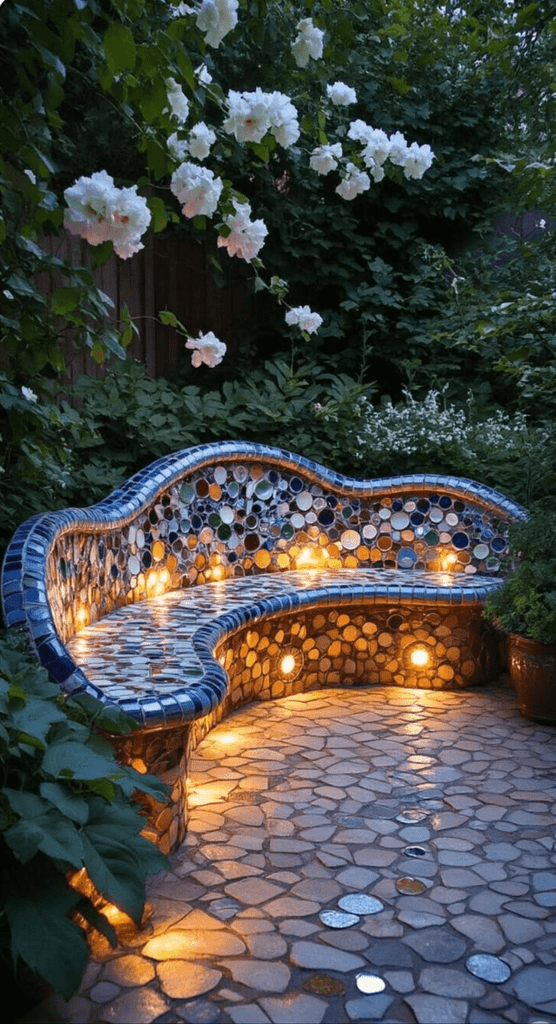
A mosaic garden bench can become both a comfortable seating area and a piece of outdoor artwork. You can decorate the seat, backrest, or selected sections with colorful mosaic patterns. An old outdoor bench can also be given a new personality by adding a carefully planned mosaic surface.
Choose a sturdy base that can support the finished weight, and make sure the materials are suitable for outdoor exposure. Floral patterns can create a romantic garden feel, while geometric shapes and contrasting colors can give the bench a more contemporary appearance. You could even design the mosaic around a favorite flower, leaf pattern, or abstract motif.
Since people will sit on the bench, avoid leaving sharp or uneven pieces exposed. Smooth, properly finished surfaces are particularly important for furniture. A weather-resistant finish can also help protect the completed artwork. A mosaic bench works especially well near a flower bed, under a tree, or beside a garden path where its colors can become part of the overall landscape.
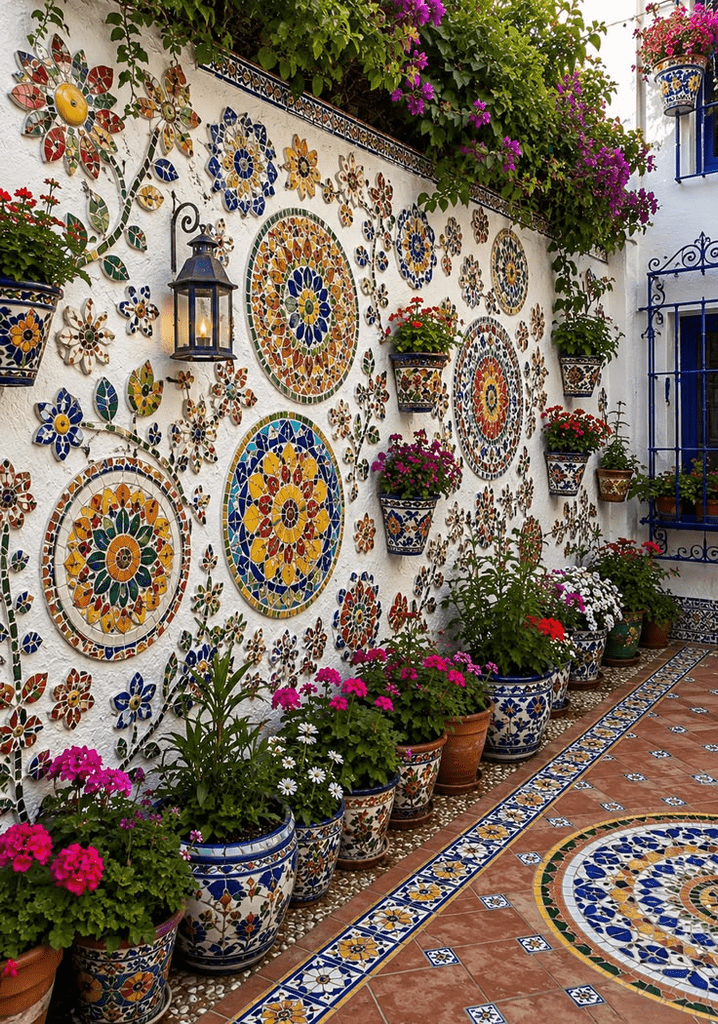
4. Vibrant Mosaic Wall Art
A plain garden wall or fence can become an artistic focal point with mosaic wall art. You can create a small decorative panel or a much larger mural depending on the available space. Nature-inspired designs are particularly suitable outdoors, including flowers, butterflies, birds, leaves, sun shapes, and abstract representations of the surrounding landscape.
One advantage of wall art is that it doesn’t take up valuable ground space. This makes it especially useful for smaller gardens, patios, and courtyard spaces. Plan your design before attaching the pieces and consider how it will look from different viewing angles. The original article recommends placing wall artwork where it can be easily seen from garden paths or seating areas and choosing durable, weather-resistant materials.
You can also use contrasting textures to create depth. Combining smooth glass with ceramic pieces or natural stone can make a relatively simple pattern much more interesting. Keep the overall color palette connected to the plants and other garden decorations nearby.
5. Mosaic Bird Bath
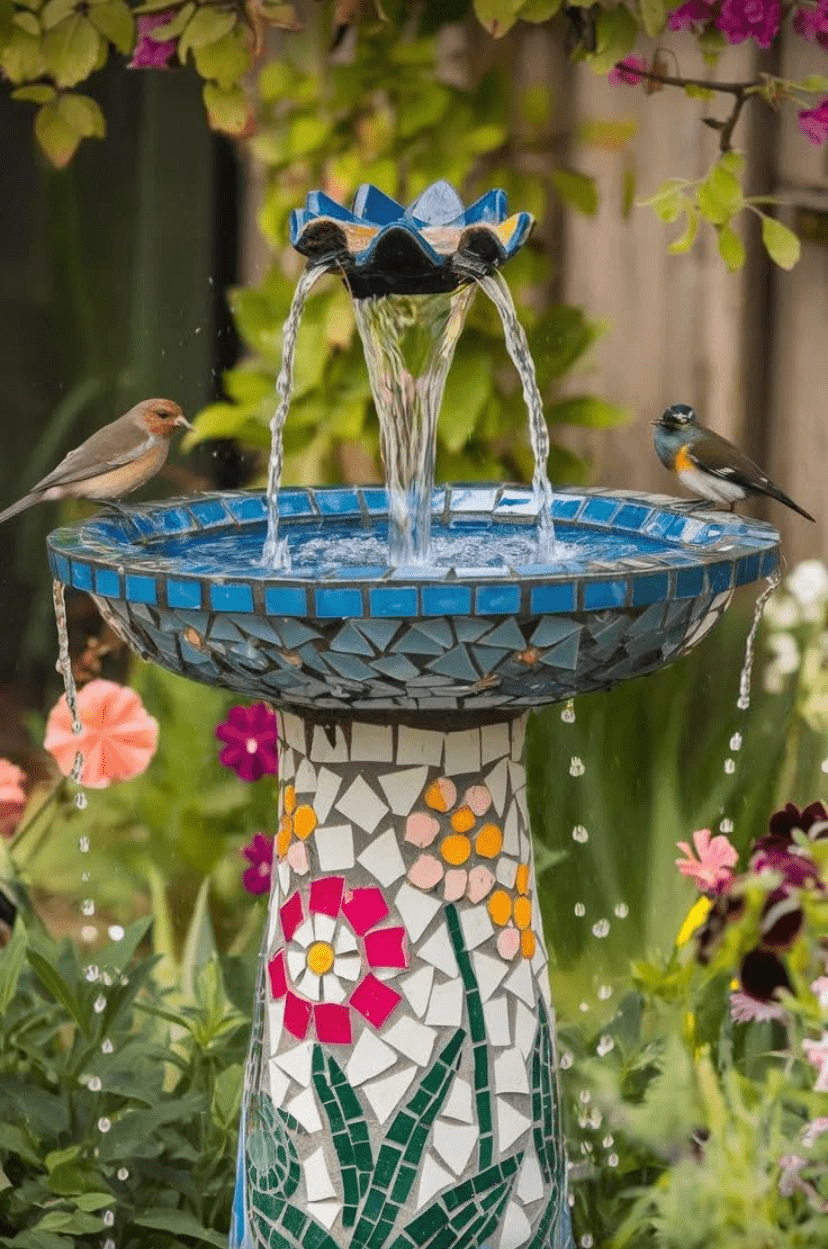
A mosaic bird bath combines garden decoration with a welcoming feature for visiting birds. A plain bird bath can be transformed with colorful tiles arranged around the basin or its supporting structure. Blue, green, turquoise, and earthy tones can create a natural look, while brighter colors can turn the bird bath into a standout feature.
When decorating a bird bath, choose materials and finishes carefully because the surface will regularly come into contact with water. The basin should remain comfortable and practical for birds, so avoid creating sharp edges or using unsuitable materials where birds will bathe or drink. The original inspiration recommends using strong, water-resistant adhesive and layering different shades to create a natural appearance.
Place the finished bird bath somewhere visible from a window or seating area while still providing birds with a relatively safe environment. Surrounding it with plants can make the feature look naturally integrated into the garden.
6. Mosaic Garden Pathway
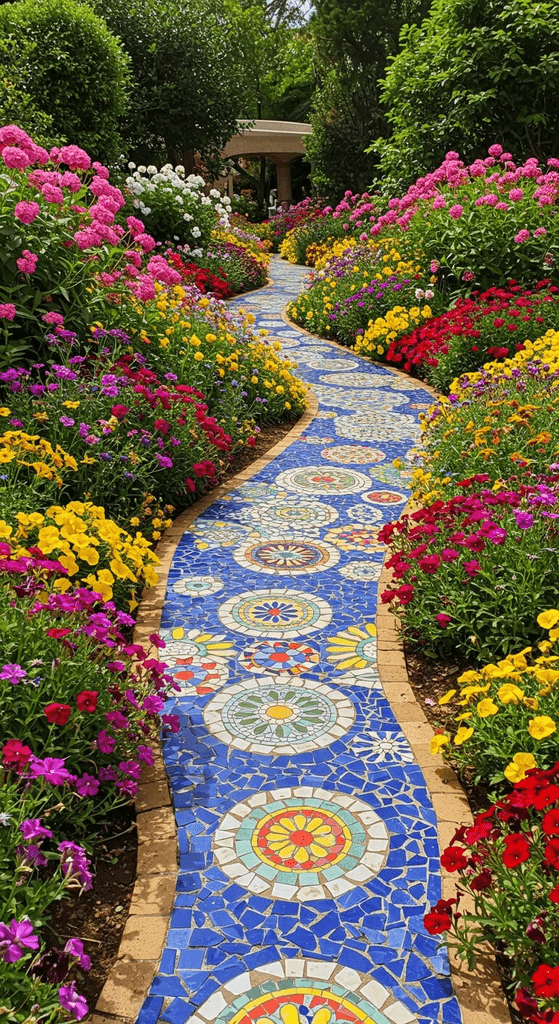
A full mosaic pathway can turn an ordinary garden walkway into an artistic experience. Rather than decorating only individual stepping stones, you can incorporate mosaic patterns throughout sections of the path. Use stones, ceramic fragments, glass pieces, or tiles to create borders, geometric patterns, floral motifs, or flowing designs.
Before starting, map out the pathway and decide where your most detailed designs should appear. A repeating pattern can create a sense of continuity, while irregular designs can give the garden a more relaxed, whimsical appearance. The original article suggests planning the design on paper first and combining different materials to create varied textures and colors.
Safety should be a major consideration for any mosaic surface people will walk on. Keep the finished surface stable and reasonably even, and make sure pieces are securely attached. A well-designed mosaic path can become one of the defining features of a garden, especially when it leads toward a seating area, fountain, greenhouse, or favorite planting bed.
7. Mosaic Garden Sculptures
Mosaic sculptures can add a playful or artistic element to your yard. You can cover simple garden forms with small pieces of tile, ceramic, glass, or stone to create animals, birds, abstract shapes, flowers, or whimsical characters. This is a great opportunity to make something completely personal rather than following a traditional garden decoration style.
Start with a sturdy structure capable of supporting the mosaic materials. The shape should be stable before you begin attaching pieces. For beginners, simple silhouettes are easier to decorate than highly detailed sculptures. You can also use a limited color palette to make the finished design look more intentional.
Think about how the sculpture will look from different directions. A piece positioned among flowers may need colors that complement the surrounding plants, while a sculpture against a plain wall can use stronger contrasts. Mosaic sculptures are particularly effective when used as unexpected focal points tucked into corners, flower beds, or near pathways.
8. Mosaic Tabletops
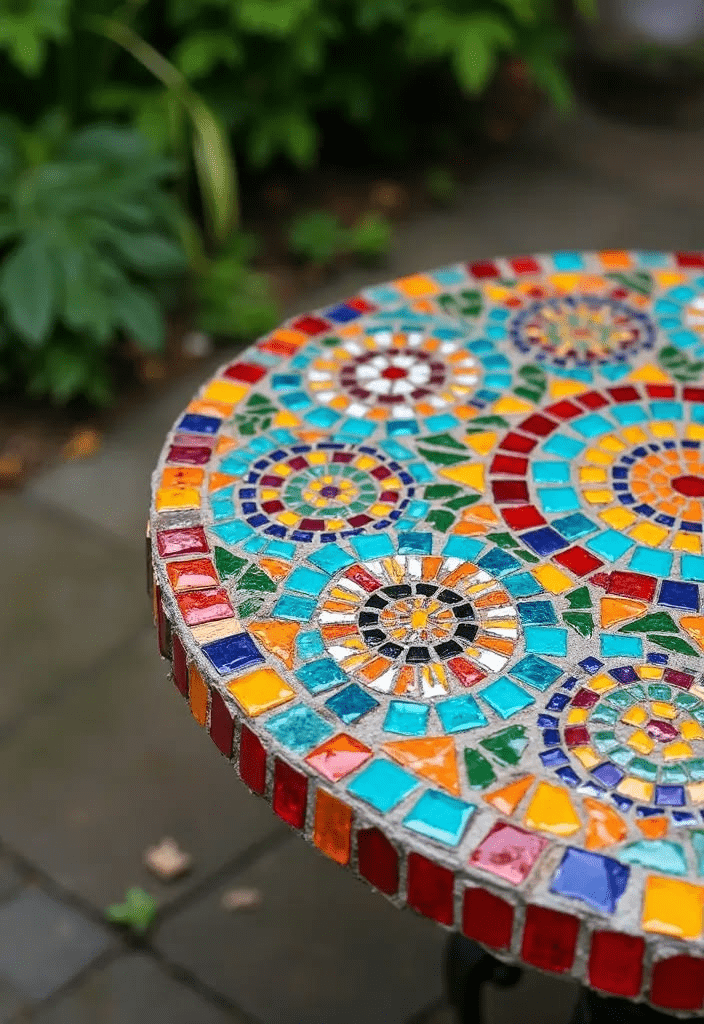
Turn an ordinary outdoor table into a colorful work of art with a mosaic tabletop. This project works especially well with small patio tables or side tables because the surface is manageable and provides plenty of room for creative patterns. You can decorate an old table as an upcycling project or start with a simple new table.
Before attaching the pieces, measure the surface and create a layout that fits within its boundaries. Consider a symmetrical pattern if you prefer a polished look, or try an irregular arrangement for a more artistic appearance. Floral motifs, mandalas, geometric patterns, and abstract designs are all possibilities.
The finished table should be properly protected for outdoor use. The original DIY & Beyond article specifically recommends durable materials and an outdoor-appropriate sealer for mosaic tabletops. If the table will be used regularly, pay particular attention to creating a smooth, practical surface that is easy to clean.
9. Mosaic Garden Borders
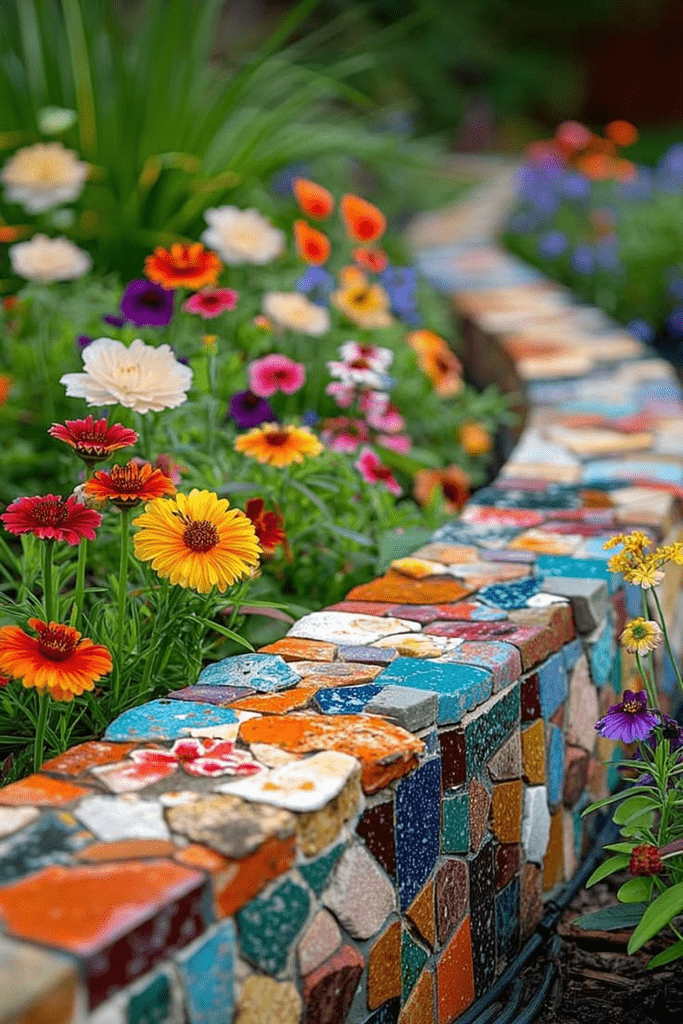
Mosaic borders can add personality while visually separating flower beds, lawns, paths, or other garden areas. Instead of using plain edging, create a decorative border with stones, ceramic pieces, or colorful tiles. You can make the design subtle by using natural colors or create a bold statement with bright contrasting pieces.
The key is to keep the border connected to the rest of your garden design. For example, a border featuring blue and white tiles could complement a nearby water feature, while warm terracotta and orange tones may work beautifully around a Mediterranean-inspired planting area.
Lay out the pieces before permanently securing them so you can adjust spacing and colors. The original article also recommends considering the border’s height and thickness before installation. A carefully planned mosaic border can provide a clean visual transition between different parts of your garden without competing with the plants themselves.
10. Mosaic Garden Fountain
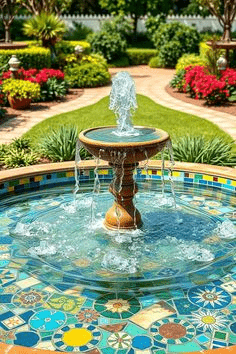
A mosaic fountain can become a dramatic centerpiece for an outdoor space. Water moving across colorful tiles or stones creates a combination of sound, movement, texture, and color that can make a garden feel more relaxing. You can decorate the basin, surrounding structure, or selected sections of a fountain with mosaic pieces.
For a water feature, moisture resistance is essential. Materials should be suitable for continual outdoor exposure, and all appropriate areas should be properly sealed. The original inspiration suggests using water-resistant materials and reliable waterproof sealants for mosaic fountain projects.
Think about scale before beginning. A large fountain can support a more elaborate design, while a small tabletop-style water feature may look better with a simple repeating pattern. You can also incorporate lighting around the fountain to highlight the mosaic after sunset. When combined with surrounding plants and comfortable seating, a mosaic fountain can create a peaceful garden retreat.
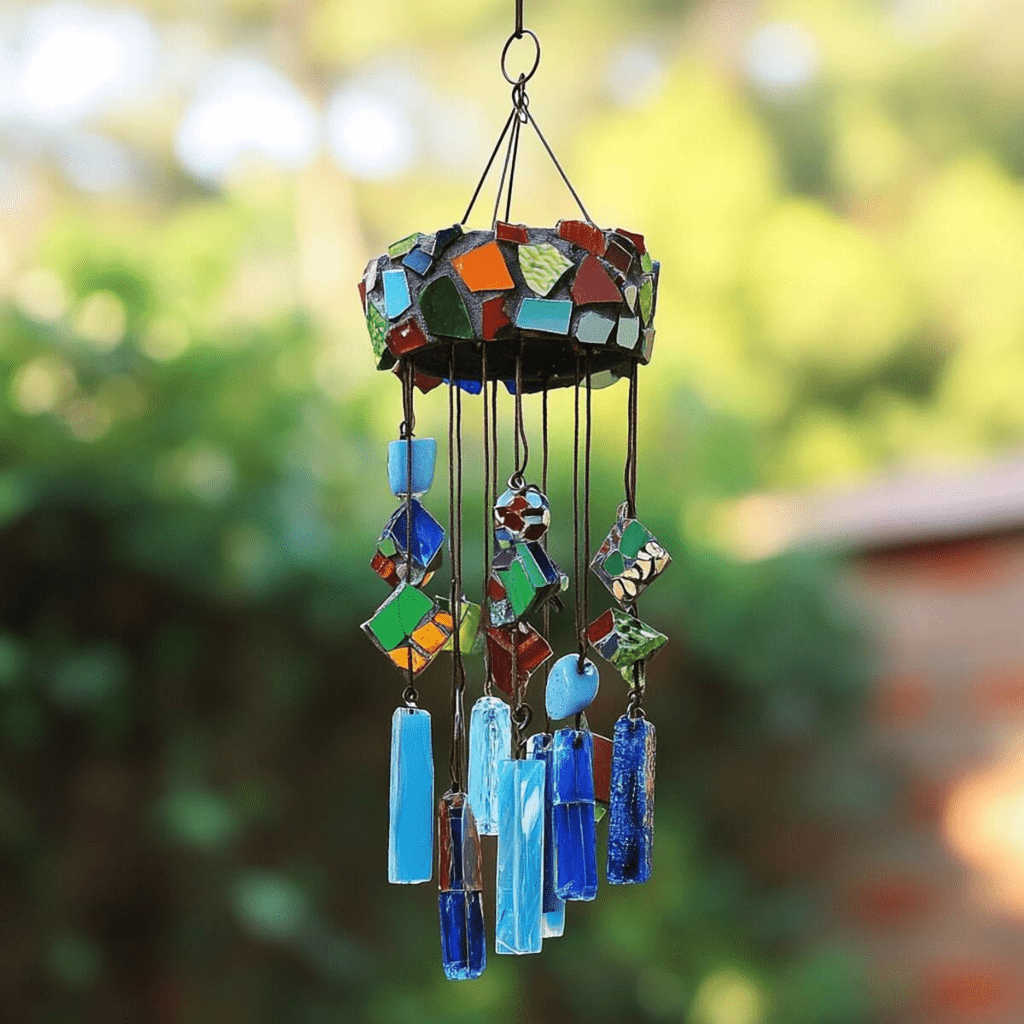
11. Mosaic Wind Chimes
Mosaic wind chimes are a smaller project that adds both visual and auditory interest to your garden. Small decorative mosaic pieces can be incorporated into the top, hanging panels, or other parts of the wind chime. When sunlight hits colorful glass or tiles, the pieces can create little flashes of color that complement nearby plants.
Because wind chimes move constantly, lightweight materials are generally more practical than very heavy mosaic pieces. Make sure every component is attached securely and that the finished decoration can handle movement and outdoor exposure. You can choose colors that match your garden furniture or use contrasting shades to make the wind chime stand out.
Hang it where there is enough airflow to create gentle movement, but avoid placing it where it could repeatedly strike walls, windows, or fragile plants. A mosaic wind chime is particularly appealing in a small garden because it takes up very little space while still adding a decorative detail.
12. Mosaic Planters
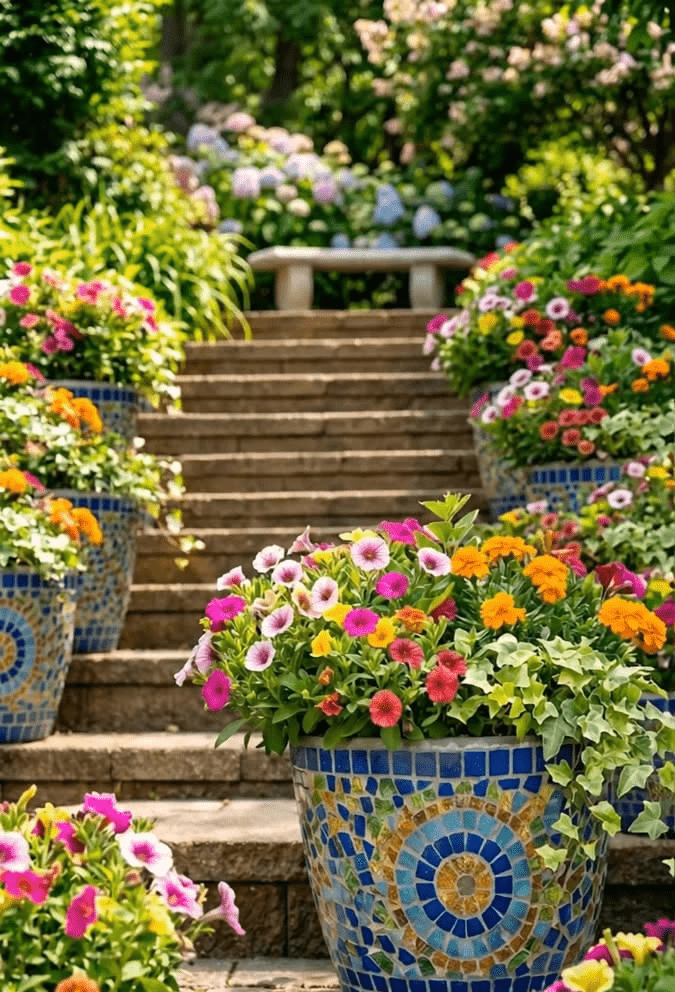
Mosaic planters offer another way to combine colorful artwork with your favorite plants. Unlike decorating only a traditional flower pot, you can create larger mosaic designs on raised planters or containers that serve as major garden features.
Try using a consistent color family throughout the planter, then introduce one or two accent colors for contrast. You could create a geometric design around the outside or use a nature-inspired motif that relates to the plant growing inside it. Mosaic planters can look particularly attractive when several containers of different sizes are arranged together.
Make sure the container remains functional after decoration. Drainage should not be blocked, and the finished mosaic should be securely attached. For outdoor planters, choose materials and finishes that can tolerate moisture and changing weather. A collection of mosaic planters can also help unify different areas of a patio or garden.
13. Mosaic Garden Art Hanger
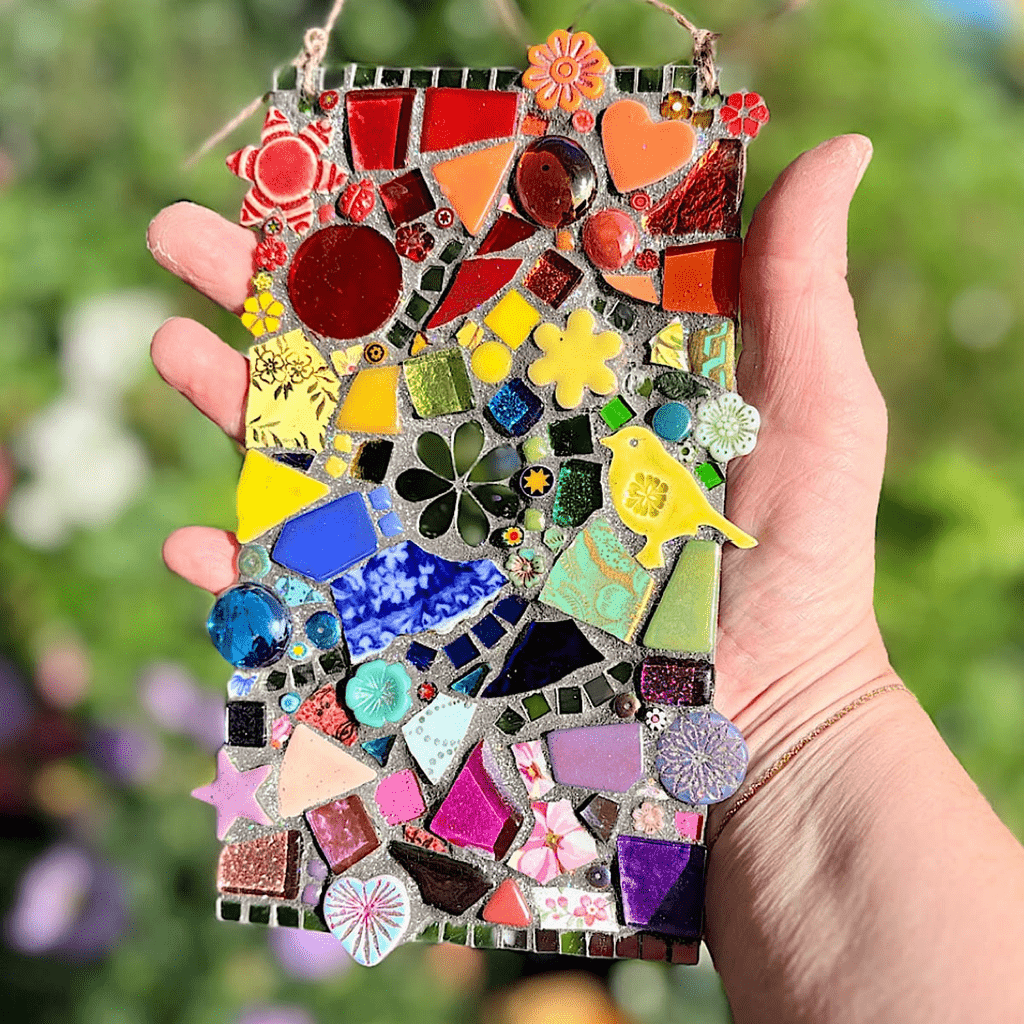
A mosaic garden art hanger is a flexible decoration that can be displayed on a fence, wall, pergola, or other suitable structure. You can create a small panel featuring a flower, sun, butterfly, bird, or abstract design and hang it wherever your garden needs an extra splash of color.
This idea is especially useful if you don’t want to permanently alter a wall, planter, or pathway. The artwork can potentially be moved between different parts of the garden as your landscape changes. You can also make several small panels with coordinating designs and display them as a collection.
When creating a hanging piece, keep the overall weight manageable and make sure the hanging mechanism is strong enough for outdoor conditions. A weather-resistant backing and appropriate attachment system will help the artwork remain secure. Consider using a bold design with a limited number of colors so the mosaic remains visible even when surrounded by dense greenery.
14. Mosaic Trellis
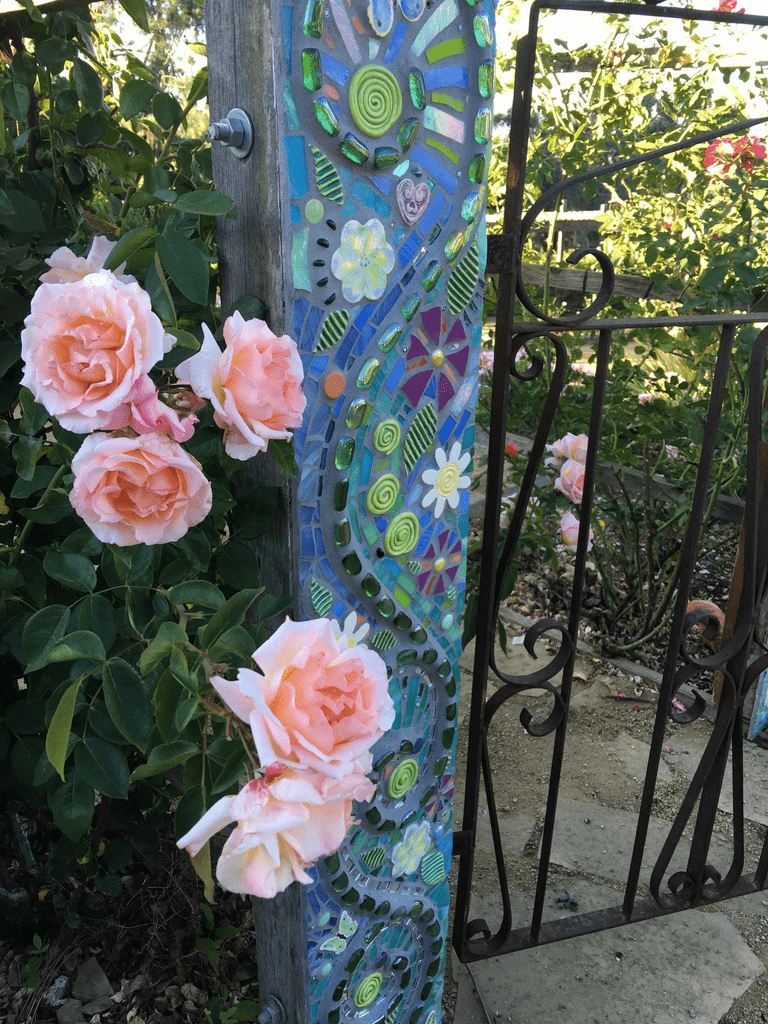
A mosaic trellis combines decorative art with a useful structure for climbing plants. You can decorate sections of a wooden or sturdy outdoor trellis with mosaic tiles, creating colorful accents that remain visible even when the plants are not fully grown.
Consider placing mosaic designs around the outer frame rather than covering every available surface. This allows climbing plants to remain the star while still giving the trellis its own artistic character. Geometric patterns, leaves, flowers, and simple repeating shapes can all work well.
Before starting, make sure the trellis is strong enough to support both the mosaic materials and the mature climbing plant. Select exterior-suitable materials and finishes because the structure will be exposed to rain and sunlight. As the vines grow, the mosaic sections can peek through the foliage, creating an attractive combination of natural greenery and handcrafted decoration.
15. Mosaic Patio Decor
Mosaic patio decor can bring the same artistic character of a garden into outdoor living areas. Instead of limiting mosaic work to plants and pathways, consider decorating patio tables, wall panels, planters, small stools, stepping stones, or decorative trays.
The patio is a particularly good place for mosaic art because it often provides a defined area where several pieces can work together. Choose a consistent color palette so your decorations feel connected rather than random. For example, blue and green mosaics can create a fresh garden-inspired theme, while terracotta, cream, and warm yellow can create a more rustic appearance.
Start with one small project and build a collection over time. Cornell Garden-Based Learning also identifies benches, tables, walls, paths, and containers as suitable areas for garden mosaic projects. By repeating colors or motifs across several pieces, you can create a cohesive outdoor space without needing every item to have the same pattern.
Tips for Creating Mosaic Art Outdoors
- Plan your design first: Arrange pieces before permanently attaching them.
- Choose outdoor-suitable materials: Weather exposure can affect adhesives, grout, and decorative pieces.
- Mix textures carefully: Combining glass, ceramic, stone, and other materials can add depth.
- Use a coordinated color palette: Pick colors that complement your plants and outdoor furniture.
- Start small: Pots, stepping stones, and small wall panels are easier projects for beginners.
- Protect finished pieces: Use an appropriate exterior sealer when the material and project require it.
- Prioritize safety: Avoid sharp exposed edges, especially on pathways, benches, and tables.
- Reuse suitable materials: Broken tiles and old ceramics can become attractive mosaic components.
Summary
These 15 great ideas for mosaic art in your garden show how small pieces of tile, glass, stone, and ceramic can transform ordinary outdoor features into personalized works of art. From simple flower pots and stepping stones to statement-making fountains, benches, sculptures, and pathways, there are options for almost every garden style and skill level. Mosaic projects can also be an enjoyable way to repurpose suitable leftover materials instead of throwing them away.
The most successful outdoor mosaics balance creativity with practicality. Plan your design carefully, choose materials appropriate for outdoor conditions, and pay special attention to stability and safety. Whether you decorate one small pot or create a complete mosaic garden pathway, a handmade piece can add a unique sense of color and personality to your outdoor space.
Frequently Asked Questions
1. What materials can be used for garden mosaic art?
Common options include ceramic tiles, glass pieces, natural stone, pebbles, beads, and suitable recycled materials. Cornell Garden-Based Learning notes that mosaics can incorporate new, recycled, or found materials.
2. What is the easiest mosaic garden project for beginners?
Small flower pots, stepping stones, wall panels, and simple garden decorations are good starting points because they have manageable surfaces and don’t require a large amount of material.
3. Can broken dishes be used for garden mosaics?
Yes, suitable broken ceramic dishes can be repurposed for mosaic projects. However, pieces should be handled carefully, and sharp edges should not be left exposed in areas where people or animals could be injured.
4. How do I protect outdoor mosaic art?
Use materials, adhesives, grout, and sealers designed or appropriate for outdoor conditions. The correct combination depends on the surface and whether the mosaic will be exposed to constant moisture, sunlight, or foot traffic.
5. Can I make mosaic art without buying expensive supplies?
Yes. Suitable leftover tiles, broken ceramics, pebbles, and other materials can be incorporated into creative designs. Small projects are also a good way to experiment without purchasing large quantities of supplies.
6. Where can I put mosaic art in a garden?
Mosaic art can be incorporated into stepping stones, pathways, flower pots, planters, benches, tabletops, walls, fences, fountains, bird baths, borders, trellises, and decorative sculptures.
7. What mosaic design works best for a small garden?
Simple geometric patterns, small floral designs, decorated pots, stepping stones, and wall panels work particularly well because they add visual interest without taking up much space.
8. Should garden mosaics be sealed?
Many outdoor mosaic projects benefit from an appropriate protective finish, but the exact treatment depends on the materials and construction. Always choose a product compatible with the specific surface and intended outdoor use.