Creating privacy in a small backyard can feel challenging, especially when you want to make the most of every square foot. Traditional privacy fences can sometimes make a compact outdoor area feel even smaller, while tall walls may block natural light and create a closed-in atmosphere. Fortunately, there are plenty of stylish backyard privacy solutions that can give you a more secluded outdoor space without sacrificing comfort or visual appeal. From vertical gardens and decorative screens to strategically placed plants and outdoor curtains, the right approach can define your backyard while keeping it welcoming. The best solution depends on your space, budget, climate, and how much privacy you actually need. You might want complete screening from neighboring properties, or simply a cozy corner where you can relax without feeling exposed.
Small outdoor spaces can benefit especially well from privacy ideas that work vertically. Instead of taking up valuable floor space, use walls, trellises, tall planters, pergolas, or climbing plants to create separation. Combining two or more materials can also make a privacy feature feel more like part of the landscaping rather than a barrier. For example, a simple wood screen can be softened with greenery, while outdoor curtains can add privacy and shade to a seating area. Whether your backyard is a tiny patio, narrow garden, townhouse yard, or compact entertaining area, these backyard privacy solutions can help you create a more comfortable and attractive retreat. With thoughtful placement and a little creativity, even a small outdoor space can feel private, peaceful, and distinctly your own.
1. Install a Slatted Wood Privacy Screen
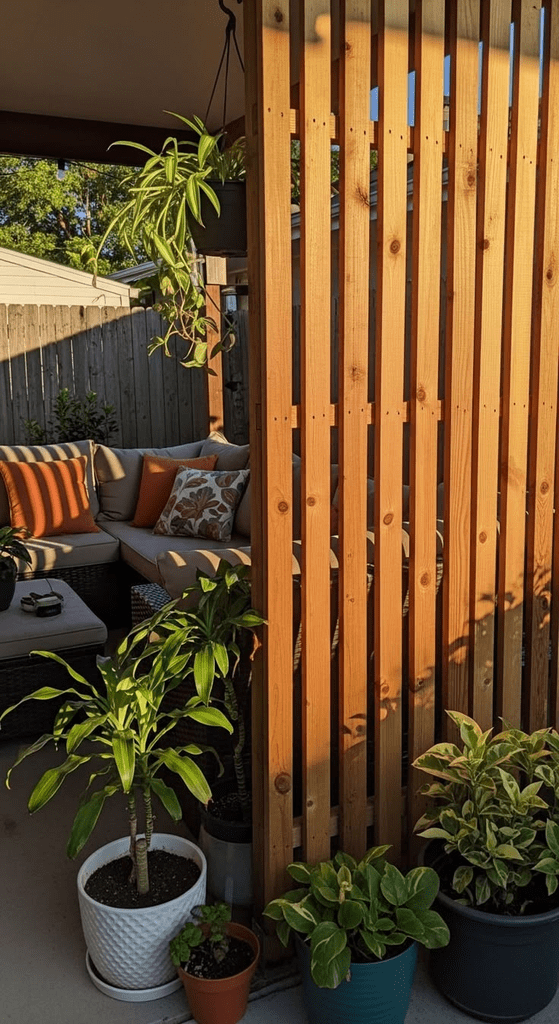
A slatted wood privacy screen is one of the most stylish ways to create separation in a compact backyard. Unlike a completely solid wall, horizontal or vertical slats allow some light and air to pass through while reducing direct views from neighboring properties. This makes the space feel more private without making it feel completely enclosed.
For a small backyard, consider using a screen only where privacy is most important rather than surrounding the entire space. A screen behind an outdoor sofa, dining area, or hot tub can create a defined zone while leaving the rest of the yard visually open. Natural wood can add warmth to concrete patios, stone surfaces, and modern furniture. You can also stain or paint the wood to coordinate with your home’s exterior.
For an even more attractive result, combine the screen with climbing plants, hanging planters, or outdoor lighting. Greenery can soften the straight lines of the wood while creating an additional visual barrier. Make sure the structure is properly secured and choose weather-resistant materials suitable for outdoor use.
2. Create a Vertical Garden
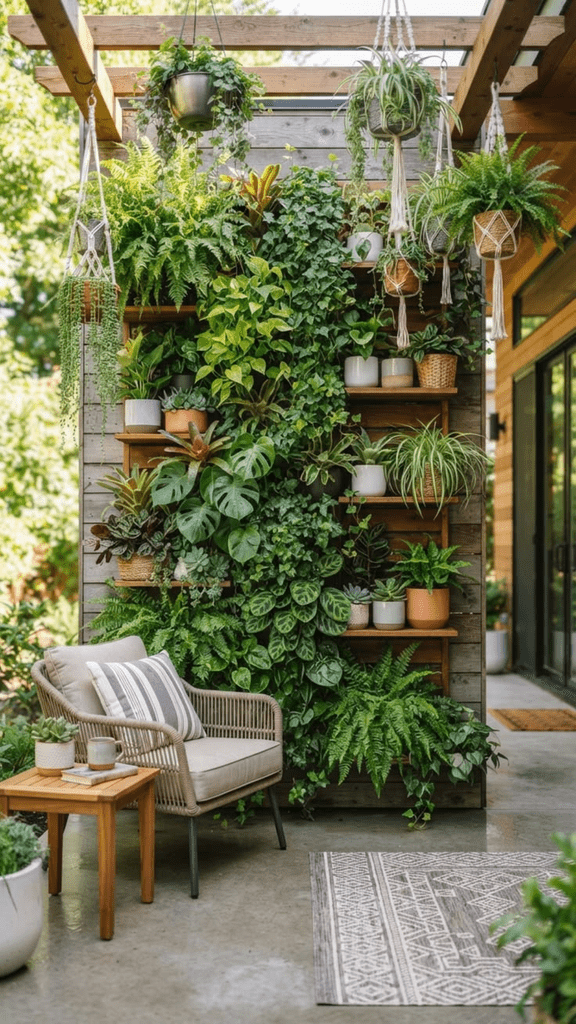
A vertical garden is a smart backyard privacy solution when floor space is limited. Instead of spreading plants across the ground, you can grow greenery upward using a trellis, wall-mounted planter system, or freestanding vertical garden.
Tall plants and climbing vines can create a natural screen while adding texture and color. Depending on your climate, options may include climbing jasmine, clematis, ivy, ornamental grasses, or other suitable screening plants. Choose species based on sunlight, maintenance requirements, and how quickly you need the screen to develop.
A vertical garden can also make a small backyard feel more lush and intentional. Use different heights and textures to prevent the planting from looking flat. If maintaining live plants is difficult, consider attractive artificial greenery for selected areas, particularly on a covered patio.
The biggest advantage is that vertical planting uses wall and overhead space instead of valuable floor area. This makes it particularly useful for narrow yards, balconies, patios, and townhouse gardens where every inch matters.
3. Add Tall Planters With Privacy Plants
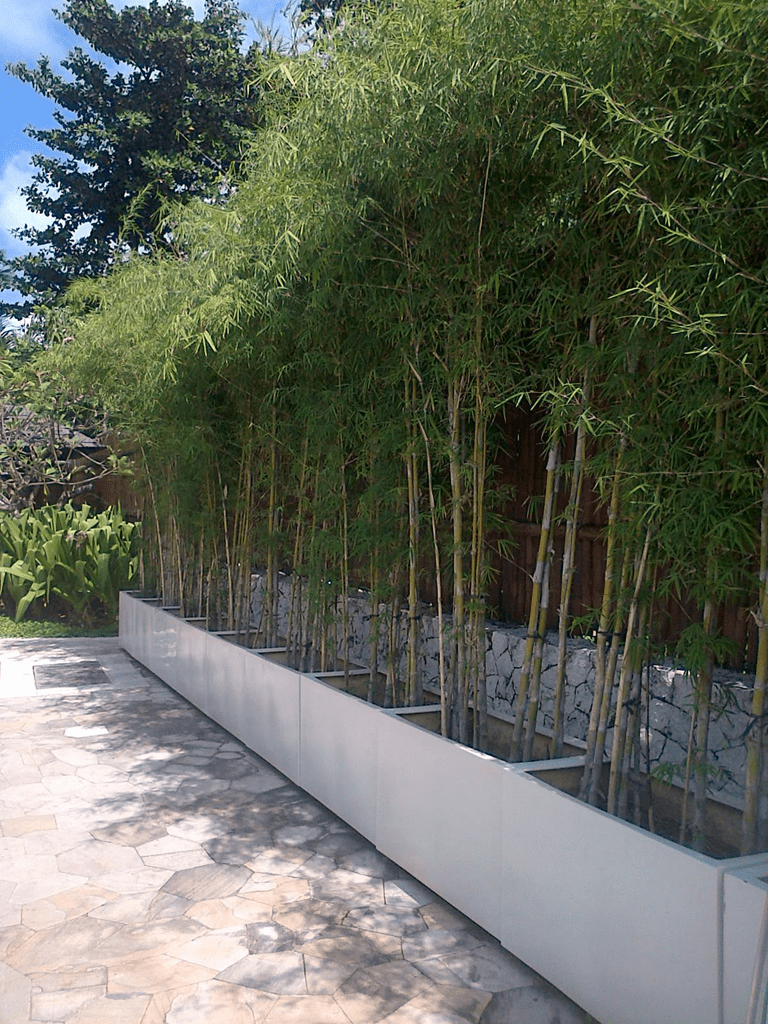
Tall planters can create a flexible privacy barrier without the permanence of a fence. Place several large containers along the edge of your seating area, patio, or property boundary and fill them with tall plants.
Evergreen shrubs, ornamental grasses, bamboo varieties suitable for containers, or other tall screening plants can provide greenery while blocking unwanted views. Choose containers that are heavy enough to remain stable in windy conditions, especially when the plants grow tall.
For a small space, consider using a series of narrow planters rather than several extremely wide containers. This creates a visual screen while leaving enough room for movement. You can also select planters that match your outdoor furniture or home’s exterior for a cohesive appearance.
Another benefit is flexibility. Unlike a permanent fence, container plants can be moved when you want to rearrange your backyard. If you rent your home or frequently change your outdoor layout, this can be an especially practical option.
4. Hang Outdoor Curtains
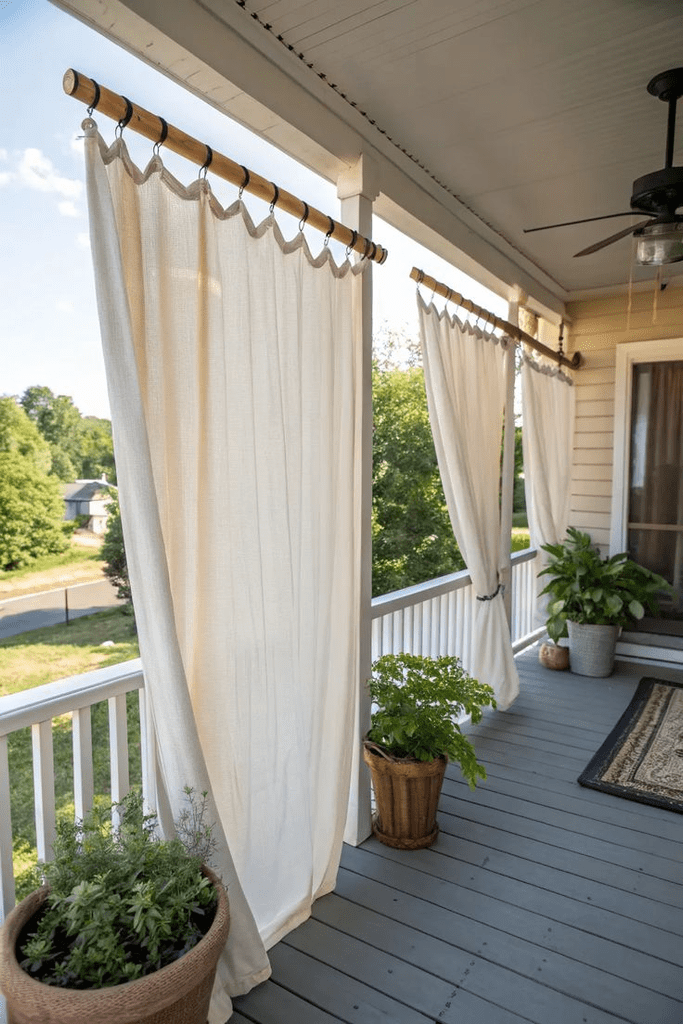
Outdoor curtains are an easy way to add privacy to a patio, pergola, gazebo, or covered seating area. They provide a softer alternative to fences and screens while also helping create a cozy outdoor room.
Choose outdoor-rated fabrics designed to withstand sunlight and moisture. Neutral shades such as white, beige, gray, or taupe can keep a small area feeling bright, while deeper colors can create a more intimate atmosphere.
Curtains are particularly useful when you need privacy only at certain times. You can leave them open during the day and close them when relaxing or entertaining. This gives you control over how enclosed the space feels.
For a small backyard, avoid overly heavy or bulky curtains that could visually shrink the area. Lightweight panels that move naturally in the breeze can provide privacy while maintaining an airy appearance. Pair them with comfortable outdoor seating, string lights, and a small rug to create a stylish outdoor living room.
5. Use a Decorative Metal Screen
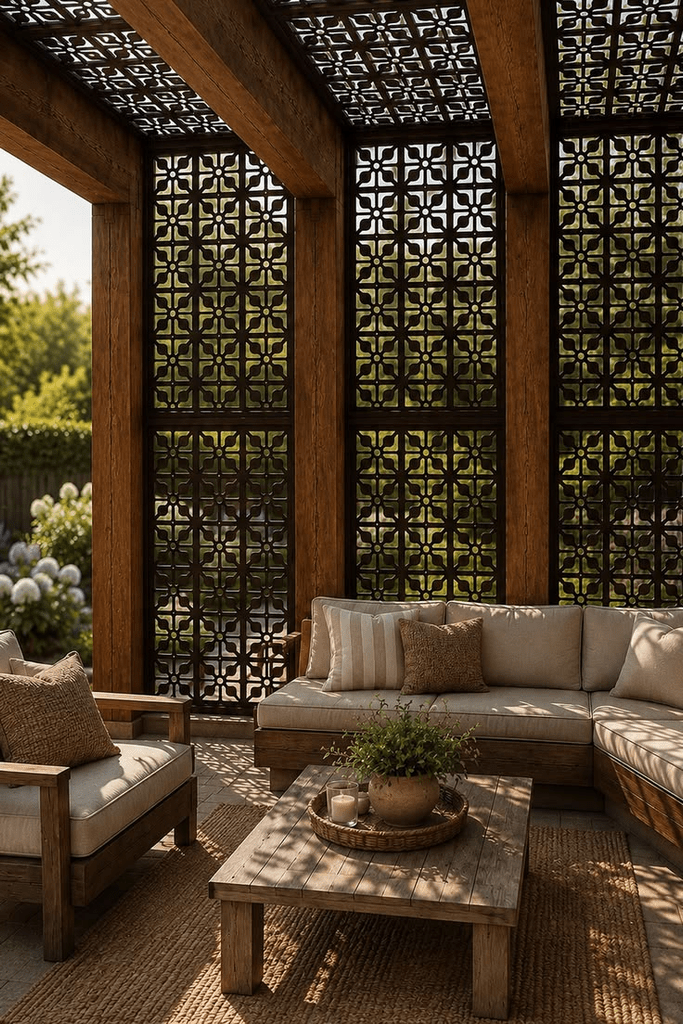
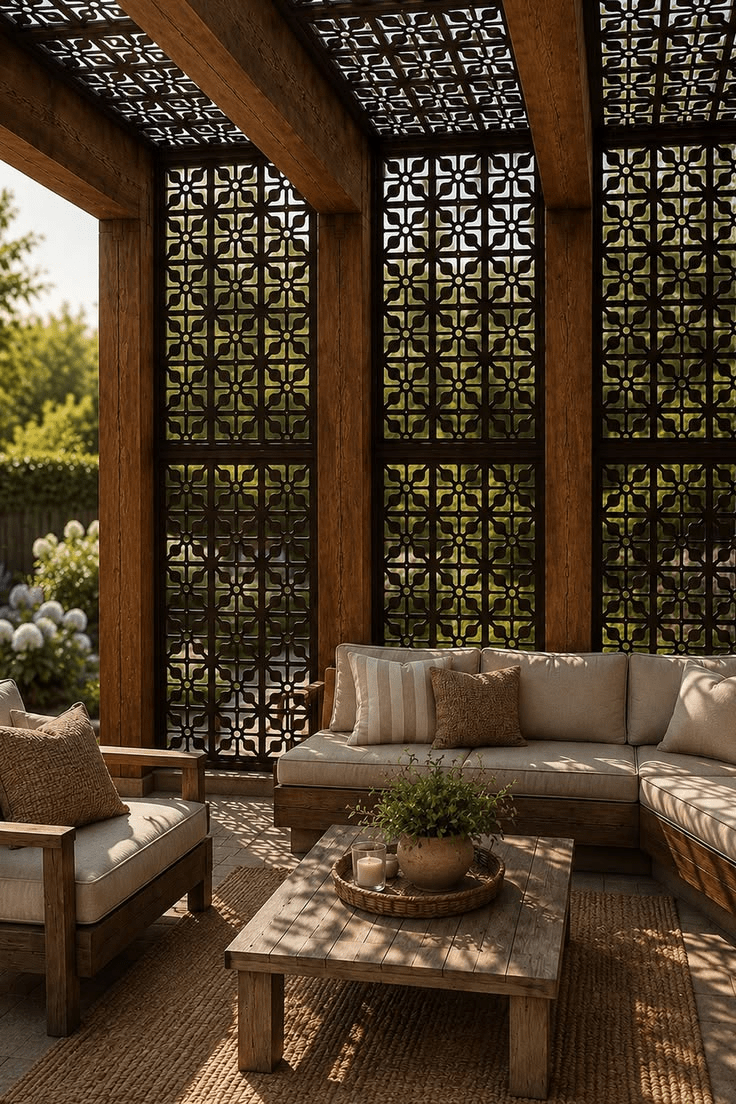
Decorative metal screens combine privacy with an architectural design element. They are available in a variety of patterns, from simple geometric shapes to botanical and contemporary designs.
Because the panels often include cutout patterns, they can block direct sightlines without completely shutting out sunlight. This makes them particularly useful for small backyards where a solid fence might feel too heavy.
A metal screen can be positioned behind a bench, beside a dining area, or along a patio boundary. It can also serve as a backdrop for plants or outdoor artwork. Choose a finish that complements your existing exterior materials and furniture.
For maximum impact, use the screen as a focal point rather than covering every boundary. Combining one decorative panel with greenery or a simple fence can provide privacy while keeping the overall design balanced. Proper installation is important, especially in areas exposed to strong winds.
6. Build a Compact Pergola With Climbing Plants
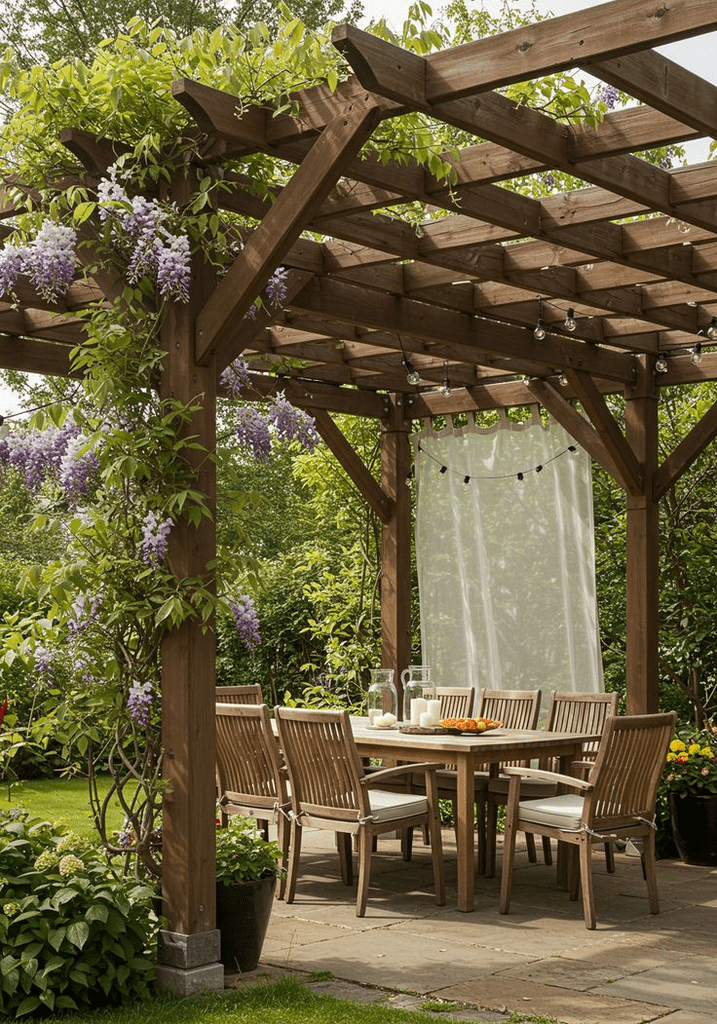
A compact pergola can provide both privacy and structure in a small backyard. Rather than building a large outdoor structure, choose a scaled-down design that fits your seating or dining area.
Climbing plants can be trained along the posts and overhead beams to create a natural privacy canopy. As the plants grow, they can help shield the space from neighboring views while adding shade and greenery.
A pergola can also visually define an outdoor room. Place a small sofa, dining table, or pair of lounge chairs underneath to create a dedicated relaxation area. Add outdoor curtains if you need additional privacy from the sides.
Because a pergola is a more permanent feature, check local building requirements before installation. Select materials and plants appropriate for your climate, and make sure the structure is securely anchored. When properly designed, a small pergola can make a compact backyard feel more purposeful without consuming the entire space.
7. Try a Bamboo Privacy Screen
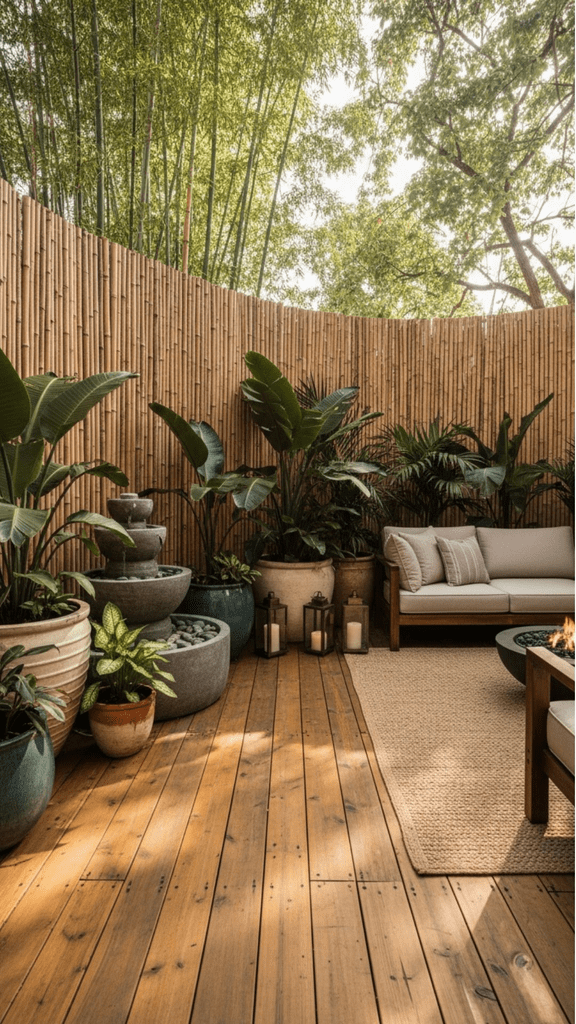
Bamboo can bring a natural, relaxed appearance to a backyard while creating a useful visual barrier. Bamboo screening can be installed along a fence, wall, patio edge, or seating area to soften the appearance of the boundary.
For a small outdoor space, bamboo panels can provide substantial coverage without the visual heaviness of a traditional solid wall. Their natural texture works particularly well with wood furniture, stone, gravel, and tropical or bohemian-inspired décor.
If you choose living bamboo rather than screening panels, research the variety carefully. Some bamboo species can spread aggressively and may become difficult to control. Container-grown or clumping varieties may be more appropriate depending on your situation and local growing conditions.
You can enhance a bamboo screen with warm outdoor lighting, potted plants, and natural furniture. The result can feel like a private garden retreat rather than a simple privacy barrier.
8. Create a Layered Privacy Wall
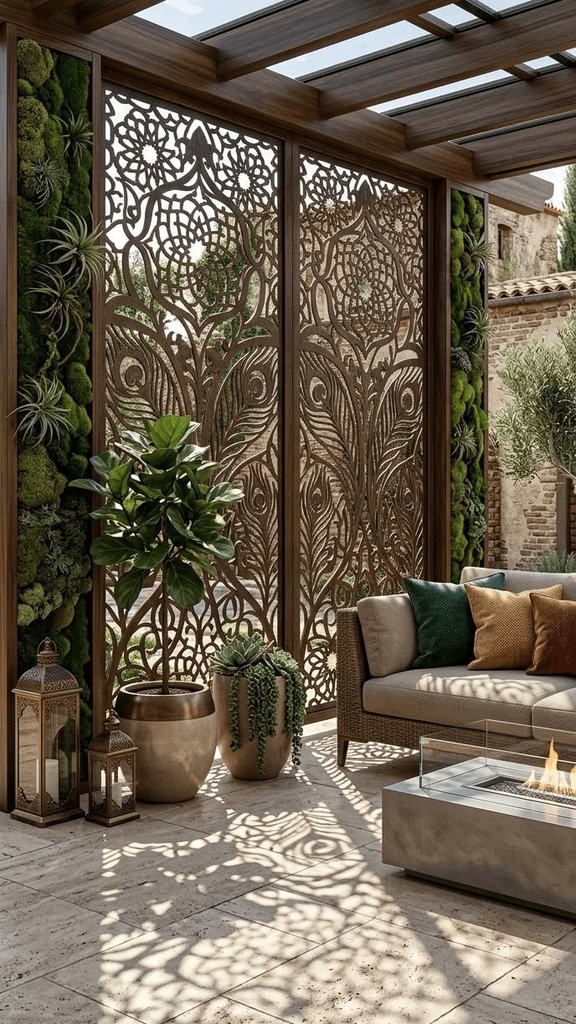
Instead of relying on one large privacy feature, combine several smaller elements to create a layered privacy wall. This is one of the most adaptable approaches for a compact backyard.
For example, you could combine a low fence with tall planters, a narrow trellis, climbing plants, and a decorative screen. Each layer contributes to privacy while adding different textures and heights. This can look more natural and interesting than a single solid wall.
Layering also allows you to focus privacy where you need it most. A seating area might have a taller screen, while the rest of the backyard remains open. This helps preserve the feeling of spaciousness.
Use a consistent material or color palette to prevent the area from becoming visually busy. Wood, greenery, neutral planters, and subtle outdoor lighting can work together particularly well. The result is a backyard that feels secluded without appearing cramped or overly enclosed.
Summary
The best backyard privacy solutions for small outdoor spaces do more than block unwanted views—they can also improve the overall design of your yard. Slatted wood screens, vertical gardens, tall planters, outdoor curtains, decorative metal panels, pergolas, bamboo, and layered barriers all offer different ways to create privacy while making smart use of limited space. Instead of enclosing the entire backyard, consider identifying the areas where privacy matters most and concentrating your efforts there. Combining structures with greenery and soft outdoor furnishings can make the result feel natural, comfortable, and inviting. With the right combination of materials, plants, and placement, even a small backyard can become a peaceful private retreat.
FAQ
What is the best privacy solution for a small backyard?
The best option depends on your space and needs. Slatted screens, tall planters, vertical gardens, and outdoor curtains are particularly useful because they can provide privacy without making a compact yard feel completely enclosed.
How can I create backyard privacy without building a fence?
You can use tall plants, decorative screens, outdoor curtains, trellises, pergolas, or vertical gardens. These options can create visual separation without requiring a traditional privacy fence.
What plants are good for backyard privacy?
Tall evergreen shrubs, ornamental grasses, climbing plants, and suitable bamboo varieties can work well. Choose plants based on your local climate, available sunlight, maintenance needs, and how quickly you want privacy.
How can I make a privacy screen look more attractive?
Combine it with greenery, planters, outdoor lighting, or decorative elements. Using natural materials such as wood alongside plants can make the screen feel more integrated with the landscape.
Can I create privacy in a very narrow backyard?
Yes. Vertical solutions are particularly effective in narrow spaces. Trellises, climbing plants, tall narrow planters, slatted screens, and wall-mounted gardens use vertical space while preserving valuable floor area.
Are outdoor curtains suitable for small patios?
Yes. Outdoor curtains can create a temporary privacy barrier around a patio or seating area. They can also add shade and make the space feel more like an outdoor room.
How do I make a small backyard feel private but not cramped?
Avoid blocking every boundary with solid materials. Instead, use partially open screens, plants, curtains, and layered elements. Keeping some sightlines open allows natural light and air to move through the space while still providing privacy.