
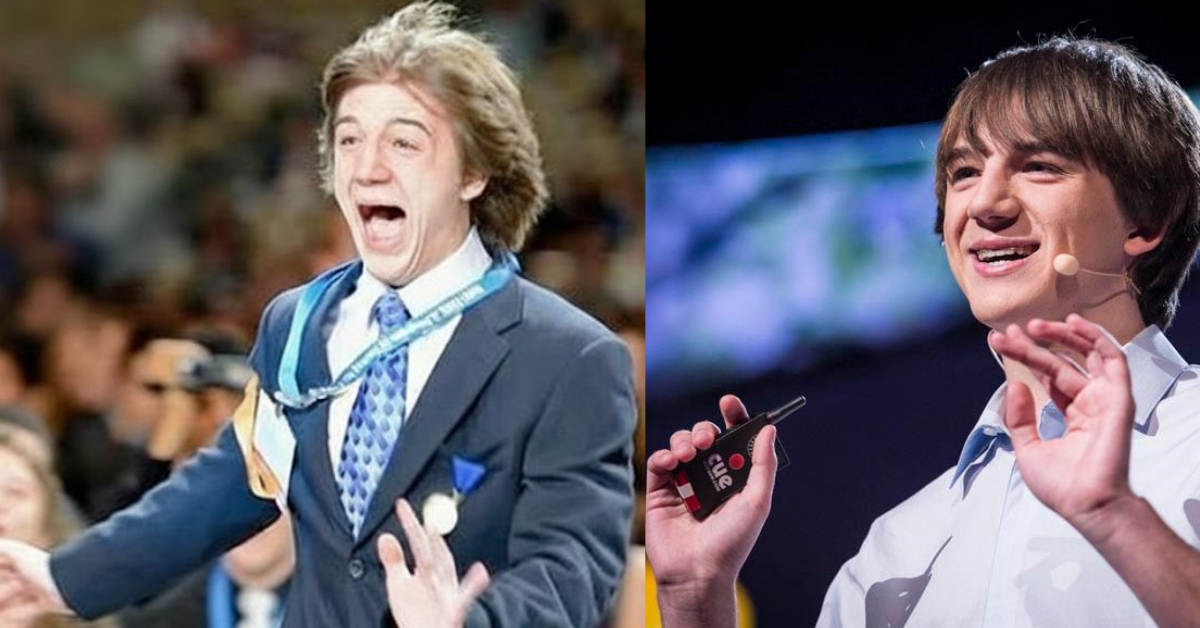
At age 15, Jack Andraka invented a surprisingly simple and inexpensive method that might help detect pancreatic cancer at its earliest and most treatable stage-a feat that had evaded some of the best scientists in the world.
Growing up in Crownsville, Maryland, Jack’s passion for cancer research began with a deeply personal loss: a close family friend, like an uncle to him, was lost to pancreatic cancer. Learning that some 85% of pancreatic cancer cases are diagnosed too late for effective treatment-and finding out that existing tests were expensive and often unreliable-Jack felt compelled to try something different.
Most 15-year-olds might stop there — but Jack started researching the science on his own. He read through scientific papers and online resources, learning about thousands of proteins linked to pancreatic cancer. So he sifted through more than 4,000 possibilities and focused on one called mesothelin, a molecule that appears in the blood in the earliest stages of the disease.
That, at least, was the elegantly simple yet scientifically bold notion of Jack: combining antibodies that bind to mesothelin with carbon nanotubes-tiny microscopic tubes of carbon-and attaching them to paper strips rather like the paper in a diabetic test. When mesothelin is present in a blood or urine sample, it changes the electrical properties of the nanotubes, signaling a possible early-stage cancer-in just about five minutes and at a cost of roughly three cents per test.
But it isn’t always that good ideas find quick support. He sent his proposal to 200 scientists asking for lab access, and 199 said no.
Finally, Professor Anirban Maitra of Johns Hopkins University agreed to take him on as his mentor, providing him with the necessary lab space. At that point, Jack spent months refining his approach and testing his device there.
The results were remarkable for someone so young: Jack’s sensor proved more than 90 % accurate in its mesothelin detection, beating traditional, more expensive methods for speed, cost and sensitivity in multiple competitions — and ultimately the Gordon E. Moore Award (top prize) at the 2012 Intel International Science and Engineering Fair, along with $75,000 in prize money.
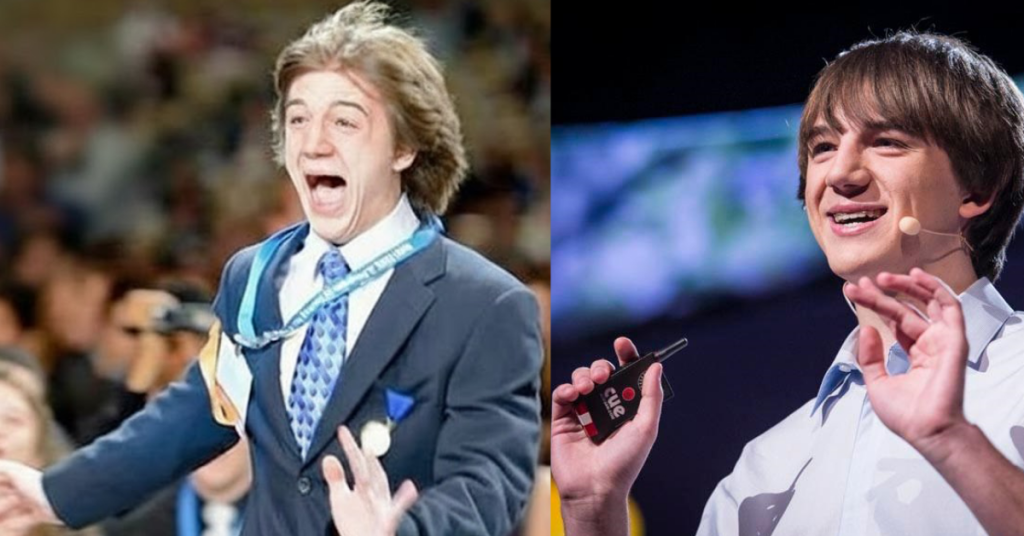
He didn’t stop there: His story became internationally recognized-through speaking at major scientific and educational conferences, documentaries, and news outlets worldwide, and an invitation by the then-First Lady Michelle Obama to the State of the Union address. His work has inspired many, not just for its scientific promise but for what it says about curiosity, persistence and creativity. Jack showed that you don’t have to be a trained adult scientist to make meaningful contributions — sometimes all it takes is a curious mind, a laptop, and the courage to ask “Why not?” .
While this test still needs extensive clinical trials and further development before it could be a widely used tool among physicians, Jack’s journey remains one powerful reminder that age is no barrier to innovation, nor is a single idea incapable of triggering real hope for the future.