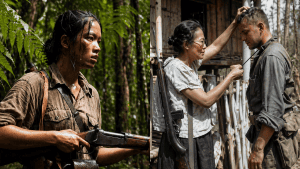
During World War II, courage often took many forms—but few stories are as striking as that of Violette Szabo, a young woman whose bravery under unimaginable pressure made her one of Britain’s most honored war heroes.
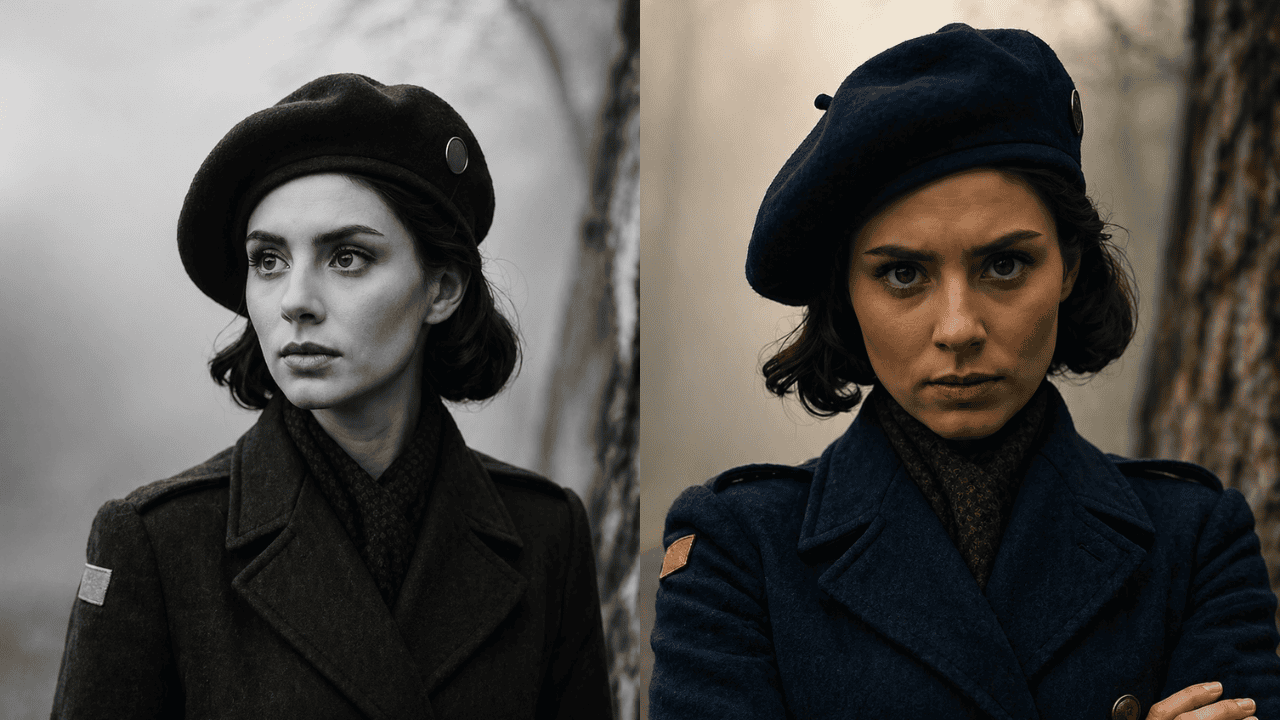
Violette Szabo was just 23 years old when she volunteered to serve as an agent for the British Special Operations Executive (SOE). Born to a French mother and British father, she was fluent in both languages—a skill that made her invaluable for missions in Nazi-occupied France. But it was not just her language ability that set her apart. It was her willingness to step into danger, fully aware of the risks.
Her decision to join the fight was deeply personal. After losing her husband in the war, Szabo chose not to retreat from the conflict, but to move closer to it. She volunteered for missions behind enemy lines, carrying weapons, codes, and critical information across occupied territory. Her work helped support Resistance networks that played a vital role in weakening German control ahead of the D-Day invasion.
Her missions required precision, secrecy, and constant awareness. Capture meant torture—and often death. Still, she continued.
It was during her second mission in 1944 that Szabo’s courage was tested in its most intense form. While traveling with fellow agents, her group was intercepted by German forces. Realizing escape was nearly impossible under fire, she made a split-second decision.
She stayed behind.
Armed with a Sten gun, Szabo took up a defensive position and engaged the advancing troops alone. Her goal was clear—to buy time for her comrades to escape. Outnumbered and under heavy fire, she held her ground, firing until she ran out of ammunition.
Her stand allowed others to get away.
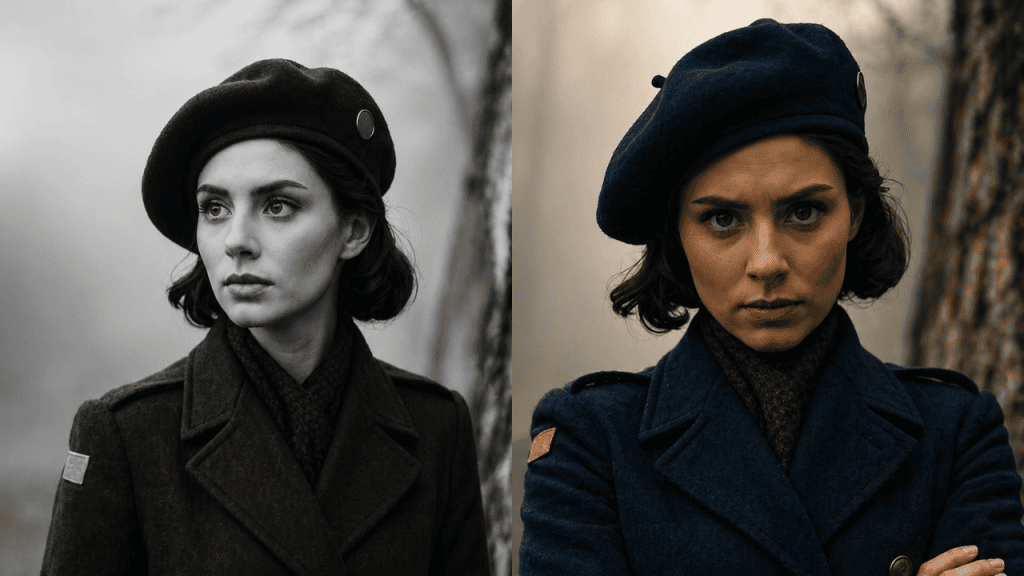
But it came at a cost. Szabo was captured.
What followed was a brutal ordeal. She was interrogated and tortured by the Gestapo, who demanded information about Resistance networks and fellow agents. Despite the physical and psychological pressure, she refused to speak. She gave no names, no details—nothing that could endanger others.
Even in captivity, she remained unbroken.
In early 1945, Violette Szabo was executed at Ravensbrück concentration camp. She was only 23 years old.
After the war, her actions were formally recognized by Britain. She was awarded the George Cross, one of the highest honors for civilian bravery, in recognition of her extraordinary courage and sacrifice.
Violette Szabo’s story is not just about resistance—it is about unwavering resolve. In the face of danger, capture, and death, she never abandoned her mission or those she fought to protect.
Her legacy endures as a powerful reminder that true courage is not the absence of fear, but the decision to stand firm despite it.