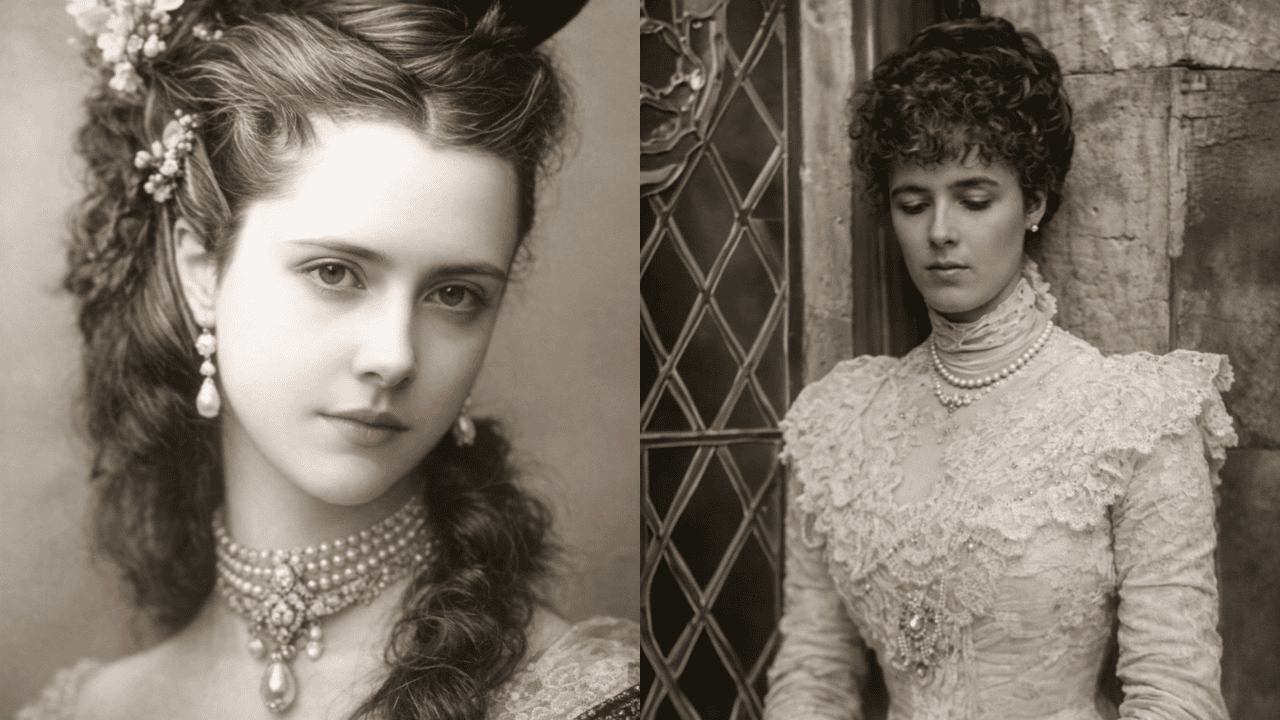
In the glittering world of Victorian high society, few women were as admired—or as constrained—as Georgina Elizabeth Moncreiffe. Celebrated across Europe for her striking beauty, she was often spoken of as one of the most captivating women of her time. But behind the admiration and attention lay a life shaped more by expectation than by choice.
Born in 1845 into a respectable British family, Georgina grew up in a society where a woman’s value was often measured by her appearance and the marriage she could secure. From a young age, her beauty set her apart. It opened doors into elite social circles, where she became a figure of fascination. Yet that same beauty would also define the limits placed upon her.
At just eighteen years old, Georgina married the Earl of Dudley, a man significantly older than her. The match elevated her status instantly, placing her at the center of aristocratic life. She attended grand events, moved among influential figures, and was admired in drawing rooms and courts alike. But admiration did not translate into autonomy.
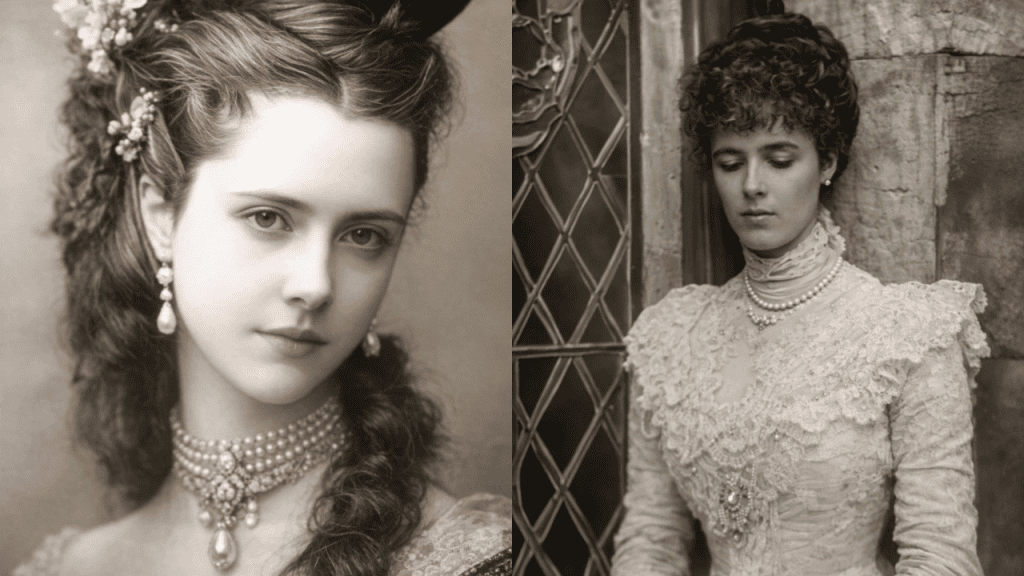
In her marriage, Georgina was often treated less as an equal partner and more as a symbol of status—an elegant presence meant to reflect her husband’s wealth and position. Decisions were not hers to make, and her role was carefully shaped by the rigid expectations of Victorian society. Surrounded by luxury, she lived a life that many envied, yet it offered little room for personal freedom.
For years, she existed within what could only be described as a gilded cage. The attention she received was constant, but it was focused on how she looked, not who she was. Her voice, like that of many women of her time, was rarely given space.
It was only after she became a widow that Georgina’s life began to change. Freed from the constraints of her marriage, she chose a different path—one that revealed a side of her that society had long overlooked. She trained as a nurse, dedicating herself to work that required compassion, resilience, and skill rather than appearance.
In doing so, she redefined her identity. No longer simply admired for her beauty, she became valued for her actions and contributions. Nursing brought her into a world far removed from aristocratic salons, one where effort and care mattered more than status. It was a quiet but powerful transformation.
Georgina Elizabeth Moncreiffe’s story reflects the tension between image and reality in Victorian society. She was praised, admired, and elevated—but only within the narrow boundaries set for her. When given the chance, she stepped beyond them.
Her life reminds us that recognition based on appearance can often obscure deeper strength. In choosing to build a new purpose for herself, Georgina proved that who a person becomes can matter far more than how they are first seen.