On May 2, 1968, deep in the dense, unforgiving terrain along the Cambodia–Vietnam border, a Special Forces reconnaissance team found itself in a nightmare. Surrounded by enemy forces and taking heavy fire, the twelve-man unit was cut off, wounded, and running out of options. Rescue attempts had already failed. Helicopters had tried to reach them but were driven back by intense gunfire. The mission was collapsing, and the men on the ground were close to being overrun.
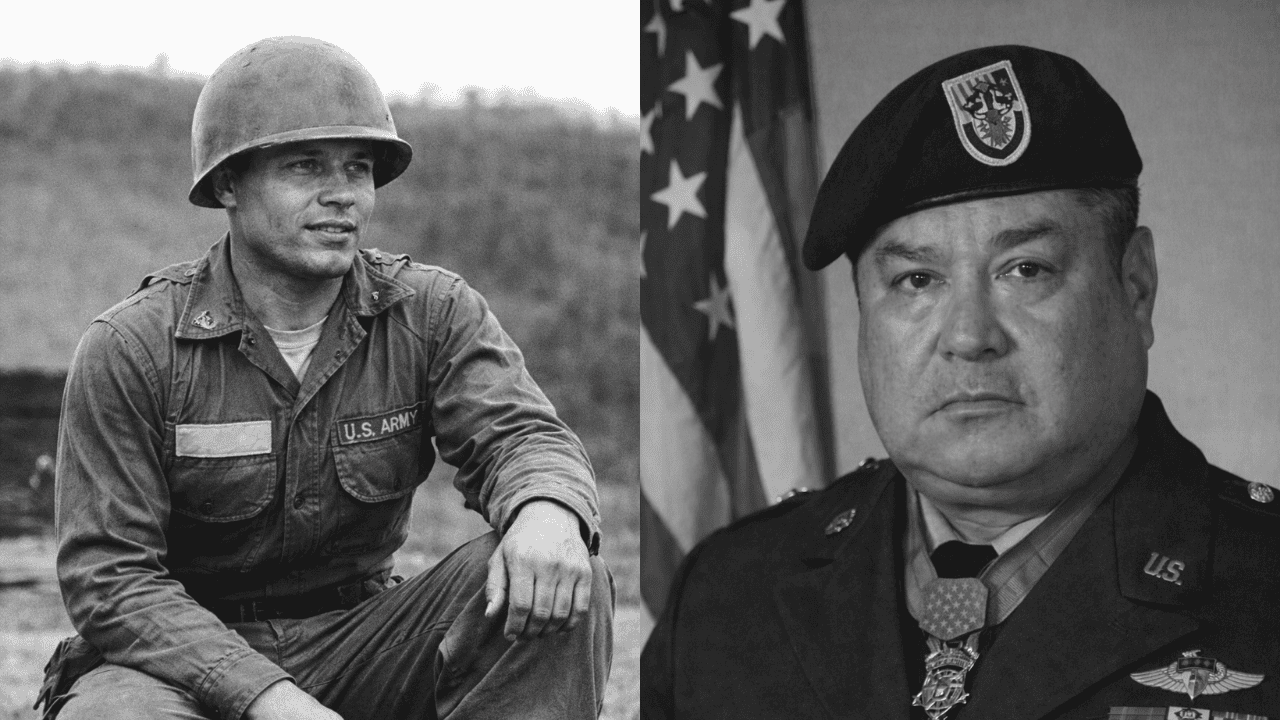
Miles away, Staff Sergeant Roy Benavidez heard the desperate radio calls.
He was not part of the mission. He had no orders to go. But as the situation grew more dire, he made a decision that would define his life. Without hesitation, Benavidez boarded a helicopter headed toward the embattled team. As the aircraft hovered over the battlefield, he jumped into the chaos below.
The moment he hit the ground, he was under fire.
Bullets tore through the air as Benavidez ran toward the trapped soldiers. Almost immediately, he was hit—then hit again. Wounds to his leg, face, and head would have stopped most men. But he kept moving. Reaching the team, he took command of the situation, organizing their defense while administering aid to the wounded.
The battle raged around them. Benavidez dragged injured soldiers to safer positions, returned fire, and called in air support, all while bleeding heavily. At one point, he was so severely wounded that others believed he might not survive, yet he continued to fight.
When a rescue helicopter finally managed to break through the gunfire, Benavidez began the painstaking process of evacuating the team. One by one, he carried or dragged his fellow soldiers to the aircraft. Even as he was struck again—his body now riddled with multiple wounds—he refused to leave anyone behind.
In the chaos, he climbed aboard the helicopter, only to realize that classified documents were still at risk of falling into enemy hands. Despite his condition, he went back into the battlefield to retrieve them, ensuring nothing would be left behind.
By the time the evacuation was complete, Benavidez had been wounded dozens of times. His body had endured more than seemed humanly possible. When he finally collapsed, he was barely conscious. At the field hospital, medical staff believed he had died. He was placed in a body bag.
But Roy Benavidez was still alive.
As doctors prepared him, he managed to spit—just enough movement to reveal that he had survived. It was a moment that stunned everyone present. Against all odds, he lived.
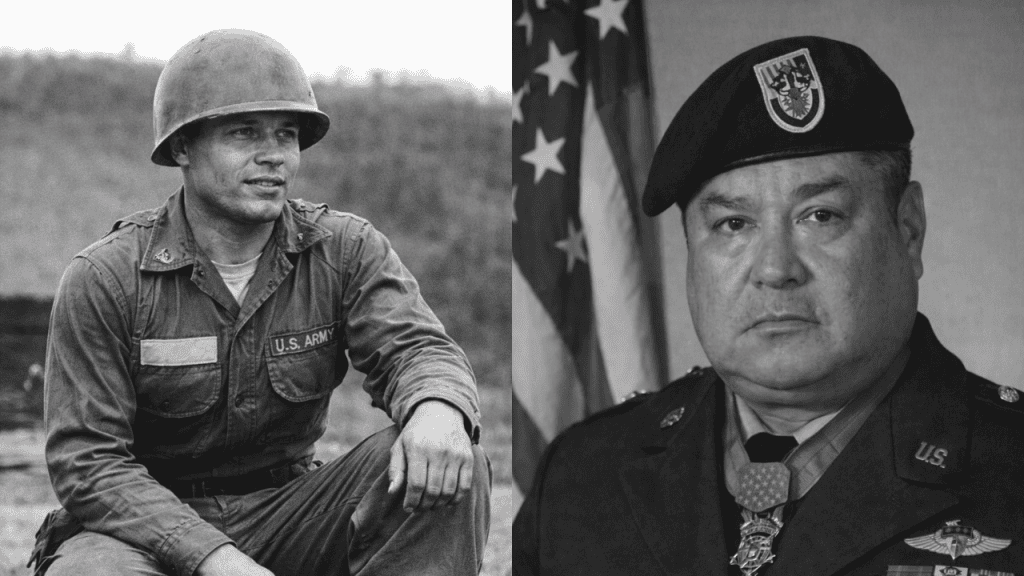
For his actions that day, Roy Benavidez was later awarded the Medal of Honor, one of the highest recognitions for bravery. His story stands as a testament not just to courage, but to an extraordinary refusal to give up—even when everything seemed lost.
On that battlefield in 1968, surrounded by danger and certain death, one man ran toward it—and brought others back with him.