
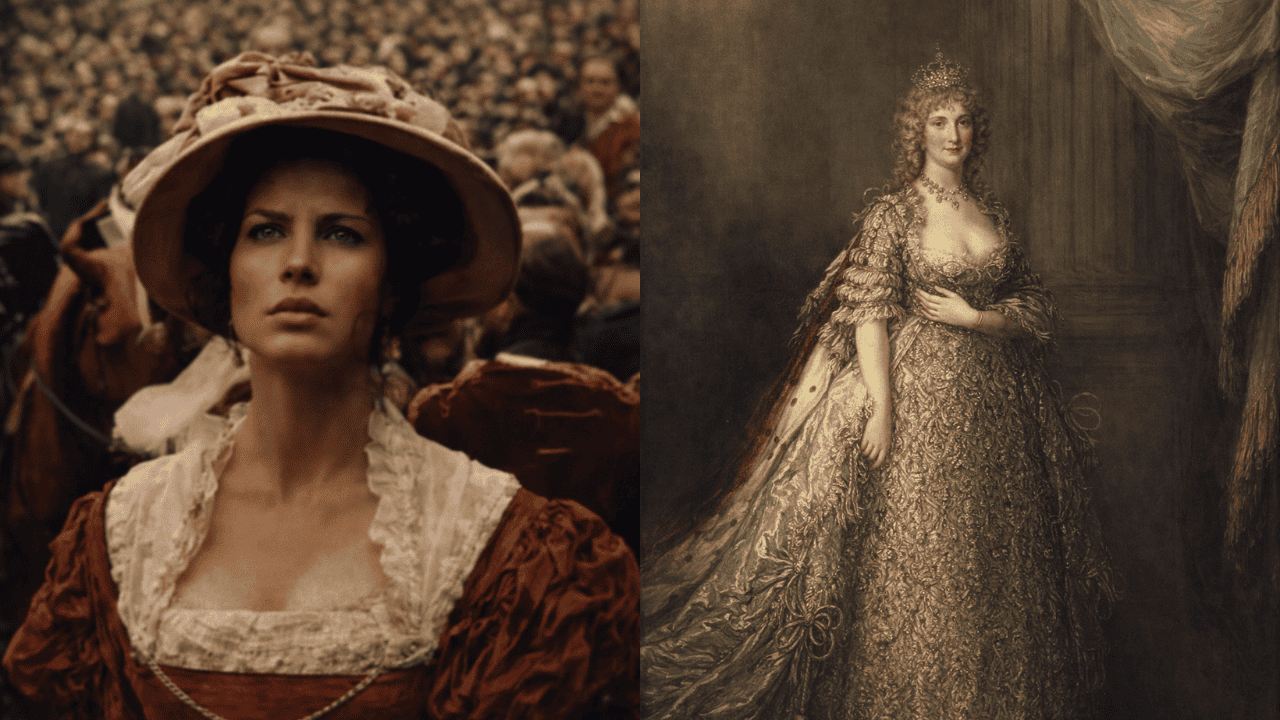
On July 19, 1821, London was alive with anticipation. Crowds surged toward Westminster Abbey, eager to witness the grand coronation of King George IV. The streets buzzed with excitement, the air thick with celebration, spectacle, and royal ceremony. But among the thousands gathered that day, one figure arrived not as a welcomed guest, but as a living scandal—Caroline of Brunswick, the king’s estranged wife.
Caroline’s story had already gripped the nation. Once married to the future king in a union marked by immediate dislike, their relationship quickly collapsed into public hostility. Accusations, rumors, and investigations followed her for years. By the time George IV ascended the throne, Caroline had become one of the most talked-about women in Britain—both defended and condemned in equal measure.
Despite the bitterness between them, Caroline made a bold and defiant decision. She would attend the coronation. It was, after all, her right as queen. Her arrival in London sparked a wave of public support. Many ordinary people saw her as a wronged woman, humiliated by a powerful husband who had tried to exclude her. Crowds cheered her name, turning her into an unlikely symbol of resistance against royal authority.
But the coronation day would deliver a moment that stunned the nation.
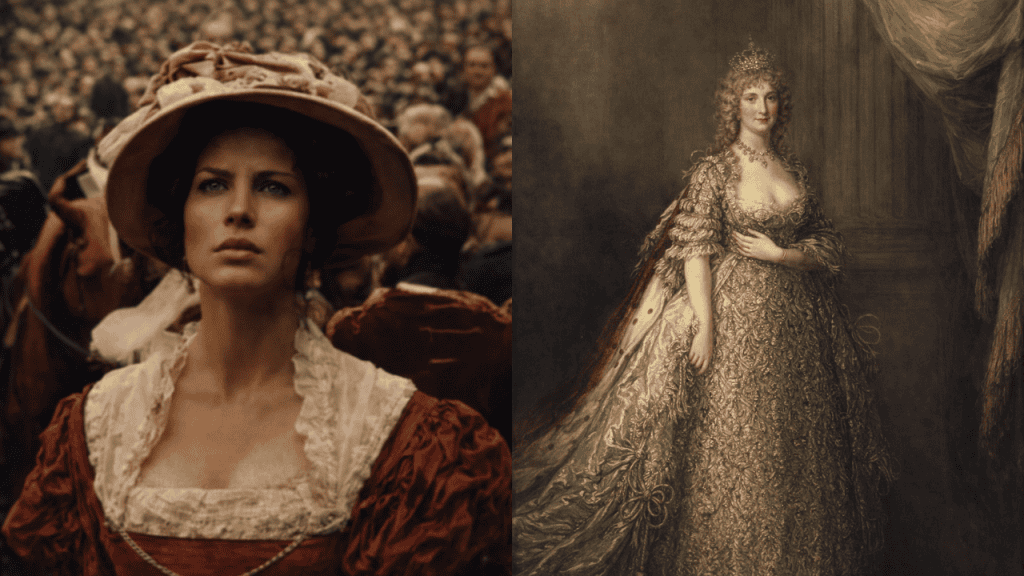
Dressed for the occasion and determined to claim her place, Caroline approached Westminster Abbey. What awaited her was not ceremony, but rejection. The doors were closed. Guards stood firm. Despite her insistence, despite her title, she was physically barred from entering. Witnesses watched in disbelief as the queen of England was denied access to her own husband’s coronation.
The scene quickly turned into a spectacle of humiliation. Caroline attempted to find another entrance, moving from door to door, but each one remained shut. Soldiers blocked her path, and officials refused her entry. The crowd, which had gathered for celebration, now witnessed a deeply personal and public rejection unfold before their eyes.
For many, it was a shocking display of cruelty. A queen, already at the center of controversy, was now being turned away in full view of the public. Yet even in that moment, Caroline did not go unnoticed. Supporters in the crowd expressed outrage, their sympathy for her only growing stronger.
After the failed attempt, Caroline withdrew. The coronation proceeded without her, but the image of that day lingered far beyond the ceremony itself. It became one of the most dramatic episodes in British royal history—a moment where power, pride, and public opinion collided in plain sight.
Just three weeks later, Caroline of Brunswick was dead. Her sudden passing only deepened the sense of tragedy surrounding her final days. Once the most talked-about woman in Britain, she left behind a story marked by conflict, defiance, and one unforgettable moment at the doors of Westminster Abbey.