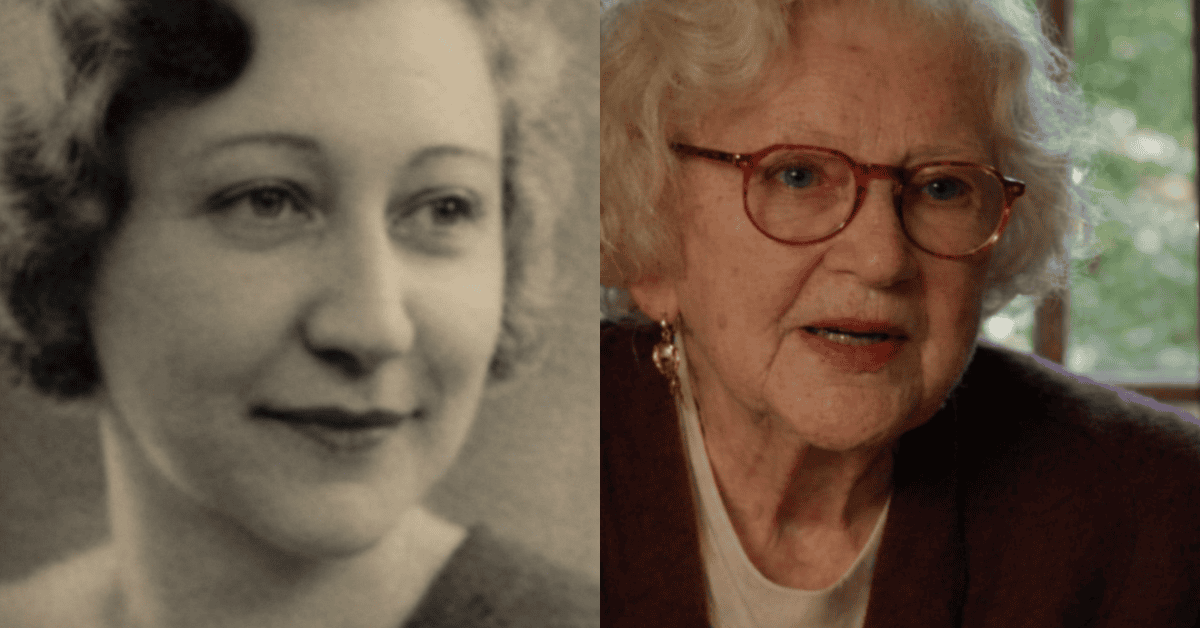
On December 24, 1971, seventeen-year-old Juliane Koepcke boarded LANSA Flight 508 with her mother, flying over the Peruvian Amazon. The weather was bad, but flights continued. Storms were common. What happened next was not.
The plane was struck by lightning.
At 10,000 feet, the aircraft broke apart in midair. Passengers were thrown into the sky. Juliane later recalled waking up while still falling strapped to a row of seats before losing consciousness again.
She landed two miles below in dense rainforest.
When she woke up, she was alone.
Juliane had a broken collarbone, deep cuts, and one shoe. Her glasses were gone. Her mother was nowhere to be found. Around her stretched miles of jungle humid, loud, and alive with danger. Of the 92 people on board, she was the only one who survived the fall.
Panic would have killed her.
Instead, Juliane remembered something her parents both biologists had taught her: if you’re lost in the rainforest, follow water. Streams lead to rivers. Rivers lead to people.
She began walking.
For eleven days, Juliane trekked downstream through the Amazon. She endured constant insect bites, dehydration, and exhaustion. Maggots infested a wound on her arm. She waded through rivers filled with unknown predators and slept exposed to the elements each night.
She did not scream for help.
She conserved energy.
She rationed the few candies she found in the wreckage. She drank river water despite the risk. She kept moving, even when weakness made each step feel impossible.
On the tenth day, she found a small shelter near a stream evidence of humans. The next day, she reached a lumber camp. The workers were stunned. They cleaned her wounds and helped remove the maggots. Then they carried her by boat to safety.
Juliane was reunited with her father days later.
Her mother had not survived.
In the years that followed, Juliane struggled with the weight of survival why she lived when so many others didn’t. She returned to the jungle as an adult, not to relive the trauma, but to understand it. She became a biologist, like her parents, dedicating her life to studying the rainforest that nearly killed her.
Juliane Koepcke never described herself as fearless.
She described herself as prepared.
Her survival wasn’t luck alone. It was knowledge, calm decision-making, and the refusal to give in to panic when the situation was unimaginable.
She didn’t conquer the jungle.
She listened to it.
And by doing so, she turned one of aviation’s most horrifying disasters into a story of endurance, instinct, and quiet resilience proof that sometimes survival depends not on strength, but on remembering one simple rule when everything else is gone:
Follow the water.