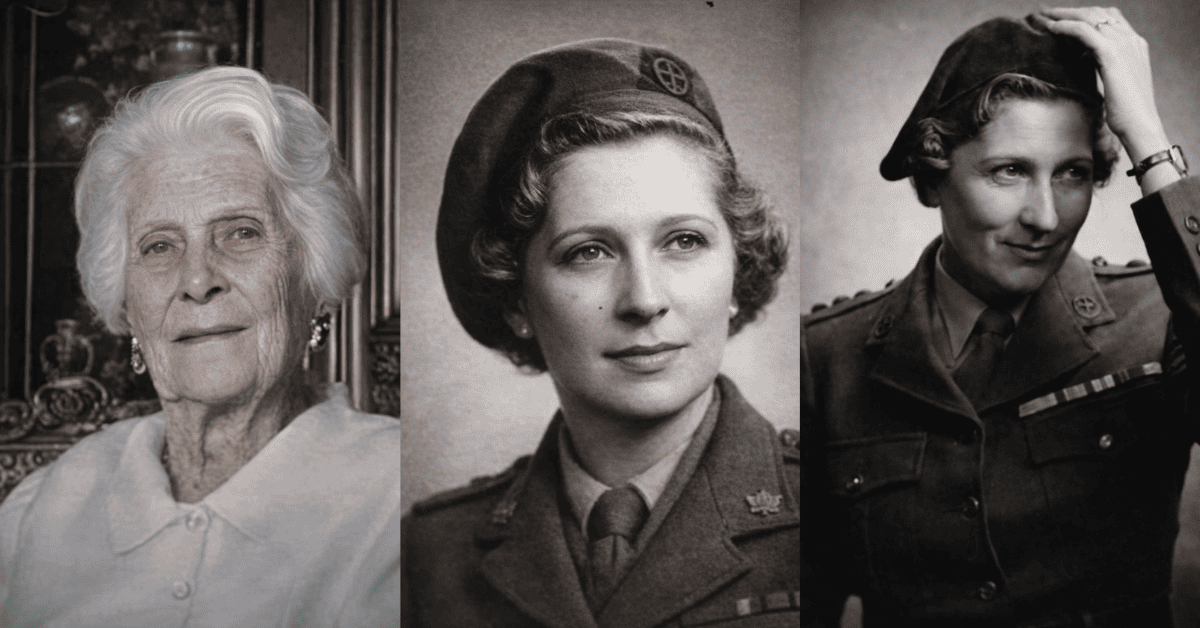
In the summer of 1942, Lise de Baissac stepped into one of the most dangerous roles imaginable.
She parachuted into Nazi-occupied France as part of Britain’s Special Operations Executive, an organization created to sabotage the German war effort from within. Her code name was “Odile.” Her mission was survival, secrecy, and disruption.
Lise did not look like a spy.
She posed as a widowed archaeologist, blending into rural French life while gathering intelligence and building resistance networks. Her cover was carefully chosen quiet, respectable, unremarkable. That invisibility saved her life.
Moving almost entirely by bicycle, she traveled through enemy territory carrying messages, supplies, and plans. She coordinated sabotage operations, helped organize resistance cells, and established communication lines critical to Allied strategy. Every journey risked arrest, torture, or execution.
At one point, she lived close to Gestapo headquarters.
Discovery would have meant immediate death.
Lise’s work focused on delaying German troop movements and disrupting infrastructure ahead of the Allied invasion of Normandy. Rail lines were sabotaged. Communications were broken. Reinforcements were slowed. These actions did not make headlines but they mattered.
When D-Day came in June 1944, German forces were less mobile and less coordinated than they could have been. That delay saved lives.
Lise de Baissac survived her mission.
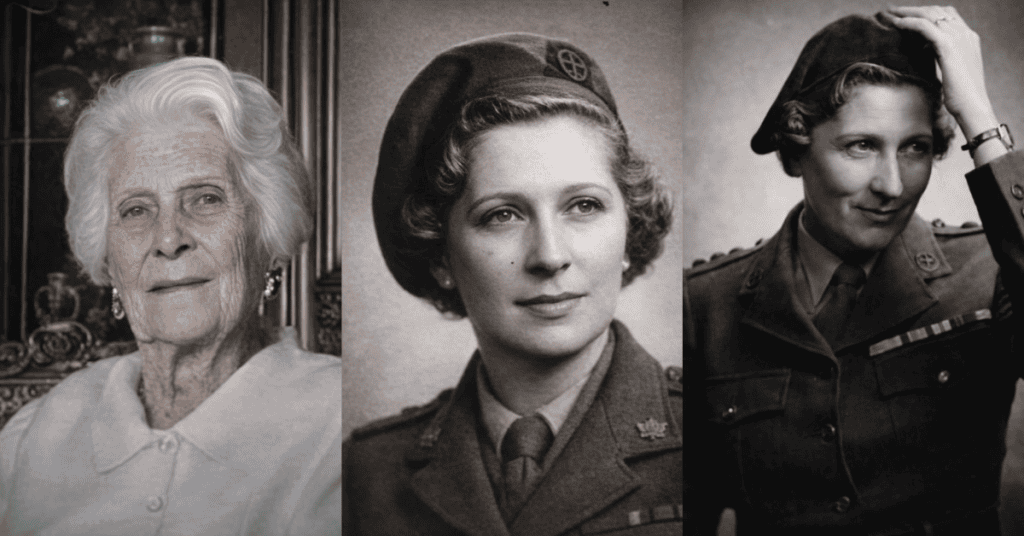
After the liberation of France, her role remained largely unknown to the public. Like many SOE agents especially women her contributions were classified, minimized, or quietly folded into broader narratives of victory.
But her bravery did not go unrecognized forever.
She was later awarded the Member of the Order of the British Empire and the French Croix de Guerre for her service. Still, she rarely spoke about what she had done. She returned to civilian life without seeking attention, carrying memories few could understand.
What makes Lise de Baissac’s story remarkable isn’t just courage it’s restraint.
She did not fight with weapons. She fought with planning, endurance, and silence. She trusted that unseen work could shape outcomes far beyond individual moments.
The war was not won by generals alone.
It was won by people like Lise moving quietly, risking everything, and asking for nothing in return.
Her bicycle rides through occupied France were acts of defiance measured not in miles, but in impact. Each message delivered, each delay caused, each network strengthened brought the end of the war closer.
History often remembers the battles.
But freedom also belongs to those who rode through the shadows, unseen, making victory possible one silent risk at a time.
Lise de Baissac was one of them.