
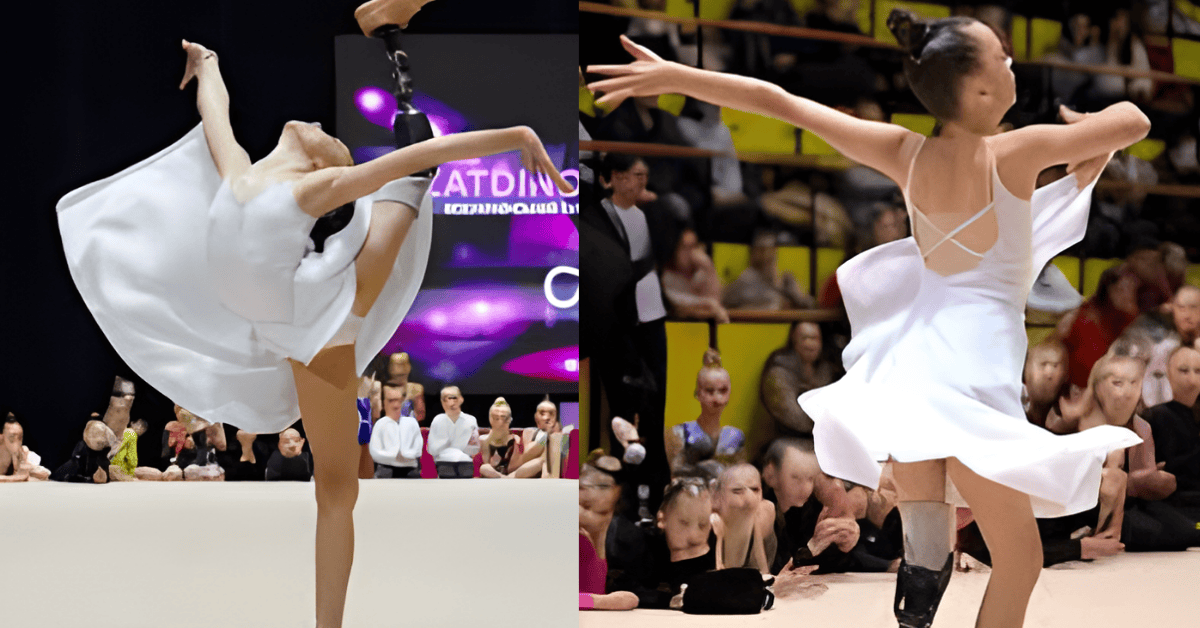
At just seven years old, Sasha Paskal’s life changed forever.
Growing up in the Odesa region of Ukraine, Sasha loved rhythmic gymnastics. Like many young athletes, she dreamed of competing, performing, and improving every day. But when war reached her world, everything stopped. During the conflict in Ukraine, Sasha lost her leg — a moment that would have ended the dreams of many adults, let alone a child.
For a long time, her future felt uncertain.
Recovery was slow and painful. Sasha had to relearn basic movements most people never think about. Walking again. Balancing. Trusting her body. On top of that, she faced the emotional weight of loss — not just her leg, but the childhood she once knew.
Gymnastics, the sport she loved, suddenly seemed impossibly far away.
But Sasha didn’t let go of it.
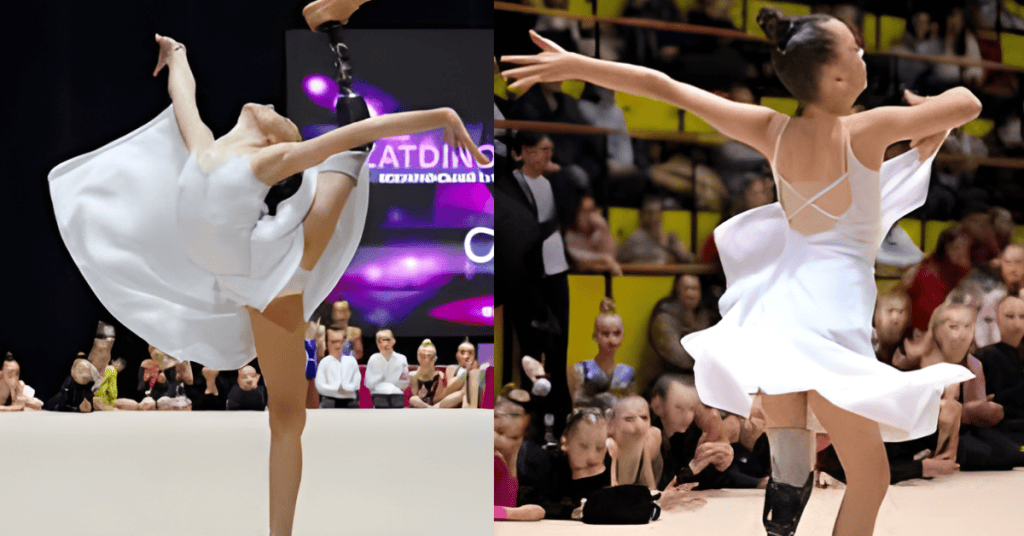
With the support of her family and coaches, she began training again. This time, she had to learn everything differently. She trained with a prosthetic leg, adapting her movements, rebuilding strength, and finding new ways to balance and turn. Every routine required patience. Every practice demanded courage.
There were setbacks. There were days when progress felt invisible. But Sasha kept showing up.
At just nine years old, less than two years after losing her leg, Sasha returned to competition. She stepped back onto the mat not as the same gymnast she once was — but as someone stronger in ways few children ever have to be.
At the Rizatdinova Cup, she performed in front of judges and spectators, her movements careful but confident. When the competition ended, Sasha earned the bronze medal.
For many athletes, a medal is a reward for hard work. For Sasha, it was something more.
It was proof that loss does not erase determination. That trauma does not define limits. That even in the darkest circumstances, courage can grow.
Her performance resonated far beyond the competition floor. People saw not just a young gymnast, but a child who refused to give up on herself. Someone who chose persistence over fear, and hope over despair.
Sasha’s story is not about pretending everything is okay. It’s about facing what isn’t — and moving forward anyway.
At nine years old, she has already learned lessons most people spend a lifetime discovering: that strength isn’t only physical, that dreams can change shape, and that resilience is built one step at a time.
The bronze medal sits on her shelf now. But the real victory is something no judge can score.
Sasha Paskal returned to the mat when the world expected her to stop. And in doing so, she reminded everyone watching that courage doesn’t disappear with loss — it rises to meet it.