
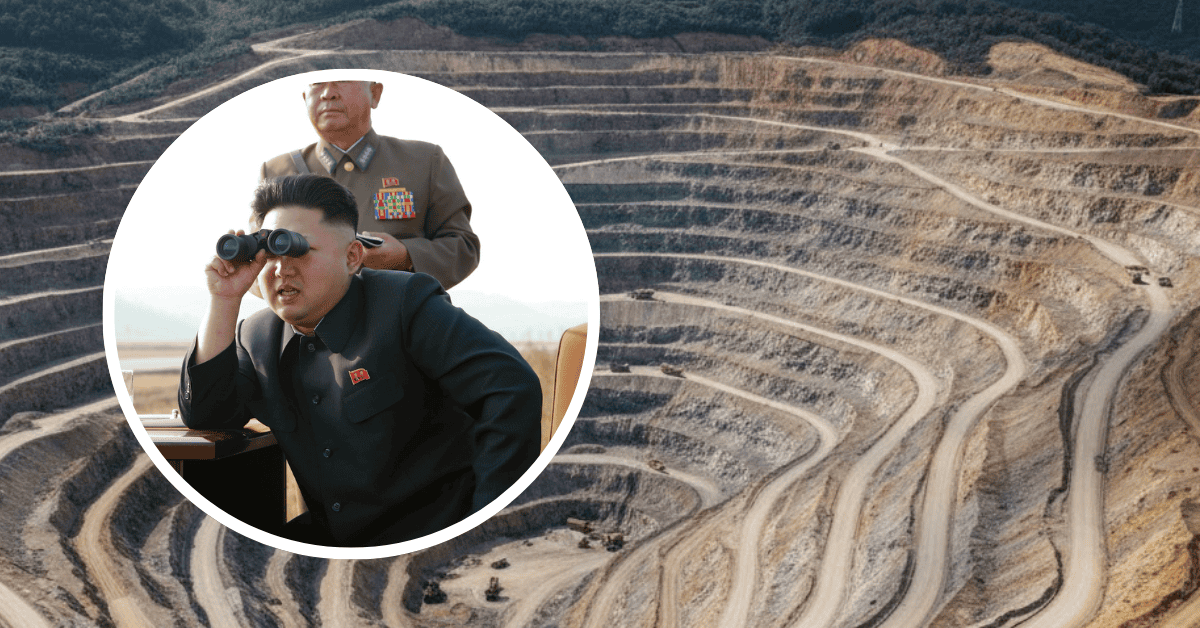
What if one of the poorest countries on Earth also sat on one of the world’s largest mineral treasure troves? It sounds like a paradox, but for North Korea, that is the reality.
Multiple estimates from the South Korean government and independent research have suggested that North Korea’s underground resources could be worth roughly seven trillion US dollars. That’s not cash in a bank account or gold in a vault—this wealth is trapped in the ground, in rock, ore, and soil. Coal, iron, magnesite, gold, zinc, copper, graphite, and rare earth elements lie buried across the mountains and valleys of the country. These are the very materials that drive modern economies, used for everything from steel and electronics to energy and defense.
On paper, North Korea could be one of the richest territories in Asia. A treasure trove like this could, in theory, finance roads, bridges, and power plants, stabilize food supplies, and connect the country to the global economy. Imagine the possibilities if these resources were managed responsibly: schools could be built, hospitals could be funded, and people could have reliable electricity and clean water.
But reality is far from the map of geological wealth. Sanctions, political isolation, outdated mining techniques, limited electricity, and weak transport infrastructure mean that almost all of this potential wealth remains untouched underground. What looks like incredible prosperity in surveys and reports does not translate into daily life. For most North Koreans, food scarcity, blackouts, and poverty are the real experience.
This story is not really about minerals. It is about systems—about how wealth only becomes meaningful when there are ways to use it responsibly, trade it legally, and distribute its benefits to the people. North Korea is not poor because it lacks natural resources. It is poor because the structures and freedoms needed to turn these resources into opportunities simply do not exist.
So when you hear “seven trillion dollars in the ground,” it’s tempting to be dazzled by the number. But the harder truth is that natural riches alone do not lift a nation. Wealth is only as valuable as the society that can harness it for human well-being, and that requires trust, governance, infrastructure, and access to markets.
Sometimes, the greatest wealth a country can have is not what lies beneath it, but what it is allowed to build above it. Roads, schools, hospitals, opportunities, and hope—these are the things that actually improve lives. And for North Korea, these human-built structures remain far more precious than any mineral buried in the mountains.