At seventy-three years old, Alvin Straight chose the slowest way imaginable to say something urgent: I’m coming.
In the summer of 1994, Alvin was living quietly in Laurens, Iowa. His eyesight was failing, his body slower, and he no longer had a driver’s license. When he learned that his estranged brother Lyle had suffered a stroke in Wisconsin, the news landed heavy. Years of distance suddenly felt fragile. Waiting felt like another loss he could not afford.
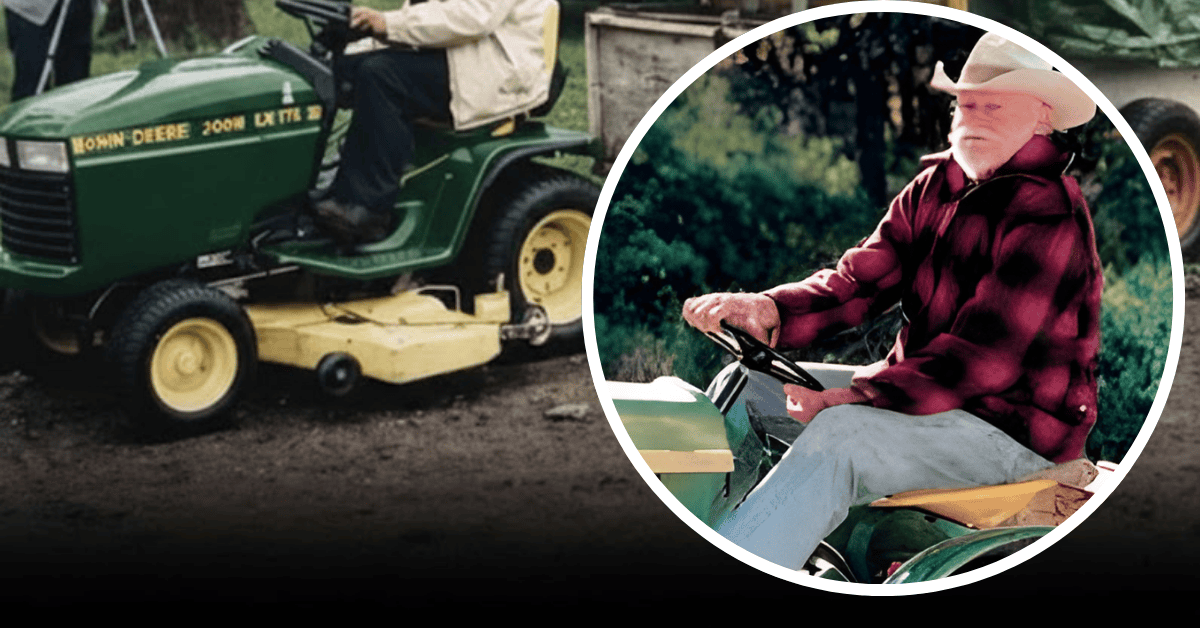
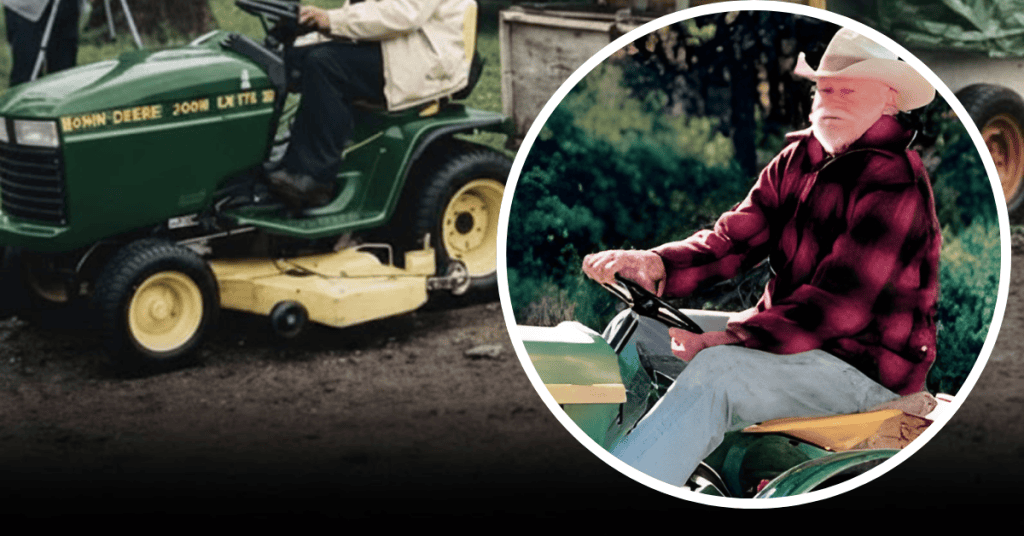
There was no car he could legally drive. There was no neat solution or quick workaround. So Alvin made a decision that felt almost stubborn in its simplicity. He climbed onto his John Deere riding lawnmower, hitched a small homemade trailer behind it, packed a few essentials, and pointed himself north. The journey was roughly 240 miles. It would take about six weeks.
He stayed off highways, following back roads at a pace slower than traffic but steady enough to keep going. He slept in fields, under open skies, and in quiet campgrounds. When the mower broke down, he fixed it with borrowed tools and patience. When strangers stopped, confused by the sight of an elderly man inching along the road, he accepted food, conversation, and kindness without embarrassment.
This was not a stunt. There were no cameras when Alvin began. He was not chasing attention or meaning to make a point. When reporters eventually caught up with him, they expected something profound. Alvin offered something simpler. He talked about family. He said that when someone you love is hurting, you show up however you can. That was all the explanation he needed.
When he finally arrived in Wisconsin, there was no dramatic reunion. Two brothers sat together on a porch. They talked quietly. They watched the sky. The long distance between them softened into something human again.
In 1999, director David Lynch told the story in The Straight Story, and little needed embellishment. The truth was already enough. Alvin’s journey doesn’t reject modern life or convenience. It gently reminds us of something easy to forget. Speed is useful, but it is not devotion. Efficiency moves bodies, but commitment moves hearts.
Sometimes care looks slow. Sometimes love takes time. And sometimes the most meaningful journeys are the ones that refuse to let obstacles decide whether we show up at all. What would our choices look like if showing up mattered more than getting there quickly?
Alvin never spoke about heroism, but the journey carried its own quiet courage. Each mile was a decision repeated daily, a refusal to turn back. The mower’s hum became a promise, steady and patient. What mattered was not comfort, recognition, or ease. What mattered was arrival, earned slowly. His story lingers because it asks us to measure love differently. Not by efficiency, not by speed, but by willingness. By choosing presence over convenience, and by refusing to let limits define how deeply we care. Even now, decades later, it continues to move people in quiet ways everywhere today.