
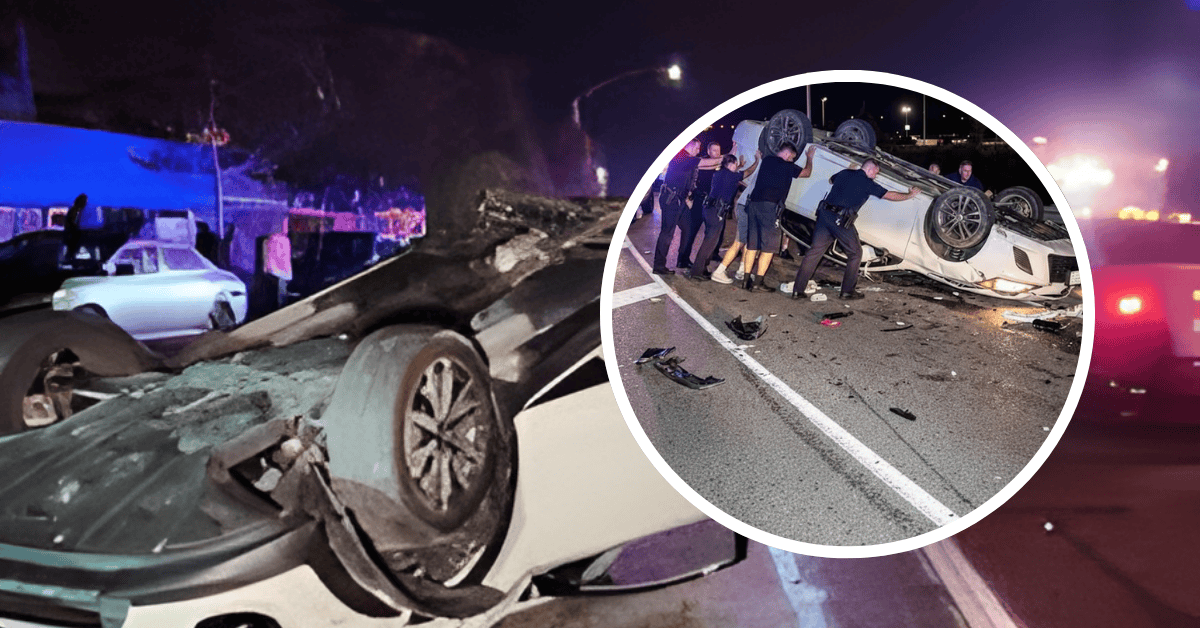
In the early, disorienting moments after a violent crash in Georgia, a 19-year-old driver lay trapped beneath his overturned car, fighting for every breath. The vehicle had flipped and come to rest in a way that pinned his body to the ground, the crushing weight of metal making it nearly impossible for his chest to rise. He was conscious, injured, and running out of time.
When officers from the Lawrenceville Police Department arrived, they immediately understood how serious the situation was. The car weighed close to two tons, and it was pressing down on the young man with deadly force. He was badly hurt, and every second mattered. Waiting for heavy rescue equipment could mean the difference between life and death.
One police sergeant didn’t hesitate. Realizing that manpower was the only immediate option, he called out for help — not just to fellow officers, but to anyone nearby who was willing to step in. And people did.
Motorists who had stopped at the scene, along with additional officers and complete strangers, rushed forward without being asked twice. There was no time to debate risk or overthink the moment. They simply reacted as human beings confronted with someone in desperate need. Together, they positioned themselves around the overturned car, braced their feet, and on the sergeant’s count, lifted.
The weight was enormous. Muscles strained. Hands shook. But they kept pushing, driven by urgency and adrenaline. For a brief but critical moment, they managed to raise the vehicle just enough to relieve the pressure on the trapped teen. That small window was all it took. Officers pulled him free and moved him to safety as quickly and carefully as possible.
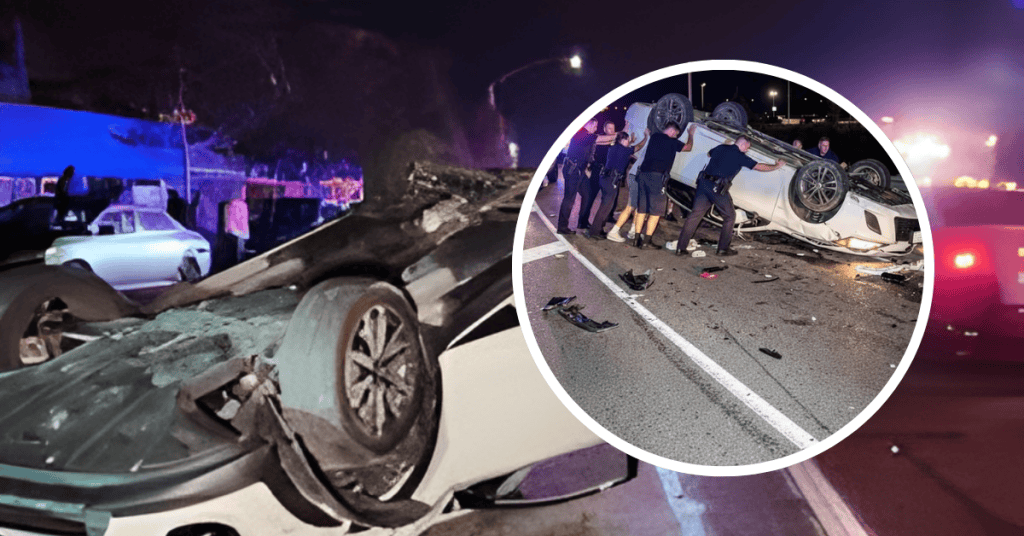
By the time emergency medical crews arrived, the young man was no longer pinned beneath the car. He was rushed to a medical facility with serious injuries — but injuries doctors believed he could survive. According to the Lawrenceville Police Department, the speed of the response and the willingness of strangers to act without hesitation were likely the reasons he was still alive.
In situations like this, outcomes often depend on timing. A delay of even a few minutes can turn survivable injuries into fatal ones. What made the difference that day wasn’t specialized equipment or advanced technology — it was people. Ordinary individuals who chose to help, even when it meant putting themselves at risk.
For the officers on scene, it was a powerful reminder of why they do their job. For the bystanders, it was a moment they’ll likely never forget — the instant when they realized their strength, combined with others, could save a life. And for the 19-year-old and his family, it was the difference between tragedy and another chance at the future.
The police department later praised everyone involved, emphasizing that no single person could have done it alone. It was the collective effort — the instinct to act, the trust in one another, and the shared determination to not let a young man die on the pavement — that turned a devastating crash into a story of survival.
In a world where bad news often dominates the headlines, moments like this stand out. They remind us that courage doesn’t always wear a uniform, and heroism can come from anyone willing to step forward when it matters most.